Stella

STELLA
details & photos ex Judith Wallath

Stella was built by Lanes of Totara North in the mid 1950s.  Benjamin (Ben) Le Clerc, farmer of Otara, Helena Bay, bought her from Lanes.  Stella was 32 ft, built of kauri, with a petrol motor and set up as a game boat.  Later, while moored at Helena Bay, a petrol explosion occurred which blew out the forward hatch.  She sat on the beach for three months while having a 40 h,p, diesel motor installed.
Disaster struck again on the 21st April 1963 when Ben was returning from a fishing trip with eight men on board, and a catch of 13 hapuka.  The boat hit a rock off the Wide Berth (Limerick, Rimiriki) Islands.  A mayday signal was sent which was picked up at Russell and Port Charles.  In the meantime the boat broke up and the men clambered onto a rock.  The first to answer the mayday call were Jack Foote of Footes Bay and Mr J.D Prestney, manager of Mimiwhangata.  A runabout was sent out, which laboured to the mainland with 11 people on board.  Mr Prestney was off-loaded at Mimiwhangata.  He raced to his Landrover and flashed his headlights to attract the attention of the Kitty Vane which was approaching from Tutukaka.
Meanwhile the other ten proceeded towards Helena Bay where disaster struck again. The runabout struck a submerged reef and began to sink.  All had to abandon ship once again and cling to a small dinghy which was being towed.  It was 3 a.m. before they reached the mainland again.  21 year old Glenys Foote was the heroine of the event.  She rowed the dinghy that transferred the men from the rocks to the runabout, and then later rowed the 8 men to shore while Ben swam.

So woodys can anyone add to the history of Stella. Was she salvaged or slipped away to Davey Jones locker? There is some confusion as to her length some say 32′ others 38′, can anyone confirm?

Harold Kidd Input

STELLA apparently WAS a total loss when she went aground on the Limericks, Wide Berth Island, on 21/4/1963, that is according to Madge Malcolm’s book “Where it all began”, but the wreck doesn’t appear in “Shipwrecks of NZ”. She was then owned by B.C. Le Clerc of Helena Bay and was a 38ft bridgedecker. I think she was probably supplied by Lanes at Totara North but was undoubtedly built by Lanes at Auckland, despite the Sam Ford-type waist windows.

Where is this woodys gathering?

WHERE IS THIS WOODYS GATHERING?
photo ex Harold Kidd

Today’s photo was taken in the period 1895-1905 & is ‘around’ the Waitemata.
What say you woodys – whats the location?

Article ex Paperpast from the NZ Herald 3 Jan 1896 (ex Harold Kidd)

Also a wee bonus today – Martin Turnwald, son of CYA member John Turnwald (MV Robyn Gae), who now resides in Switzerland, has sent in a c.1993 video of the William C Daldy. We see the crew was firing up the boilers to turn the old girl around on the wharf and Martin and then girlfriend, (now wife) were on board to watch.


Woody Trip Report – Inside Passage Cruise

WOODEN BOATS OF THE INSIDE PASSAGE

Story & photos by CYA NZ member Denis O’Callahan (owner of MV Tasman)

Today’s post tells the story of Judy & Denis O’Callahan’s adventure cruise – its a great read, so I’ll let Denis tell the story. Enjoy 🙂

 “In April 2000 I was invited by a Canadian friend to help launch a boat which his brother Wayne had built on Thetis Island in the Strait of Georgia near Vancouver. The “Grail Dancer” is 48’ on the deck, ketch rigged and based on the lines of the “Emma C Berry”, a 150 year old traditional fishing boat now preserved at the Mystic Seaport Museum, Connecticut. Wayne works as a wooden boat builder and restorer who at that time was restoring historic paddle steamers at Fort Dawson and Whitehorse on the Yukon River during the summer. During the winter he worked on the “Grail Dancer” which took him 14 years to complete. This trip was a great experience which gave me an inkling of what a wonderful cruising ground the Inside Passage to Alaska would be. This was further reinforced when I read the great book, “Passage to Juneau” by Johnathan Raban.

Eventually this year my wife Judy and I planned a visit to Vancouver and Alaska, including an adventure cruise of the Inside Passage. Our first stop was Vancouver, from where we took a float plane to Victoria on Vancouver Island to spend a couple of days with friends who live near Nanaimo. On the way north from Victoria we called in at the small fishing port of Cowichan where I was able to see a converted fishing boat, “Morseby III”, which belongs to a guy I know who lives at Mangawhai. We flew back to Vancouver from Nanaimo and had a couple of days there including a visit to the excellent Maritime Museum. Here there is preserved the wooden auxiliary schooner St Roch, built in 1928 in Vancouver and operated by the Royal Canadian Mounted Police. In 1942 St Roch completed the first voyage from the Pacific to the Atlantic through the Northwest Passage, 27 months from Vancouver to Halifax and spending 2 winters in the ice. In Halifax her engine was upgraded from 150hp to 300hp and she made the return journey in 1944 in 86 days.

Next we boarded the Alaska Marine Highway ferry “Columbia” for a 2 night, 1 day voyage from Bellingham to Ketchikan. This was rather like a Cook Strait ferry and while we had a comfortable cabin many hardy souls camped in deck, fixing their tents down with duct tape. We saw a number of other boats during this trip, huge barges laden with containers and trucks, cruise ships, fishing boats, pleasure boats and some of the contestants in the inaugural “Race to Alaska” (R2AK). R2AK is open to any kind of boat without an engine, from kayaks to racing trimarans, 750 miles from Port Townsend to Ketchikan. First prize, $10,000, second prize, a set of steak knives. The ferry passed through many spectacular narrows and channels and at Bella Bella we stopped while the crew lowered the anchors to demonstrate compliance with US Coast Guard requirements.

Ketchikan is a busy port town with floating docks and other marine facilities. However during the summer it is dominated by up to 4 giant cruise ships visiting each day. A large marina (“floats” in the local lingo) accommodates a variety of fishing and pleasure craft. The salmon fishing boats are divided into 3 types, purse seiners which go for large volume, low value fish, gill netters which aim for better quality and trollers which target the top quality product. Long-liners target halibut, a kind of gigantic deep water flounder which can grow up to 200kg.

We took a 10 day adventure cruise on the “Alaska Dream”, a 104’ catamaran, rather like a Waiheke ferry with cabins for 40 passengers and a crew of 17. We strongly recommend this as a way to see the Inside Passage. Activities included walks ashore, railway excursions, kayaking and even swimming. We saw amazing wild life, indigenous culture, glaciers and fishing ports, including Sitka, Skagway, Haines, Juneau, Petersburg, Wrangell, Thorne Bay, Matlakatia and Ketchican. In every port there were numerous classic wooden fishing vessels in varying states of preservation. I would estimate that 90% of the working fishing boats around the Inside Passage are of wooden construction. The plentiful supply of rot resistant old growth Yellow Cedar and Western Red Cedar no doubt accounts for the durability of these vessels”

Swanee

SWANEE
photos & details ex Ralph Weber

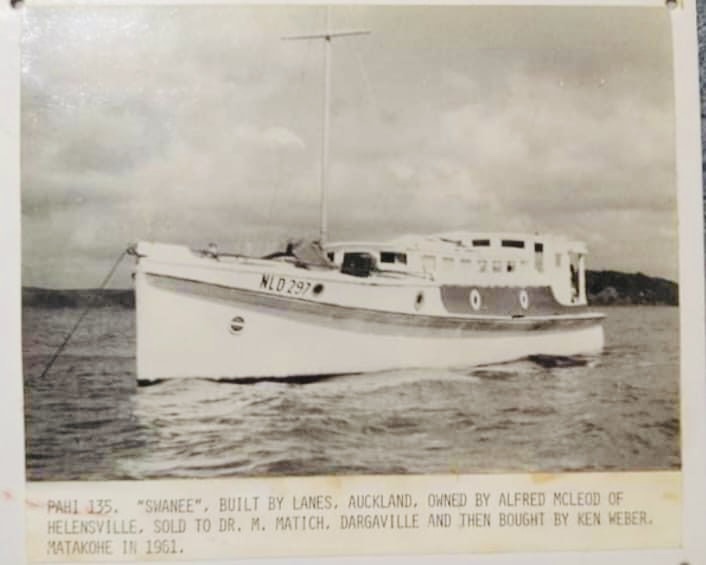
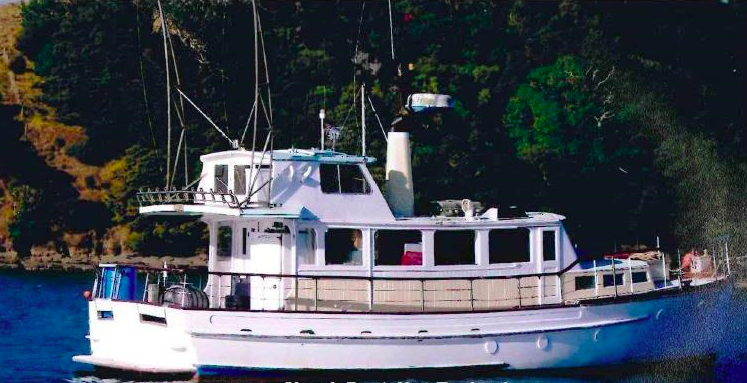
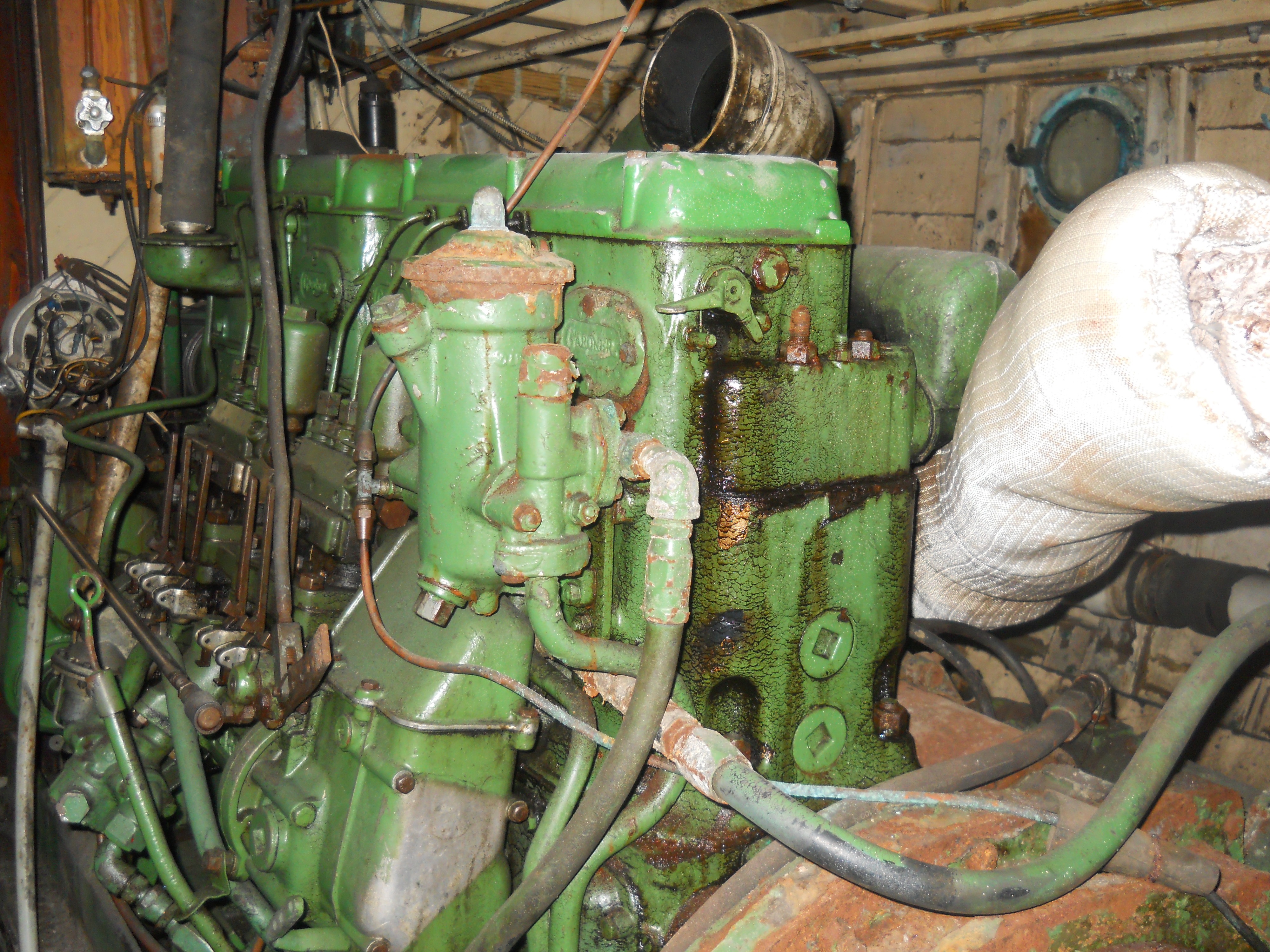
While the exact details of who designed & built today’s launch Swanee are unclear, she is rather unique in that she has remained in that same family for over 50 years. Built from kauri she is 33′ long with 8’9″ beam & 2’8″ draft, currently powered by a 60hp Ford diesel.
You can see from the photos that she is very well appointed with everything one needs for comfortable cruising – electric flush toilet, freezer/frig, electric capstan & all the safety gear.
Over their period of ownership the Weber have ensured Swanee remained in great condition with a major 2 year out-of-water refit in 1970 that saw her re-ribbed with pohutukawa (you could back then 🙂 ) & new topsides. In 2004/5 her topsides were glassed & 2 pot painted & she was rewired.

Owner Ralph understands, from his mother, that she was built c.1920 in Auckland for Sanfords. Then later sold to the McLeod family of Helensville. Then she went to Dargaville and then owned by Matich Bros and later by Dr Maurice Matich. The Weber family, Ken & June, bought Swanee in 1961 and now ownership is with their son Ralph Weber of Matakohe. Currently moored at Pahi.
Ralph commented that Harold Kidd had previously mentioned that she may possibly have been the – ‘Sister Lola’ & built by Bailey & Lowe, if so she ‘raced’ with the Ponsonby Cruising Club.

Ralph sent ww photos of Swanee over a year ago & contacted me recently to say that unfortunately life has moved on & the family have had to make the difficult decision to sell Swanee after 50+ years of ownership, so today’s post has a degree of sadness but could offer a lot of happiness to someone looking to buy a classic launch. For a 33′ launch, Swanee is a lot of boat, you can see in the photos that there is no shortage of living area & she comfortably sleeps 5. After 50 years you end up nothing what works best & where on a boat 😉
Boat aesthetics is a very personal thing & with some people practicality is #1, but if I was buying her I would be off to see a good sympathetic wooden boat builder like Geoff Bagnall & returning her cabin windows to a style a little more in keeping with a 1920’s classic. People forget that these old girls are wood & the cost of a wee bit of restoration like this would not be great. After all there is little else that needs doing to her.
She sports rather a racy (flat aft) bottom so with a bigger motor I would imagine she would perform very well.

So woodys – can we find a buyer for Swanee or know something that is looking for a classic wooden launch? Being based currently at Pahi she does present some interesting scenarios e.g. you could keep her there for a few seasons & have a floating family bach. A group of guys could get together & buy a good fishing / man bach on the Kaipara. Or simple put her on a truck & return her to the Waitemata.

Now I do not normally like to talk money in ww posts but the overall 2nd hand boating market is just so soft that when I think something is great value, I will – well woodys someone could own Swanee for less than $30K. , that is real value, you could not build a garage for that.
If you or anyone you know could be interested – contact Ralph, initially via email on weber.bros@xtra.co.nz

Also interested in any info /photos on her past.

Harold Kidd Input

SWANEE was certainly built as SISTER LOLA pre-October 1920, possibly by Harvey or DIck Lang. I don’t know where the Bailey & Lowe reference came in, although Bailey & Tyer did build a 33 footer (unusual dimension) just pre WW1. Lang too had built a 33 footer in 1916 and just could have used those moulds.
I can’t find a direct report of her owner as SISTER LOLA but am pretty sure she’s the boat reported in the Auckland Star of 28th August 1920. If so, her hull was built professionally and she was finished off by her first owners Pavitt brothers and Verran at Bayswater. There again the Verrans were Northcote people and Bailey & Tyer were at Hall’s Beach, Northcote Point.
She was sold to Arthur Sandford of Vine St., Ponsonby in late 1922, early 1923. He changed her name to SWANEE probably after the Al Jolson song “Swanee”. Sandford was, for a time, a professional Vaudeville artist and no doubt sang that song on stage. She had a 6 cylinder Studebaker car engine in 1925.
Sandford sold her to Alfred McLeod some time between 1934 and 1939. McLeod joined the Squadron with her in 1939. She then had a 30hp Hercules engine which he replaced with a 100hp Meadows ohv 6 in 1947/8 (probably a war-surplus engine). The rest of her history on the Kaipara is well-known.
There’s a big dose of conjecture in the above. I’ll check with the Verran family.

Update 30-08-2015

B/W photo added above ex Ian Miller whose wife Rosalind’s late father, Doug Hazard, crewed on Swanee in the 1930’s

Update 06-03-2023 – photo below ex Kauri museum, Matakohe via Diane Wilkinson fb

Wee Tug Boat- help needed

Wanted – Drum & Rope Steering Set-Up

Ok its Friday & I’ll feeling charitable 🙂 I have had a request from David Grace in the Hawkes Bay for a hand in locating an old steering wheel system that has a drum on the back for a rope steering system. Davids not worried about what sort of actual wheel just the shaft and drum. He can’t find anything in Hawkes Bay so wondered if any woodys can help ?.

David has set himself a target to get the wee tug to next years (late Jan 2016) Lake Rotoiti Boat Parade (Nth Island) so lets see if we can help.

Jennifer II

JENNIFER II
photo ex Tony Kellian ex Pam Cundy at Whangateau Traditional Boat Yard

The photos of Jennifer II were sent to Pam by Tony & show her hauled out at the Whangateau slip & at sea. Jennifer was used by Tony’s grand father Ross Kellian to commercially fish out of Leigh.
The Kellian family would like to know who built her etc. and if she might be still be around.

So woodys – can anyone help out with info on Jennifer?

Manaaki

MANAAKI
photos & details ex Crispin Waddell

Crispin has owned the 1926 Collings & Bell launch Manaaki since 2013. Manaaki’s specs are – length: 11m, beam: 2.5m, draft: 1m & her current engine is a  1970’s Lees Marine Ford diesel 75hp. She is carvel planked, with full-length 32mm heart kauri planks over steam bent and laminated ribs, with less than 200mm spacing.
She cruises at 8knts. & tops out at around 12knts. but unlike some other boats of her era, Manaaki has more of planing hull & is flat at the stern & could do up to 16knts. with the right engine.
She is one of 6 boats build for the Zane Grey fleet – Alma G, Otehei & Avalon were the names of some of her sisters. Manaaki was originally fitted with a petrol Redwing engine.

Crispin has been involved with the boat since he was a child, (now 29). He bought her off the Hunt family. Like most of us he is always keen to find out stories and collect any old photo’s and history of the boat. She lived in the Whangaroa for around 30 years & there are a few photo’s of Manaaki on wall of the pub & records of all her catches in the Game Club up there.

Electrochemical Wood Damage
Crispin came across  the ww article about electrochemical damage & the timing was great as he is having problems with it occurring on Manaaki. It’s mainly happening in the area where the prop shaft sleeve comes through the keel under the floor. The kauri fluffs up around this area and he get lots of salt crystals. Thanks to the ww article he is hoping to get on top of this as it’s just started over the last 3 years.

If anyone knows the boat or has any old photo’s send them into ww, Crispin would also be interested in getting in contact with anyone from the boats past.

24-02-2018 Manaaki was anchored alongside me today at Motuihe Island, looking very smart 🙂

P1020124

P1020123

Anita Bay / Te Repo Repo / Maharatia

ANITA BAY / TE REPO REPO  / MAHARATIA

photo & details ex Paul Drake

The above photo of a woody on a truck is the launch Te Repo Repo that was at Taupo in the 1960’s, run by the Tourist Hotel Corporation. Paul is pretty confident that her skipper was the Internal Affairs Harbour Master. Whilst at Taupo she was called Te Repo Repo but previously she came from the South Island, where she was called Anita Bay. Paul thinks that this was probably her “as built” name.

Copy of flyer below, promoting her services ex Harold Kidd

Photo below ex Ken Ricketts  & B Worthington


I have to say given how beautiful she was, the more recent photo of her below is a little sad, sure someone now as a boat that they probably enjoy, but we have lost a classic along the way 😦
Screen Shot 2015-08-06 at 6.30.41 AM

MAJOR UPDATE 07-08-2015

details ex Paul Drake, Ken Ricketts, Harold Kidd, Russell Ward, Jimmy Thomson, Caitlyn Beazley, Troy Searle. Extensively edited by Alan H

This story grew from a single photo sent in by Paul Drake & with the help of the above people has morphed into a comprehensive record of the the vessells past. In the interests of the recorded facts & woodys reading pleasure I have attempted to pull it all together as one. If I get something wrong – let me know 🙂 Alan H

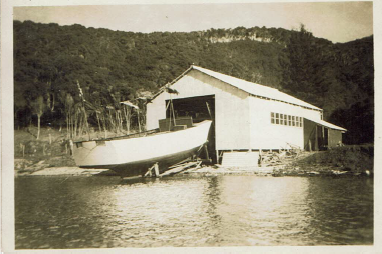
Maharatia was launched in 1947 from the Auckland yard of Roy Lidgard, her hull was entirely built to deck level on a concrete slab at their property in Smeltering House Bay, Kawau Island. They bought,  dismantled & shipped a shed from the mainland, to put over her, this shed is still there today (photos below). This became the shed where the Lidgard’s built & maintained many boats after Maharatia.
The hull was towed to Auckland where she was put in their Auckland shed, to be completed (photos below of shed, Maharatia is top left in the 1st photo).

She was built for the Birch family of the Tauranga region in the Bay of Plenty who were farmers & the boat was named after their farm, named Maharatia, which means “memories” in Maori.

According to Jimmy Thomson (close family friend of the Lidgards) she only remained in Tauranga for a fairly short time & actually spent most of her life during the Birches stewardship in Smelter House Bay at Kawau. They were however keen fisher people & she was used in Tauranga fairly extensively for game & other fishing in her early days apparently, note the number on her bow in some of the older photos.

In the 1960’s she was sold to the Government & went to Taupo. It would almost certainly have been the Govt., as owners who first changed her name from Maharatia to Te Repo Repo. Her skipper whilst at Taupo was the Internal Affairs Harbour Master, Lt.Cmdr. Pete Petersen, RNZNVR, who was Harbour Master from 1955 until 1978. Back in those days, he was it – just him and his Imperial typewriter.

After her time at Taupo, the Govt. then trucked her to Tauranga & sailed her to Milford Sound, to the Milford Tourist Hotel Corporation hotel & while there her name changed again, to Anita Bay.
She was damaged whilst there & taken to Bluff for repairs & sold to a Keith Wright, who took her to Whangarei, where he had a tow boat business & he used her in association with this & also for local tourist trips. She was quite badly damaged on a trip to an exploratory oil platform he was associated with, during his ownership.

Wright later sold her to Bruce Davies, also of Whangarei, who replaced the original Buda diesels with the 2 LX Gardners which she still has today. He later sold her Lawrence McCleod, who owned her for approx. 25 years. It was McCleod who changed her name to Anita Bay IV, for reasons of liquor licensing for tourism use. He took her the Kaipara initially, where he used her for that purpose, as this is where he was living. When he later moved to Snells Beach he took her to the Sandspit, which was in the mid 1980s. He sold her to Dave Searle of Warkworth in 2013. She had not been used for a number of years when bought by Dave Searle.

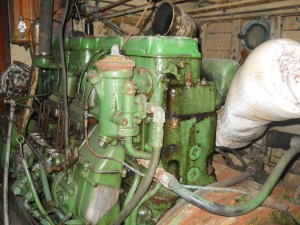
She is presently in Steve Grice’s shed at Omaha & being given an extensive restoration by the classic artisan boatbuilder, Colin Brown. The restoration will be to her original concept more or less & she is going to go back to her original name of Maharatia. She will have completely refurbished engines (photos below). Ken reports that the ‘upstairs wheelhouse’ put on by the Government when they owned her has gone along with her funnel – we like that 🙂 Restoration photos below ex Ken Ricketts

Her present owners have promised to keep ww updated on the work so fingers crossed we will be able to follow the project.
MAHARATIA - HER 2 - LX GARDNER DIESELS BEFORE REFURB ON 8.5.15 - 1

Update -8-08-2015 Seeing Double ?
OK folks heres a curly one – I received an email last night from David Balderston & he puts forward a very good case that there were/are two Anita Bay’s – read on

Fascinating post of Anita Bay. I note the para where it is stated that she went to Milford. However, I think that Anita Bay at Milford is a different ship and your Anita Bay went to the Kaipara.

In the 1980s, I became aware of an Anita Bay running for the old THC at Milford. She was used to bring the survivors who had made it over the Milford Track across to the hotel at Milford. I actually adjusted her compass in the early 1990s. Here are two photos of her at Milford, March 1992 and 7/7/92. Note she has no port holes and I reckon her bow is straighter, in any case she looks far different to the one in your post.

I visited the Kaipara in February 1998 and took these two snaps of Anita Bay at Helensville , could not get closer, rather a large dog. Note in the second snap the signpost advertising her tours, how faint it has become, which would perhaps indicate she had been operating there a while.

The final item is from my scrap book, with two adverts of the Kaipara Anita Bay, dated 1988 and 31/1/90.

Therefore I submit that there were (are) two Anita Bays.

08-08-2015 Input from Denis O’Callahan, owner of the Colin Wild launch Tasman. Ian reports he walked the track in April 2014 and Anita Bay was still on the run to Sandfly Point picking up trampers.
You can recognize her comparing Denis’s photo with David Balderston’s.

04-12-2015 Input from Ray Morey

‘Anita Bay’ was hauled out at Tauranga at Ray’s father in law’s , Sulpher Point yard on the ‘Eva’s’ cradle. This was right next to the roadway. She was lifted onto the house removers rig by a mobile crane from the Ministry of Works which was working on the Mt Maunganui Port extensions. She was not at Taupo for very long, maybe 2 years at the most and came back the same way. Ray’s recollections are that Keith Wright delivered her to Steve Petty who had taken over the “Kingfish Point” lodge at Whangaroa,(there may have been a T.H.C. connection there.)
She was the general service launch there for quite a few years. There was no road access in those days. Keith Wright did have her later after he had sold out of the coastal tug and barge business. Ray is not too sure but thinks the aft wheelhouse was built and fitted in Auckland prior to going to Taupo but removed for the road trips.

07-03-2016 Update ex Ken R from Colin Brown’s shed
The 2 x 6LX Gardners are back in place, looking just like new. Her T & G cabin top has been removed & new T & G roofing will be used to correct the ‘holes’ left after the removal of her dry stack exhaust & the block of flats.

30-06-2016 Update from Ken R ex Colin Brown’s yard on her restoration + some old photos the late 1940’s – early 1950’s showing the hull leaving Smelting House Bay, Kawau Island & another of her being towed to Auckland for finishing off.
MAHARATIA - HULL LEAVING SMELTING HOUSE BAY c1946-7

Tamahine & her catch

Tamahine – supplied the lunch

And the Raglan Fish – cooked the best F&C’s I have had in a long time – 3x Dory + chips $10 @ Raglan Wharf

Even when its a weekend away in the car, still managed to slip some salty activity in. If you are in Raglan, check out the Wharf area, great coffee (Raglan Roast), funky shops that had enough appeal to lighten the wallet/purses of the blokes & blokets + one of the best fish shops / cafes I have been to in a long time.

And a plug for a great beer we discovered, its not often Mrs H enjoys a cold ale but the “Good George – Sparkling Ale’ (ex Hamilton) was spot on.

Saturday saw a walk to the inland ‘Bridal Veil Falls’, 55m drop – very impressive.

A Woodys Trip Report from France

A Woodys Trip Report from France
photos & story ex Russell Ward

Getting the other-half to go on holiday in France – thats easy, but how Russell manages to sneak in visits to wooden boat yards, beats me. I need some tips 🙂
I’ll let Russell tell the story. Remember to click on the photos above to enlarge 😉

I visited a fellow steam boater in Arcachon and the conversation on steamboats lulled a trifle and we went on to local work boats the Pinasse! Yep, when the French say Pinasse it is rather akin to the technical term for one’s diddle!
They are a breed of double ender peculiar to Arcachon on the coast out from Bordeaux. Arcachon is a rather larger harbour than Whangateau. Golden sands and sandbars abound. Oyster farms are everywhere and the origin of the Pinasse in the area dates from 1900 or so.

The local work boats abound and many have been retired to pleasure duties and some look real posh.
They have a broad beam, some have elongated bow and stem posts to give a Venetian look; bold sheer (as befits a work boat intended for fishing), self draining cockpit fwd, low deck house and aft cockpit.
The engines were marinised automotive engines and many early ones were made by local engineers.
The older traditional boats have a disappearing prop arrangement akin to the American Dispro boats (check out Wooden Boat). The Dispro has a cast tunnel that the prop shaft and prop pivot up into. The Pinasse has a slot about six inches wide from a third of the way fwd from the stern post. The prop shaft emerges at the fwd end of the slot and there is a bronze universal to allow the prop shaft to pivot up when a lever is raised in the aft cockpit or automatically if the skeg scrapes on a sandbar.
The hull form is interesting. They appear round bilge but in fact have a chine on the middle third of the hull.

One boatyard built most of the boats and above  are several photos of the sheds. Makes my eyes go all misty and George and Pam’s will too. They have so much space in there but only a couple of major rebuilds in progress. One smallish burdensome sailing boat of about 16’ and one elderly Pinasse who has a new stem, chines, set of floors and most of the bottom having new planks.
 Six generations of one family worked the yard and it was recently sold to a man and his sister who continue the work.
Lovely place!

There are a lot of references but few specific to our interests. Go trawling!
http://www.dubourdieu.fr/en/history.html