Wainui

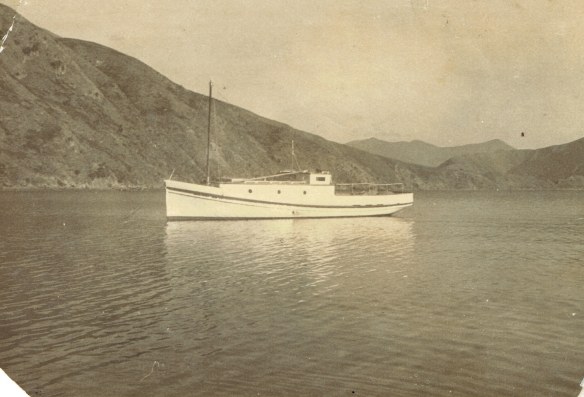
Wainui on Slipway 1931 Photo sent by Arthur to Cora after purchase30102015

1931 on slipway after purchase

wainui 1931 dark scan30102015

1931 – Love the dogs

Wainui on slipway Bulwer1938 undergoing alteration to stern 30 10 2015

1938 – on slipway undergoing stern alts.
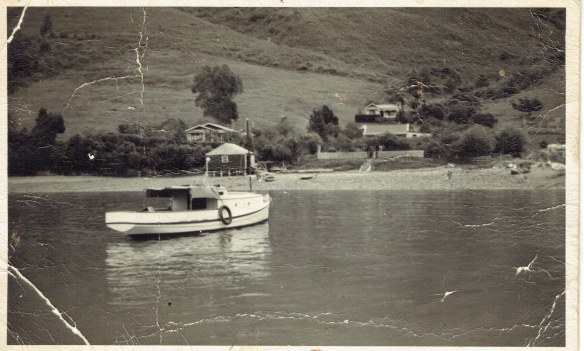
Wainui Bulwer 1940s 30 10 2015

1940’s – Bulwer, Pelorus Sound

Wainui 1955 Smiths Bay Clay Point 30 10 2015

1955 – Smiths Bay, Clay Point

WAINUI
photos & details from Brynn McCauley. edited by Alan H

Brynn’s grandfather owned the launch Wainui in the Marlboroough Sounds from the late 1930’s to 1950 & she was last seen in Wanganui in the late 1950’s.

Brynn is convinced his grandfather’s Wainui is the same Wainui that featured on ww on 16-07-2015 (link here  https://waitematawoodys.com/2015/07/16/mystery-launch-16-07-2015/  ) The hull shape and size are a near perfect match for this vessel. This Wainui is lucky to be owned by the Pollard Bros. & when it comes to custodians of classic wooden boats they do not come much better than Cameron & Andrew Pollard.
The Wainui was shortened by cutting off her stern and raised her gunnels by Brynn’s grandfather in the 1930’s so he could use her to fish in the Cook Strait and Outer Sounds. The photos above show her when he originally bought (dark cabin and long stern) her and then the year he sold her (white with high gunnels and cut off stern).

In the 1987 Onehunga photo of the Pollards Wainui we see her with the raised running boards added as she was bought after serving as a mail launch in the Sounds by Arthur McCauley as his fishing boat, and fished on the fishing grounds well out into the Cook Strait and around Durville. She was one of the McCauley Mosquito Fishing fleet described in the book on Nelson and Marlborough pioneering fishing families, and served the family for well over 30 years, fishing, hauling wool and sheep around the Sounds. Patrick McCauley settled in the Sounds in the late 1870’s mining for gold and then cutting the family farm out of the bush. He taught himself to build boats building a fleet of fishing boats initially all sail, then introduced the first petrol engine into the Sounds at the turn of the century in the Ark. He pioneered a design suited to fishing in and out of the Sounds, building them on the beach in Bulwer, Pelorus Sound. He drowned in 1913 by falling off her near Havelock. Arthur his eldest son initially fished from the Ark, on returning from WW1, then purchased the Wainui and fished in her along side the Ark, The I’m Alone and the Eastern Star till 1955 when he downsized to a smaller clinker named the Nunui which unbelievably he continued to fish from well out into the Cook Strait and around Durville. Brynn still has the tender dingy that the Wainui towed which allowed access for picking up the nets and landing ashore on the many hunting trips enjoyed from her around the Sounds.

Wainui has a very special place in Brynn’s family history and they would very much like to learn if this Wainui is the same vessel and be able to chat to the current owners. Which won’t be a problem – Brynn can be contacted on brynn.mccauley@xtra.co.nz.

ps when ww does these ‘hook-ups’ it makes all the work in the background so worth while – 🙂  Alan H

Input from Andrew Pollard
She sure looks like the same boat…Many alcohol fuelled stories with Wainui, one involving some an umbrella and some faulty navigation lights..
Anyhow, as mentioned before we bought her in 1997…as a semi afloat wreck, as I hopped on the floorboards floated into the cockpit to meet me…She was a mess, bitumen on the decks,decay everywhere, a stuffed 40hp Ford diesel and a long since departed snapper carcass soulessly eyeballing us from the bilge…
She was at Te Atatu boat club on poles right outside the clubhouse. They kept her there so they knew when she was about to sink, apparently one of her pastimes!
We purchased her off a dubious bloke named Ryan Cornelious. He purchased her of the guy that steamed her from New Plymouth to Onehunga (a Gary Swordc. Rumour has it they had to wait outside the Manukau bar for the weather to calm down and ran out of fags and booze and things got tense between the crew as a result.
Anyhow Sword took her to a K’road panel beaters yard and fitted the cabin she know has but back then it had huge black tinted windows.
Now we were told he purchased her from a couple of Maori brothers who had cray fished her out of New Plymouth and Waitara area and she was built in 1903…
I had heard whispers of a history in the Sounds…with wool bales…
She is two skin not three, and has 6 (3 each side) huge Pohutakawa knees a midships running from deck level to keel…
She steams like a witch with the Gardner…we don’t open it right up as she starts to suck the back deck down and…

Update – photos below ex Angus Rogers show her hauled out in April 2017 at Okahu Bay, Auckland

IMG_0126

IMG_0122

07-07-2017 Input from Brynn McCauley

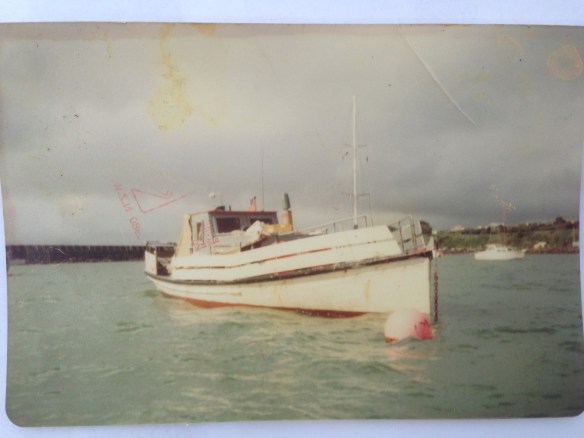
I was given the photos below in November 2016, when I stopped in at Waitara where the Wainui spent some time, by the son of Paul Blossom who owned her there. Its a photo of her in New Plymouth, you can see the breakwater to the left. Amazing when you see her in this photo, taken in the early 1980’s before Paul Blossom took her to Waitara. She looks pretty rough in the photo, incredible she survived.
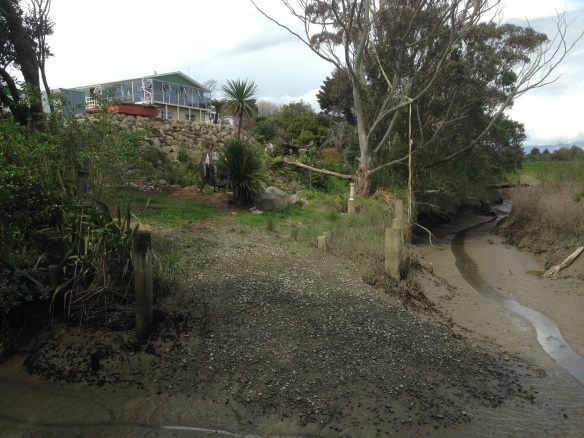
The colour photo shows where she used to be docked in this tidal stream beside the main river. Spent most of the time sitting in the mud.
IMG_1117_sRGB

IMG_1106


Woodys Trip Report

20160414_144821_resized

20160412_184945_resized

Woodys Trip Report

photos from Harold Kidd

If you have noticed that HDK has been missing in action from ww for a few weeks that is because he is to use that old fashioned term ‘On-leave’. But as you would expect, never far from the water.

I received the above photos from a visit to Beer in East Devon on the Jurassic coastline.

The yacht club sign (Beer Sailing Club) would need to be welded to the gate, as I would imagine its a sort after ‘souvenir’. The local fishing fleet look very fit for purpose i.e. salty looking. Crabs must be a feature on the local menu.

Now Harold’s a wee bit of a collector, read – understatement of the year 🙂 & even traveling can not keep his hand in his pocket –  just how he is going to get the 1/16 model of a Vosper 45 footer he bought home in one piece is beyond me. And I’m sure there will be more before the trip ends.

Read more about the yacht club here   http://www.beersailingclub.co.uk/index.html

Mystery Launch Quiz

Mystery Launch

Mystery Launch Quiz
Win a copy of Robert Brooke’s book – ‘Beautiful Boats’

Ok woodys the first woody that can supply the boat name, designer, builder & year of launch will win a copy of Robert’s just released book ‘ Beautiful Boats’. The first reply in the ww comments section with all 4 answers correct – wins.

Robert has been collecting classic yacht designs for over 50 years, amongst his collection is work from our most talented & recognized designers – Arch Logan, Chas Bailey, Charlie & Alex Collings, Colin Wild, Bert Woolacott, Bob Stewart, Des Townson, Alan Wright & Robert’s father – John Brooke.
From his collection Robert has chosen 50 & redrawn each design, tracing off the original drawings to present them in a similar format. To add to the wow factor, Robert used the drawing equipment & ships curves that were once used by either Arch Logan, Charlie & Alex Collings or his father.

The 105 page, A4 size book allocates 2 pages to each vessel with specs & photo/s on the left & the drawings – hull lines, profile, half breadths, sections, diagonals & sail plan on the right hand page (refer Rainbow drawing example below). Its a must have in all serious woodys library.

Robert has very generously donated 4 copies of the book to waitematawoodys so over the next few weeks I will be giving them away as prizes. In addition I also have a framed 380 x 300 rendered copy of one of the Beautiful Boats. I have not decided yet how this will be ‘won’, details soon.

There are thousands of ww followers out there so do not get your hopes up on winning a copy 🙂 I would suggest you visit Boat Books at 22 Westhaven Drive, Westhaven, Auckland & grab a copy for yourself, cost is $60. For out of towners or those who refer the web – copies are available on line at  https://www.boatbooks.co.nz/
Its a very limited print run & Boat Books are the sole outlet. Boat Books also have framed copies of the prints for sale – David Glen was one of the first to race in & buy a print of his Rainbow.

Cover, Tawera

Rainbow

Mystery Launches & Location

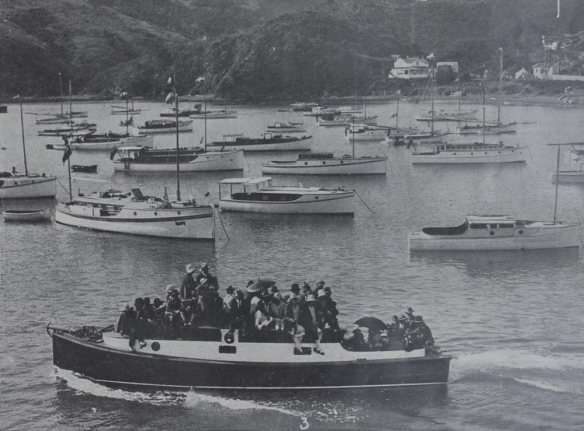
1927 guess names and place

Mystery Launches & Location
photo ex Nathan Herbert

The above photo is dated 1927 & show an amazing collection of launches. The challenge today is what’s the location, the reason for the gathering & how many can we name?
On my estimate I can count 38 people on the ‘dark’ launch in the foreground, the Harbour Master compliance nazi’s would wet themselves these days if they saw that, & no sign of any life-rails 🙂
This launch is sporting the #6 on her & the passengers have a very high % of females on board which makes the occasion very interesting, I look forward to the replies.

San Cristobal (Pagan)

San Critobal

SAN CRISTOBAL (Pagan)
photos from Peter Croft, Alan Good & trademe

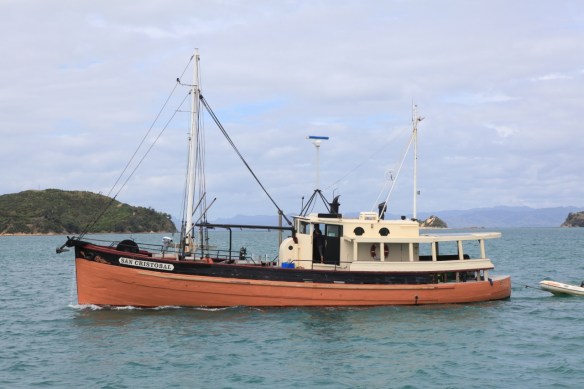
Over the last few summers I have seen the San Cristobal anchored up around the gulf, she appears to be a live aboard at Matiatia on Waiheke Island & is regularly seen on the weekends in Man 0 War Bay. I understand that she is a 1943 60ft converted Scottish drift trawler & have heard that $100k was spent on reconditioning the 8 cyl. Gardner………
San Cristobal is currently for sale on trademe & the following details are ex there – she was built by the British Admiralty in Lowestoft in 1943. Built to take saboteurs and supplies to Norway. The German High Command had instructed the German submarines not to torpedo fishing boats. Bronze fastenings below the water line as not to set off the magnetic mines. After the War she sailed to NZ and was purchased by Sanfords. Name changed from Pagan to San Cristobal. Commercial fishing around NZ. Designed off the Scottish Drifter developed for the herring fleet in the North Sea. Built of larch on oak and measures – length 20m, width 5m with a 2m approx. draft.

She is a perfect example of the the magic powers of paint, from memory she was classic work boat green & looked like she had just escaped from the fishing fleet, then bang she is sporting a salmon / terra-cotta & cream colour scheme & looks a different vessel. It would have been a big call looking into the paint tin but it works a treat (in my eyes).

Any of the woodys able to supply more info on her past, must be a few woodys that have worked on or alongside her.

Update 19-12-2016 ex Ken Ricketts
She was sold by the insurance company 2 weeks ago to a Andre Botha, after she had come to grief in the Warkworth River sometime earlier this year.

He put her in the water last Friday afternoon & lifted her out again about 3 hours later, about 6 30pm, with massive quantities of water on the wrong side of the hull, which was all falling out of her, at high speed after lifting.

As shown in the photos below she is has a substantial recaulking exercise underway at the moment & the new owner hopes to have her back in the water in about a week, & will initially keep her at Gulf Harbour for a few days & will then move her to town to a mooring site in the central city area, as yet unconfirmed.

The owner told Ken he has bought her with a view to restoring her & ultimately he is considering living aboard in due course. The purchase of San Cristobal is his first ever venture in to the world of boating. He also mentioned she is built of oak & she still as the 8L3 Gardner diesel engine, which he says, has only done around 2500 hours.


Palm Beach Boat Show 2016

IMG_5962

PALM BEACH BOAT SHOW 2016
photos & comments from James Dreyer

Today’s ww post is a trip report from James Dreyer (Laughing Lady) James has kept the focus on wooden or partially wooden craft, with a little American excess and muscle thrown in for good measure. Enjoy, its a great read & interesting to see whats happening in the USA. Remember click on any photo to enlarge
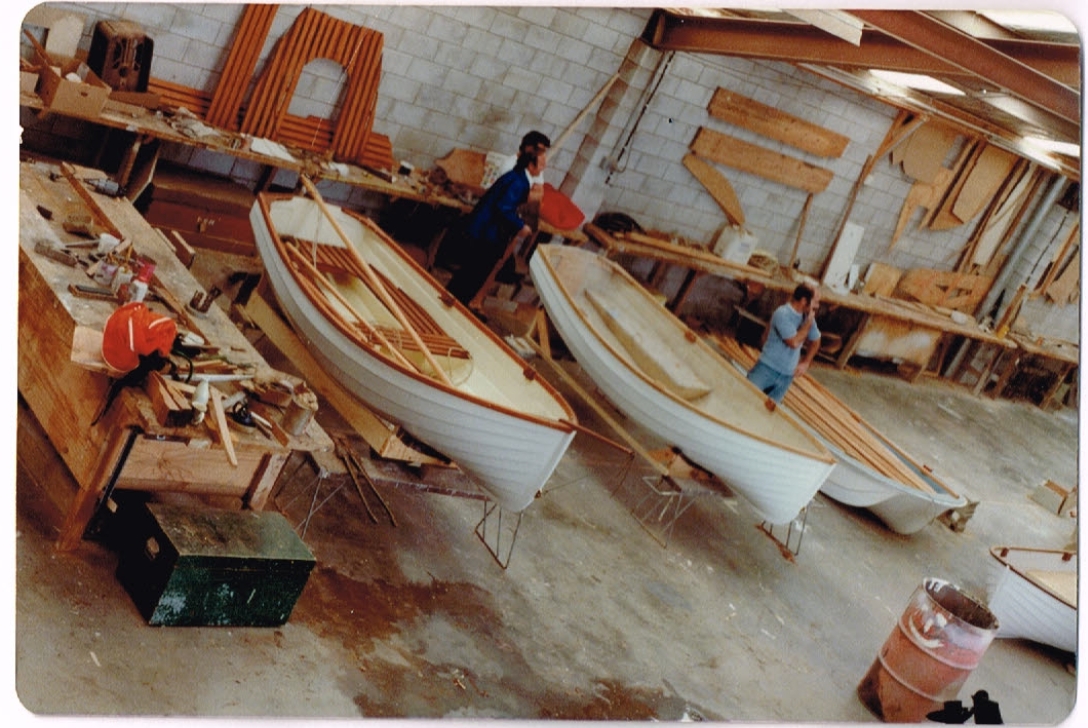
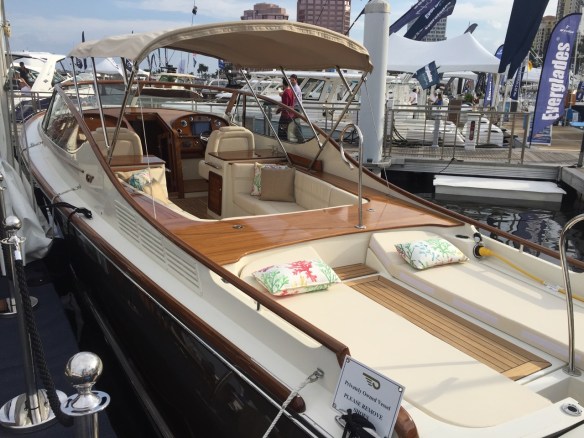
The latest offering from Hacker craft.  A modern take on the classic triple cockpit runabout. I did get the feeling that the boat is a little let down by stainless off the shelf hardware.  If your forking out over $300K for a speedboat, you wouldn’t expect the same handrails as a Searay.

Vicem yachts of Turkey builds all mahogany, cold molded up to 140’  Beautiful craftsmanship with a long history.

IMG_0645

Hinckley Yachts is famous for their jet driven Picnic boat, but this is their latest model, a 36’ open.  Built in glass but with some really lovely styling cues from downeast.

IMG_0647

This little Grand Craft spent most of her time doing cocktail cruises of the Intracoastal waterway between Palm Beach (Holiday spot of the wealthy and retired, including DL Gardiner who owned Laughing Lady) and West Palm (home of the normal folk.)

Trumpy yachts Flying Lady.  Lovely solid lines on her wheelhouse.

IMG_0654

My favorite boat of the show, a modern commuter and tribute to Aphrodite.  Vendetta was built for Billy Joel out of a high tech blend of carbon and kevlar and runs twin 1300 MANs with Arneson drives in tunnels.  She will do 50 knots and doesn’t have a stateroom, just a lovely big salon area with kitchen and seating for many.  Totally impractical but oh so cool.  I was very lucky be invited onboard and shown around once the guy heard I had a commuter yacht.  He even knew laughing lady from his original design research.  She’s for sale at $1.3 million if anyone is looking to tour the East coast in style.

IMG_0655

IMG_0656

Honey Fitz, the 1931 Defoe built ex-presidential yacht named after John F. Fitzgerald and once chariot for Truman, Eisenhower, JFK, Johnson and Nixon.

A 1960s era Bertram offshore race boat.  Sporting close to 800hp and Ray Hunts game changing deep vee hull design, she’s a thing of beauty.  Almost like a vintage Nascar.

IMG_0633

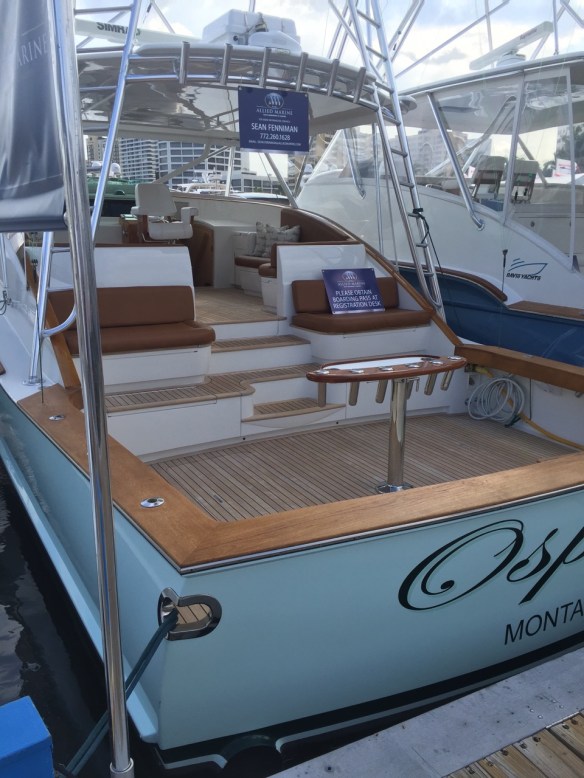
Maybe I am biased, but the whole express cruiser (open) sport fish really does it for me.  Totally impractical in anything but fine weather, but oh so cool.  Registered to Montauk at the tip of Long Island – Laughing Ladys first home port and serious Bluefin Tuna grounds.

IMG_0637

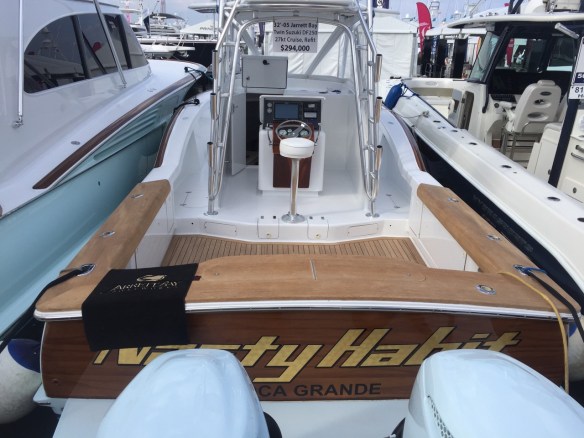
Jarrett Bay build some of the finest cold molded SFs on the market, this being about as small as they come.

IMG_0639

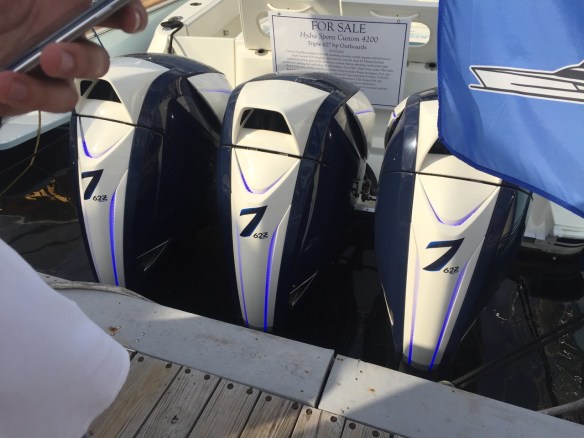
Seven Marine are the newest outboard on the American Market and are just ludicrous.  627hp (!!!) each, from a Chevrolet 6.2L supercharged V8.  At 500kg each, you want to have a pretty robust transom to hang three of these off!

IMG_0640

76’ Sportfish provides a pretty big aft cockpit.  Again cold molded.

IMG_0641

Rybovich is the name most synonymous with classic sport fish designs and this modern express model has a lot of classic styling cues from original Rybo’s like Release and Bolero

A few for the yachties 🙂

Wild Horses – the 70 odd foot W-class Spirit of Tradition sloop designed by Donald Tofias.

IMG_5964

I’m not sure if this is Herreshoffs Bounty or Ticonderoga, but she has incredible and unmistakable lines.  Pretty cool little yard tugboat on the left too.  This helped us park the large yacht I work on.

IMG_0741

Everything is big in America – to give you an idea of the scale, this has 3 x 350hp Outboards and is 41’ and note the tow rig.

Some nice wheels on display:

Sometimes you really have to wonder 😦

IMG_0648

And a funny to finish – Some people don’t hide it.  Apparently he owns a chain of Laundromats.

IMG_0644

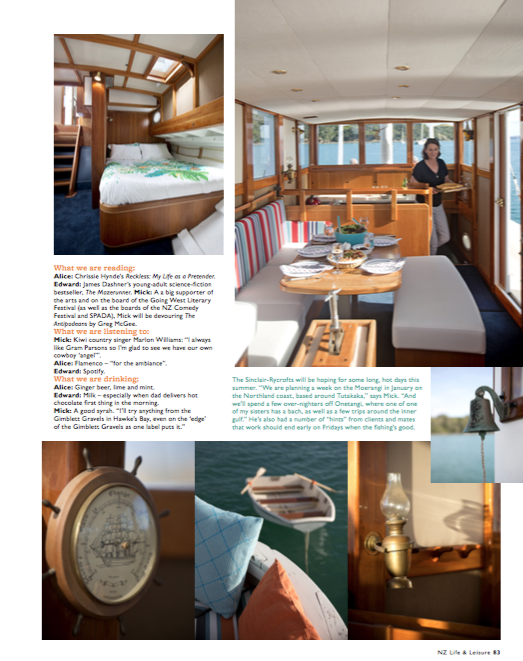
Moerangi – 4sale

Moerangi 1

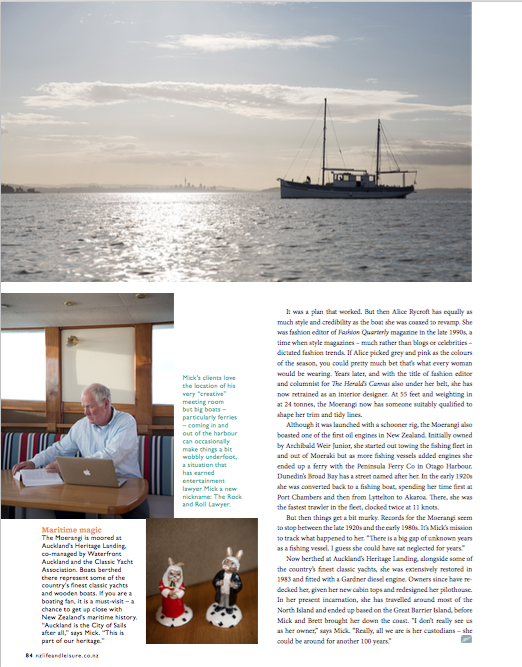
MOERANGI
photos & story from NZ Life & Leisure magazine

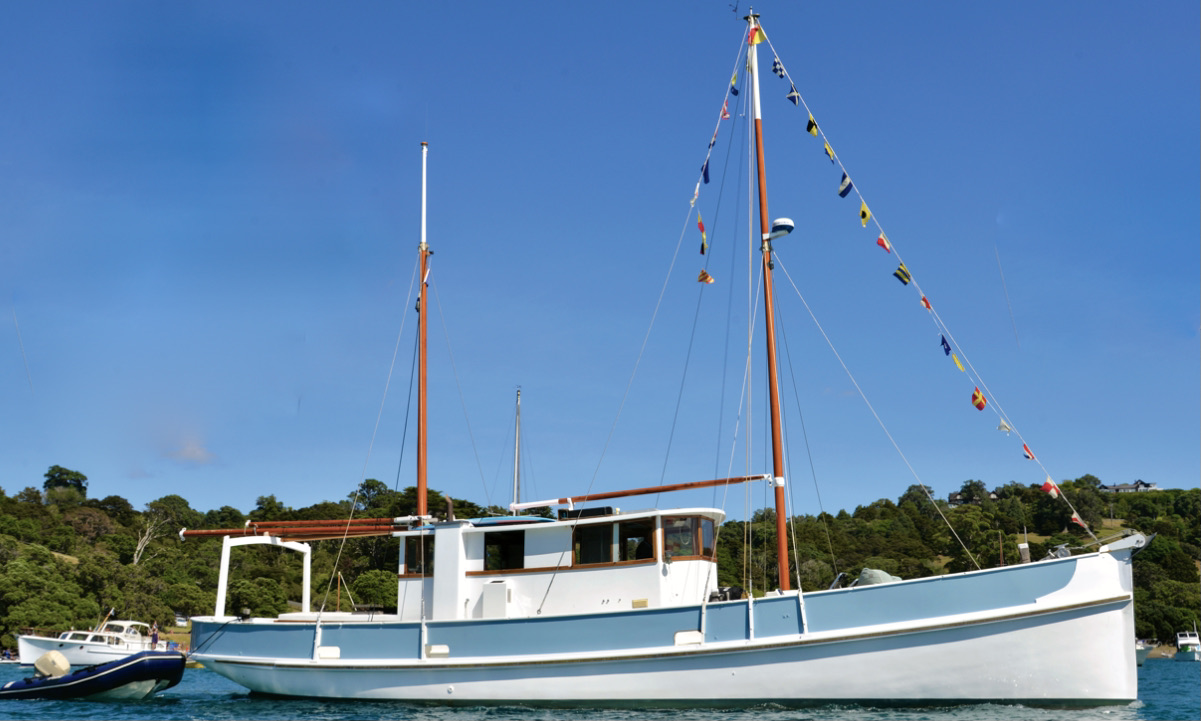
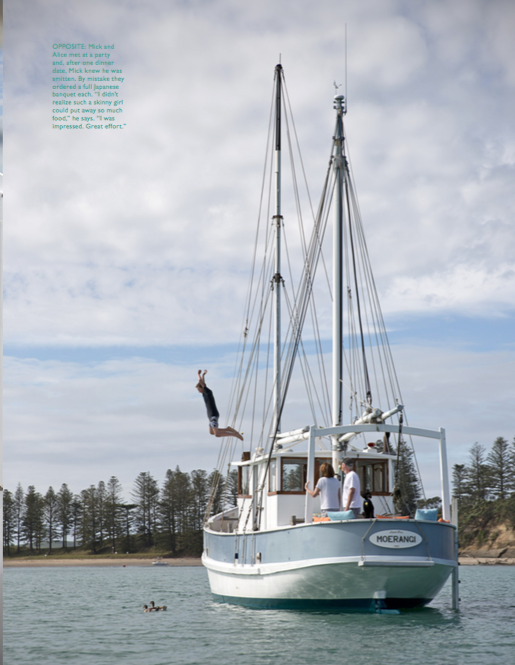
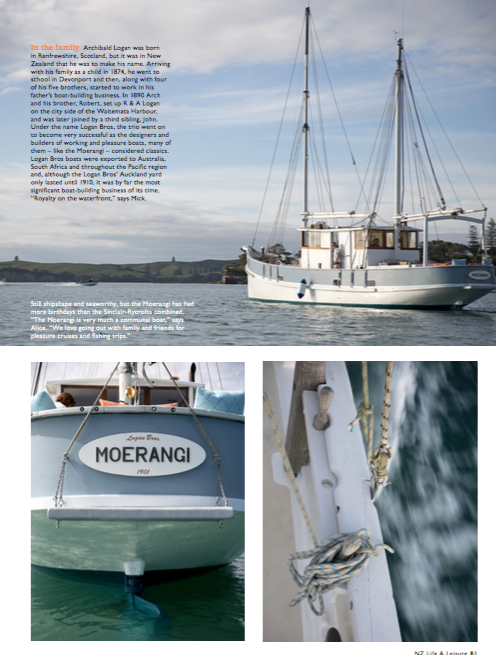
Today we feature the Logan Bros ex work boat Moerangi. When launched in 1901 she was schooner rigged & also had one of the first oil engines in New Zealand.
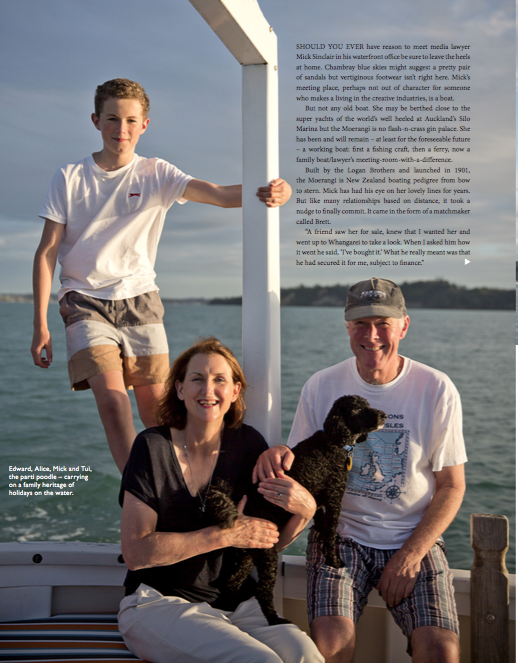
Built for Archibald Weir Jnr. she started her working life towing the commercial fishing fleet in & out of Moeraki, as the fleet started installing engines her role became redundant & she became a passenger ferry with the Peninsular Ferry co. in Otago. Around 1920 she was converted back to a fishing boat & moved around several ports – Port Chalmers > Lyttlelton > Akaroa. Her past is a lille cloudy after 1920 until the early 1980’s when she was converted to a pleasure craft. Her owners Alice & Mick Sinclair would love to know more about the ‘missing’ years.
ww has a great relationship with the crew at NZ Life & Leisure magazine, the #1 selling magazine in its field & we thank them for sharing this story with ww readers. You can find out more about the magazine here    http://nzlifeandleisure.co.nz/

More details & photos on Moerangi’s past here https://waitematawoodys.com/2014/12/15/moerangi/


Moerangi 2

Moerangi 3

Moerangi 4

Moerangi 5

Moerangi 6

Moerangi 7

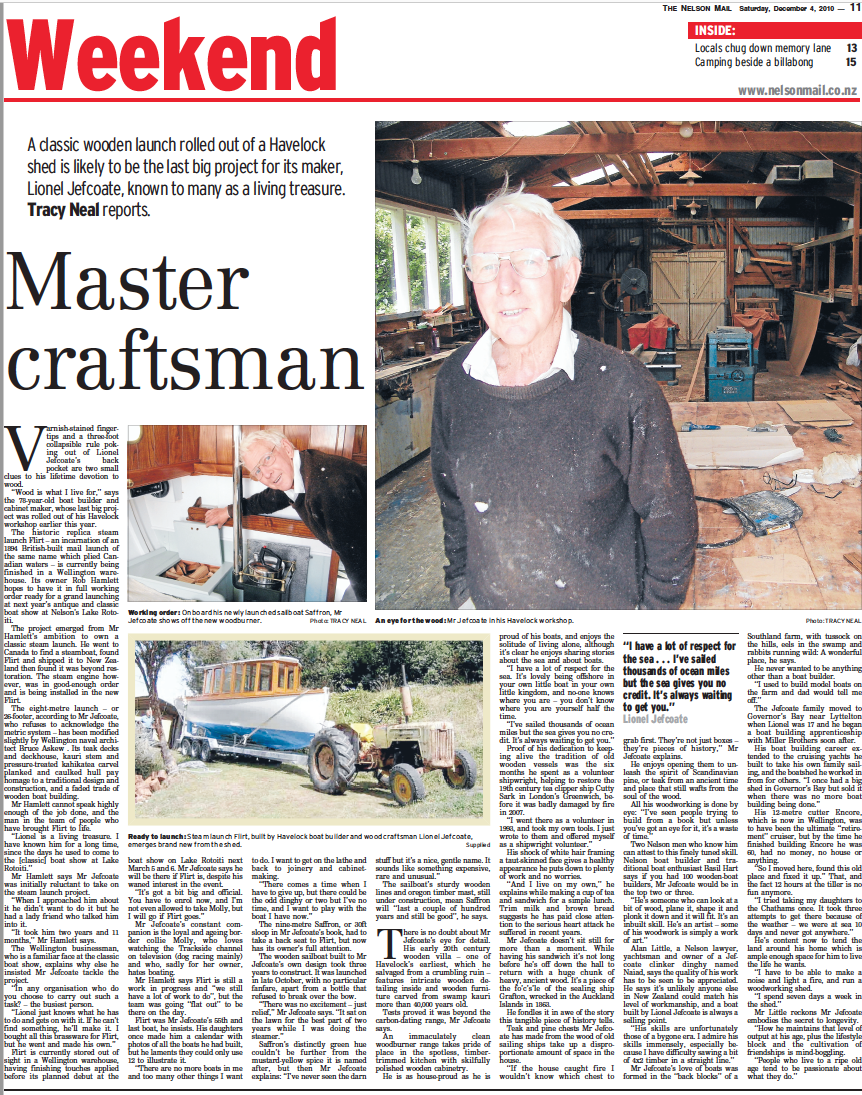
Lionel Jefcoat – Boatbuilder & Wood Craftsman

The Flirt

Flirt

Lionel Jefcoat – Boatbuilder & Wood Craftsman

details ex Nelson Mail, Radio NZ & Gary Drummond

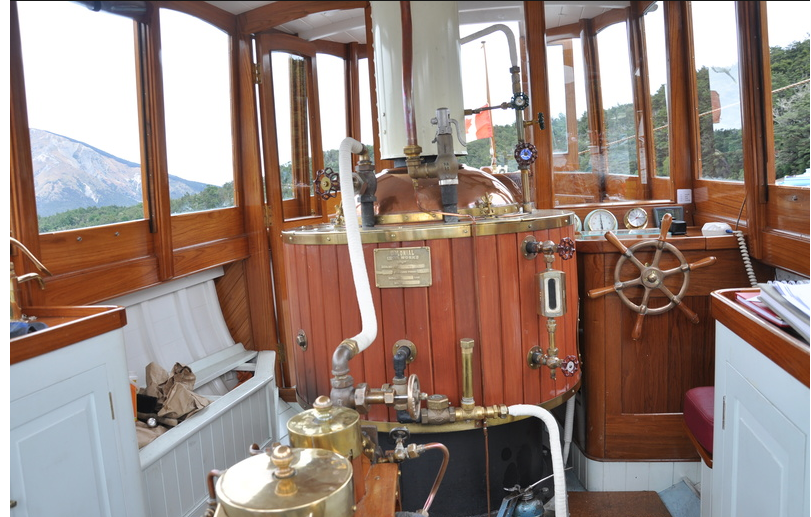
Lionel Jefcoat works out of a ‘shed’ in Havelock, where he built the historic replica steam launch Flirt – an incarnation of an 1894 British-built mail launch of the same name which plied Canadian waters. Flint is a regular attendee at the antique and classic boat show at Nelson’s Lake Rotoiti.

The project emerged from Flint’s owner Rob Hamlett’s ambition to own a classic steam launch. He went to Canada to find a steamboat, found Flirt and shipped it to New Zealand then found it was beyond restoration. The steam engine however, was in good-enough order and was installed in the new Flirt.

The 26′ launch, according to Lionel, has been modified slightly by Wellington naval architect Bruce Askew. Its teak decks and deckhouse, kauri stem and pressure-treated kahikatea carvel planked and caulked hull pay homage to a traditional design and construction, and a faded trade of wooden boat building.

Lionel’s own boat is the 30′ wooden sloop Saffron, built to his own design, taking three years to construct. It was launched in late 2010.

Lionel’s love of boats was formed in the “back blocks” of a Southland farm, he never wanted to be anything other than a boat builder. The Jefcoate family moved to Governor’s Bay near Lyttelton when Lionel was 17 and he began a boat building apprenticeship with Miller Brothers soon after.

His boat building career extended to the cruising yachts he built to take his own family sailing, and the boat shed he worked in from for others. “I once had a big shed in Governor’s Bay but sold it when there was no more boat building being done.” His 12-metre cutter Encore, which is now in Wellington, was to have been the ultimate “retirement” cruiser, but by the time he finished building Encore he was 60, had no money, no house so Lionel moved to the 100+ year old villa & workshop in Havelock that today is home to this wooden craftsman.

Below is a link to a photo gallery of images from Radio NZ ‘Nine to Noon’ that showcase Lionel – in his early days, family life & some of many craft he built. Enjoy

http://www.radionz.co.nz/national/programmes/ninetonoon/galleries/lionel-jefcoat

14-05-2016 Input from Ian Miller

A while back Rosalind discovered Lionel on her family tree (albeit way out at the end of a remote branch) and as a result of that we called on him earlier this year when we were in the Marlborough Sounds. He was not particularly interested in discovering another relative (sentiments similar to my own) but when he learned of our interest in old wooden boats his whole demeanour changed and we spent a most enjoyable three hours with him.

The workmanship in his sea chests and turned bowls was out of this world and the experience of looking at his stuff and talking to him about it, as well as his boats, was something I will never forget.

His book “57 Boats Later” is a fascinating chronicle of his life as a wooden boat builder  and he was persuaded to sell me his second to last copy, although I understand a third reprint is on its way. (I must get a copy. AH)

Lionel Jefcoate RIP

Sadly, I have to advise that Lionel passed away on 17th July 2018. His funeral is scheduled for – Springlands Chapel, Cloudy Bay Funeral Home, 1:30pm – Saturday 28th July.

I was sent the photos below & copy by Russell Ward ex Rob Hamlett.

Screen Shot 2018-07-23 at 11.53.41 am

Screen Shot 2018-07-23 at 12.05.10 pm.png

Rautangi

Rautangi on patrol - original

image002

RAUTANGI
photos & details ex Don Barry

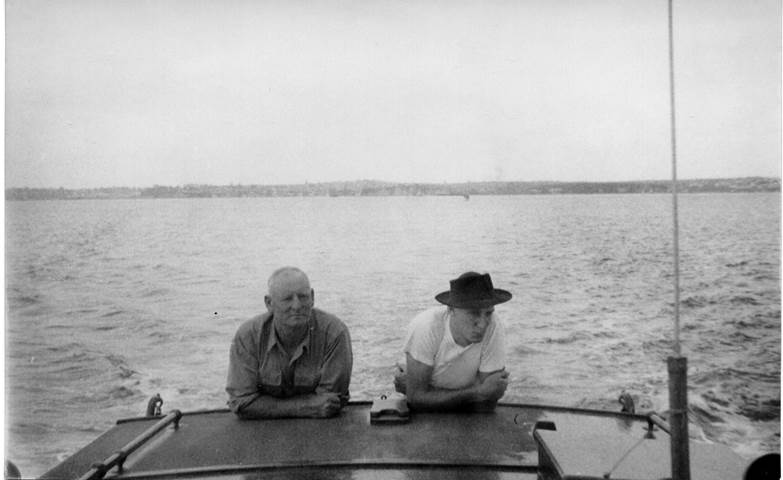
The top photo of Rautangi running at full chat shows Don’s uncle Tim on the cabin top, to quote Don “mad as a cut snake – pipe in his mouth holding fast against the wind… OHS would have a field day” Chances are she would have been petrol powered……. She is flying a PATROL burgee, anyone able to suggest the origin of the burgee?
I’ll sure HDK will enjoy this photo, matches his attitude to helming launches 🙂

The 2nd photo is again of uncle Tim, who was a regular on Rautangi.  With him is here  is Don’s uncle Doug.

Rautangi was built by Collings & Bell& launched on the 18th May  for Mr. L. Stericker. She measures 37′ x 9’6″ x 2’8″ & is currently midway thru a major refit happening at Katikati in the Bay of Plenty but due to changing personal circumstances is listed for sale on trademe.

More photos showing her past here https://waitematawoodys.com/2016/02/23/rautangi/

Below is a copy the boats official song.

Rautangi - front page [#2] 2

Rautangi - inner page [#2]

Harold Kidd Input

Love it!
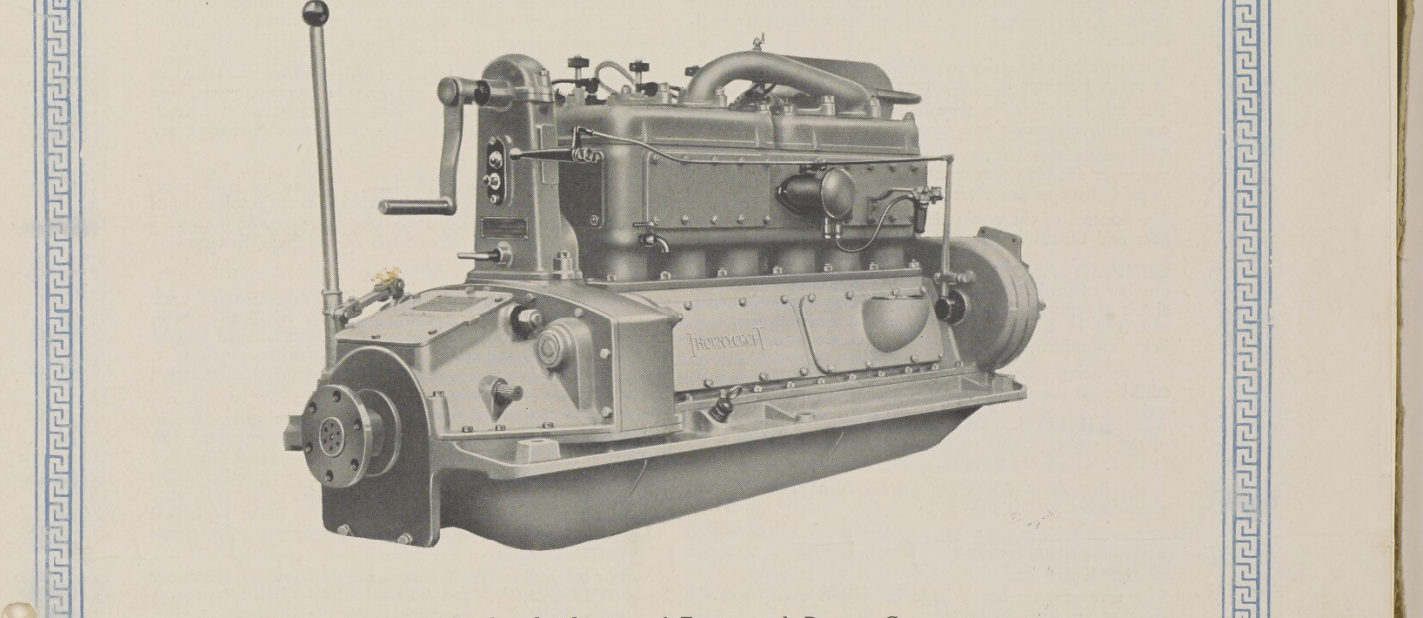
Les Stericker was a well-known petrol-head with his racing hydroplanes all called HUM BUG. I think there were 5 of them, the last a “Blimp” type built by Collings & Bell in November 1929, 12ft 6in with a 32hp Elto 4 cylinder outboard, the top go-fast gear of the time. He was a precision engineer in Newmarket. No doubt the 6 cylinder side valve petrol Thornycroft RD6 engine (photo below) in RAUTANGI was well breathed upon.
As for the “Patrol” flag, Lees and RAUTANGI did a lot of NZPBA and RNZYS mark boat etc work.

The RD 6 Thornycroft engine when launched

Thornycroft RD6

Okura Gigs – Sailing Sunday

Okura Gig 49 (9)

Historic photo 01

Historic photo 02

OKURA GIGS
photos & details ex Darren Arthur

We did a post on ww a little while ago about ‘Seabird’ dinghies & this generated chat & subsequent comments about the ‘Okura Gig’. This sparked Darren to contact his wife’s uncle – Dennis Hart, who with his late brother Ray ran Hart Brothers Marine and were behind the Okura Gigs. Darren encouraged Dennis to document their history.
Darren asked me that given that the boats we not wood, was it a potential ww story – after a quick peek at the photos – I replied that there was more than enough wood & bronze to get the ww tick 😉

I have published Dennis’s story below word for word, its a great tale & combined with the above collection of older & recent photos is a cracker read. Enjoy 🙂

THE OKURA GIG:  A Brief History By Dennis Hart

Background

During the late 1800’s the area at Silverdale now known as Millwater included the Grut (pronounced Grew) farm which had access to the Orewa Estuary. Mr Grut had a 10 foot kauri clinker rowing boat, understood to have been built by Bailey & Lowe at Sulphur Point, Northcote. The boat was mostly used for net fishing. Charles St.Croix Grut and Alec Grut later inherited the farm and continued farming until the 1960’s ?

Dennis believes Croix and his wife Merle had the 38ft Wollacott design yacht Iorana, built by Don Wood at his yard in the Orewa Estuary. However the memory can play tricks over time & Dennis would be interested to learn if he is correct in this. The couple then in their late 60’s were the first Weiti Yacht Club members to circumnavigate the globe.

Croix brought the boat to my brother Ray and I at Hart Bros Marine  in the mid to late 70’s for a full restoration to its original configuration as the 70 plus years had taken their toll. We duly completed the ‘no expenses spared’  job resulting in a very pretty and sound rowing boat. We negotiated a deal whereby we could use the boat as a plug and take a mould from it in order to produce the boat in fibreglass , We made no charge for the restoration returning it to Croix and Alex with a fibreglass replica rowing boat each for their general use. The original boat was retired.

I tried to locate the original boat and was told by Croix that he had entrusted it to a gentleman who had promised to donate it to the Maritime Museum. On enquiring there I was told that no such boat had been received. Croix Passed away in November 2012 aged 94.

Building the OG

Because of the tumblehome created by the very pretty wineglass transom the mould had to be in two parts. The original boat had no centrecase so a slot was cut in the keel and a case was moulded in -situ at the same time as fitting the buoyancy thwarts and stern benches . A galvanised steel swinging plate was hinged at the top forward point, raised and lowered  by a stainless wire. After release from the mould Kwila slats were fitted to the thwarts, the inner and outer gun’les were copper riveted together, the thwart  and lodging knees fixed in place followed by the remainder of the fit-out . Two rowing positions were provided, the forw’d pair provided fitting for the side stays.

The rig

The sails were kept as traditional as possible by using ‘tanbark’ coloured sail cloth and braided lacings. The oregon spars were made so that they would fit inside the boat, when not in use. This worked well as a handy sized main was set with the peak well above the mast top. This, coupled, with a boom that overhung the transom and a jib tacked to a short sprit,  giving plenty of sail.  Many of the fittings  that controlled the running rigging (cleats and blocks, were made by hand or modified from Harken traditional range. All other fittings were sourced from the depths of Fosters basement or were bespoke by us of copper, brass or bronze. The gaff jaws were covered in leather. Rope sheets were a light tan poly. The gaff halyard was rove to a bridle to make setting the main more simple.

Development

Like the old harbour ferries the OG has a balanced waterline with fine ends so does not drag water at the transom as the boats bottom lifts the transom clear of the water at the stem of the wineglass.  Fit-out of these boats was kept to an affordable minimum at the time.  As production continued we made some minor modifications and improvements, i.e. separate peak and throat halyards to give better shape control to the main, reefing points and tackle for the main, a change from cane rings to lacing on the luff.  The rudder is if fixed shape with a swivelling tiller, its bottom edge does not extend below the keel line which allows safe beaching.

The sail plan was easy enough to balance on paper.  In practice it showed a slight weather-helm  in fresh airs which was easily adjusted by swinging the centreplate back,  flattening or easing the sails.

Production

The Okura Gig became a ’boutique’ activity.  As a result of the boat tax being imposed in 1979 we reduced the size and scope of our business and closed our fibreglass manufacturing operations and moved our boat shop into the mould shop. We had built about 55 OG’s between 1978 and 1981.  The moulds were taken by Dinghy Developments who resumed production giving the OG a Seabird name.  I believe that they took their version to USA west coast boat shows where they were warmly received. I have no idea how many more were built.

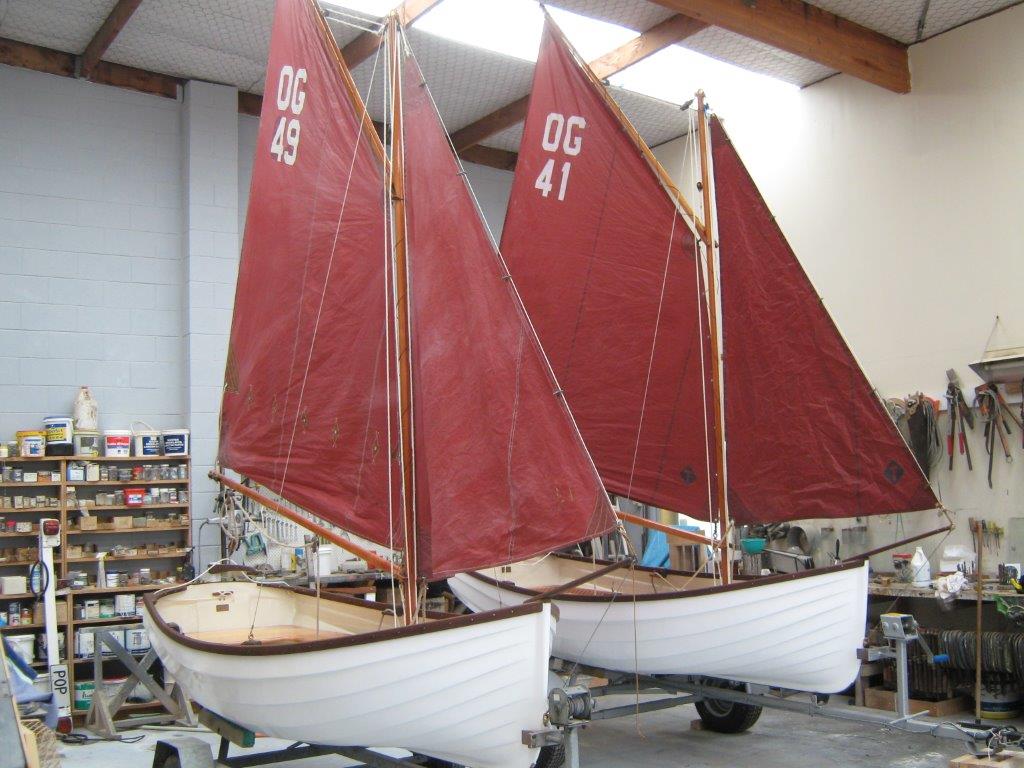
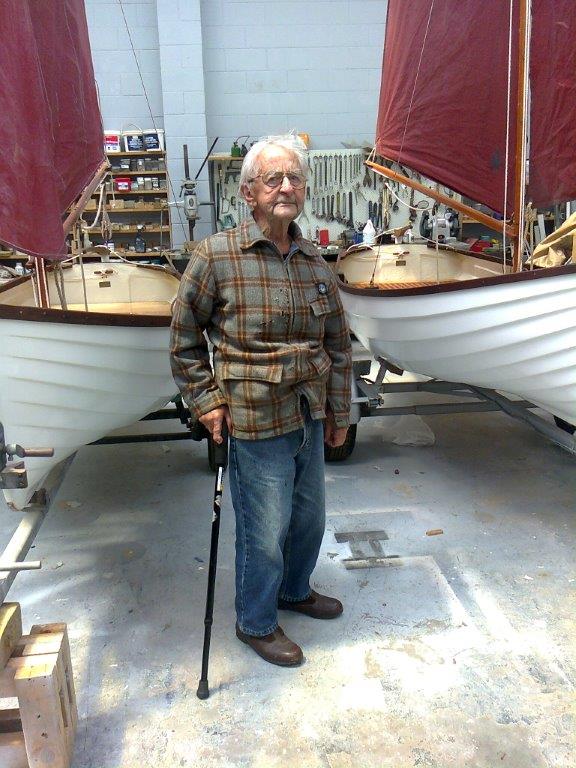
I have  two OG’s,  No. 41 and No 49.  One had spent about 35 years in a wet boatshed at Lake Rotoiti,  it required a complete grind off of the osmosis damage before refitting.  The other is our long time family boat. I have refitted them both to a much higher standard than the originals. They are currently in my shed at Whangaparaoa.  I still sail OG49 occasionally and still find it enjoyable. It really romps sailing just off the wind with the peak halyard eased . OG 41 is too pretty to put in the water. It would make a fine centre piece in a large lounge.

Croix Grut  got to see OG’s 41 & 49 restored and fully rigged before he passed away. Photo below.

Photo0006

Foot note:

I was fortunate to have served my apprenticeship at the Devonport Naval Dockyard commencing in 1958.  Marty Martinengo was in the same intake as I, as was Denis Cantell, in 1958. We have enjoyed  a very solid friendship ever since, as we do with many of the apprentices who were indentured before or since us.   The Dockyard provided a very traditional training in all aspects of boatbuilding and shipwrighting  . It was a very competitive environment with up to 14 apprentices at any one time. My brother Ray Served his time at Lidgard’s and Lane’s before moving to Max Carter. He  moved to Whangaparaoa about 1968 where he started boatbuilding.  I joined him  in 1972.

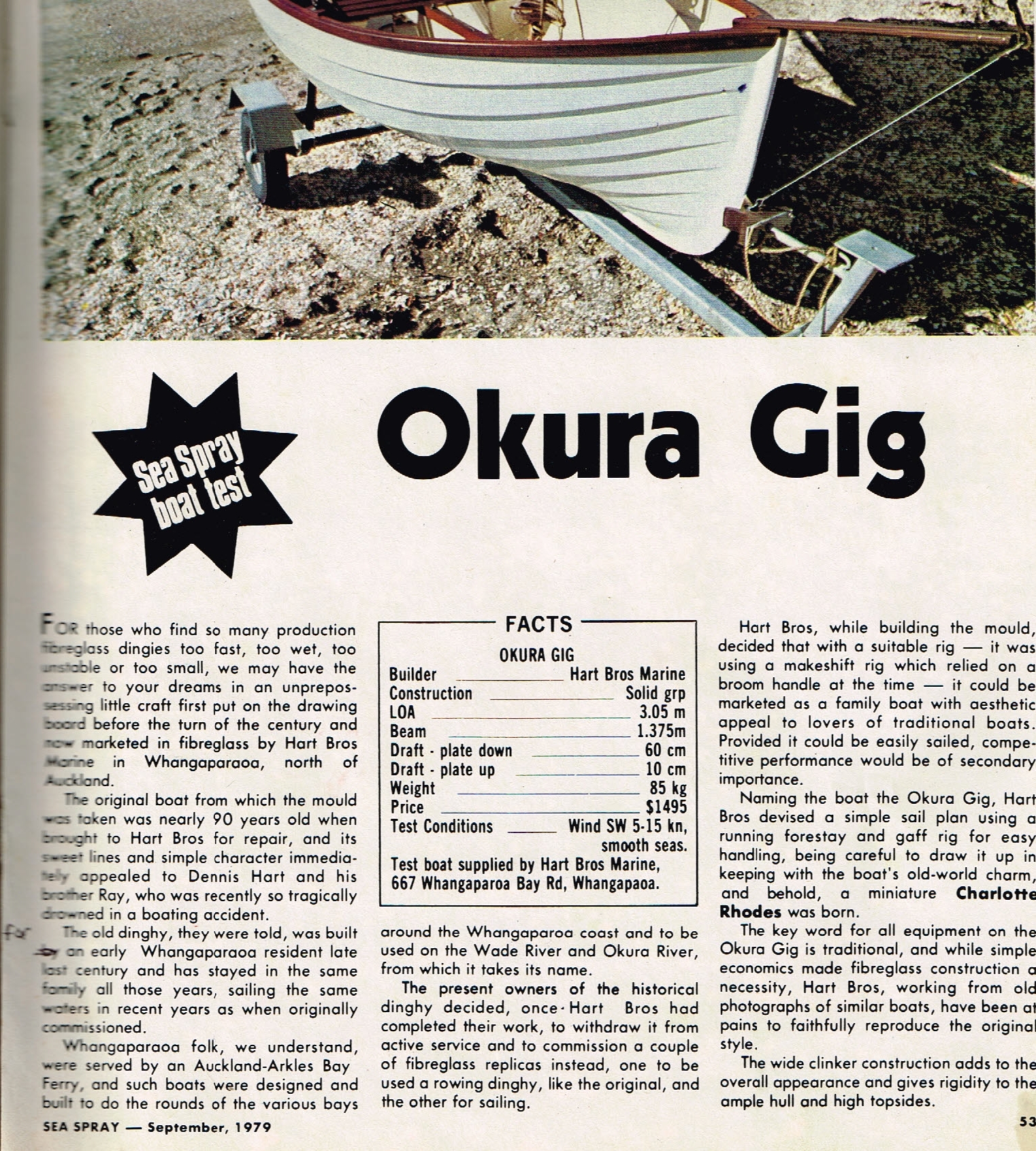
Below is an article reproduced from Sea Spray magazine Sept 1979

Sea Spray Article Sept '79 p1.pdf

Sea Spray Article Sept '79 p2.pdf