Koputai – Sailing Sunday

KOPUTAI  Sailing Sunday

Todays post is one of the ones I love, lots of details & lots of both old & current photos.

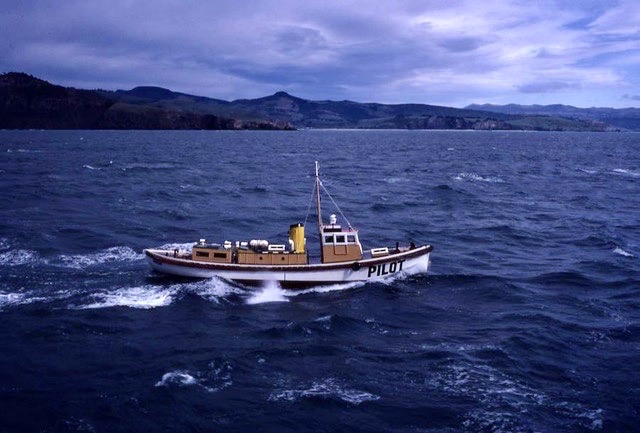
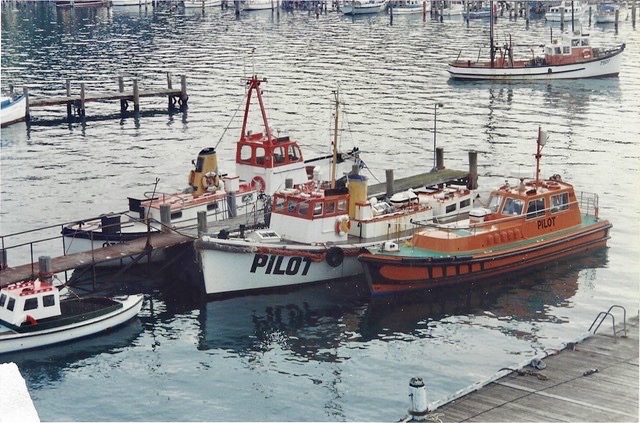
Koputai is a heavily built pilot stye hull weighing almost 40ton. She was built by Miller and Tunnage of Port Chalmers and launched in 1939. She served as a pilot vessel until the early 1990s when she returned to Miller and Tunnage to be converted to a pleasure boat.  Since she has circumnavigated NZ twice including  Chatham Islands, Great Barrier Island, Stuart Island and the Three Kings.

In 2013 her owner, Louey Sandlant, circumnavigated the South Island after fitting rigging and sails to the boat. They spent April-June in Fiordland with friends coming and going. The boat was perfectly suited to this life with spacious living quarters, a warm wheel house, plenty of food storage and fridge freezer space that easily accommodated 7-9 people long term.
On this trip she averaged 1L/NM at 6-7kts and didn’t get to make much use of the full set of sails. On passages Koputai will motor at 6.5-7kts with some sail for steadying. If there is a good blow she will sail 6-9kts with the engine backed off to idle or just over, this brings the fuel consumption right down & can halve the fuel consumption, making long passages very affordable cruising.

Despite the GM Detroits reputation for noise and thirst, Louey reports they have found it to be a very pleasant piece of machinery to live with. It has been very well set up with a 4.5:1 Allison box turning the large propeller and a sound insulated dry muffler set up with a wet exit making it quiet and smooth. Like most Detroits she runs like a clock.

In the sailing department Koputai has a traditional Bermudan style cutter ketch rig. Louey generally always has the mizzen hoisted for stability and with the stay-sail forward this configuration is balanced and happy up to around 35+kts., in lighter airs the full main and code zero style jenoa as well goes nicely up to around 24kts, she will get along at 8 kts off the wind with engine just ticking over. She feels solid pushing into heavy weather and will safely hold her own against most NZ coastal conditions and her owner wouldn’t hesitate to take her offshore. Koputai has been in survey.

Koputai has had a lot of time & money sent on her – in 2012 and 2013 she under went extensive restoration work, including:

-Complete deck re-corking and refinishing
-Complete new Kauri covering board
-Cabins stripped and refinished and windows refitted
-New stainless steel staunch-ens
-All repairs have been done with top quality treated kauri
-In 2013 she has also had a new sailing rig fitted with Canadian Oregon masts, standing rigging and all new sails made by classics sail maker Bud Nalder.

Everything that has been done to her by the current owners has been done with the highest quality products available for traditional boat building and completed by an experience boat builder to a high standard of durability. A useable finish is achieved while maintaining her traditional style.
The rig was designed to suit the era and fit with the original lines to make a well rounded, practical motor sailor for extensive cruising and expedition.

Recent work June 2014 includes; Full repaint above and below the water, new shaft bearing, new zincs, exhaust through hull fitting removed and inspected and refitted, prop removed checked and cleaned, shaft bearing replaced, shaft inspected and cleaned

Now the sad / good news – Loueys sad news is that Koputai is now for sale – the good news is the some lucky boaty is going to get to own one of the best restored, set up motor-saliers around. I don’t normally put prices on ww but I believe this to be such great value – this time I have – NZD$195,000.

If you wanted to a have a South Island experience for a while, there is a mooring in Nelson that is available to rent or purchase by negotiation and she will be delivered anywhere in New Zealand. I have to say that she would also make a great live aboard.

Her owners are currently cruising north over the next month via Great Barrier so if any ww followers are interested – contact Louey on 0274948028

Some Specs:

Leingth 17.1m  –  Draft 1.95m  –  Beam 4.7m

-Engine;  GM Detroit 671 New 2008 4090hrs  – Dry muffler wet exit. 180-200hp

-Running gear; Allison gearbox, 3 1/2″ bronze shaft, 53″ bronze propeller, solid bronze rudder and shaft with hydrolic steering (new main shaft bearing 2014)

-Genset; Newly reconditioned 2.5kva Mase (single cylinder yanmar)
-Fuel;     1700L  –  Water;   2000L

-Power; New batteries all round feb 2013  –  2x290ah AGM deep cycles. 2xNS220 start batteries

-Anchoring;  Nilson maxwell 3500 winch (new 1000w motor 2012.),  13mm galv short link chain (New chain 2012.), 80lb  manson plow

-Refrigeration; Large 200l freezer/chiller with engine driven compressor(new compressor and switches 2013) Dometic 3way automatic fridge freezer (new 2011)

-Sails; Main, Mizzen, Staysail and Genoa (new 2013)

-3m inflatable dingy with yamaha 8hp  –  Or a 4.1m inflatable thundercat with a 50hp yamaha with cradle

-lifting gear with elect capstain for loading tenders up 450kg also very handy for lifting anchors and gear on board.


Update 27-08-2020 Photo below supplied by David Balderston, as per his 2015 comments

Jack Brooke Cruise Collection #20 – Xmas 1967/68 Cruise On Kiariki & Defiant

Jack Brooke Cruise Collection #20 – Xmas 1967/68 Cruise On Kiariki & Defiant

Another Jack Brooke drawing, published on ww thanks to son Robert for making them available to ww followers. Jack produced a hand drawing on each cruise. Today’s post is the 20th featured – this one shows the xmas 1967/68 cruise aboard Kiariki & Defiant. A lot water under the keel on this trip – Kawau Island, Bay of Islands, Whangaroa & Great Barrier Island. It appears there was a little fire incident. Crew list below – you’ll note there was a mutiny* post Kawau 🙂

Crew On board Kiariki : John Brooke, Elsie Brooke, Howard Wallace, Monty Wallace, Peter Walker

Crew On board Defiant : John & Judy Salthouse, Philip, John Brooke*, Elsie Brooke*

Memories of Supreme Craft

My Memories of Supreme Craft by Ben Hipkins
Story & photo sent to ww by Karen Moren/Lyn McGeady ex Ben Hipkins

(Disclaimer: Story as from memory)

This is a great read & compliments all the recent McGeady/Supreme posts on ww – read on & enjoy Ben’s story. Alan H

Mac McGeady – (A good Boatbuilder and Designer)

“I first met ‘Mac’ in 1955 at his boat factory in 1A Summer Street, Ponsonby. I was 16 years old and I now know he would have been 55.

‘Mac’ was a very intimidating looking man to me and I had a daunting job to convince him that I was the right boy for him to apprentice.

When I started work (at £2-16-0 a week!), the staff comprised of five men. Mac, Barney Glasgow, Peter Williams, Bluey Jacobsen, Graeme Kitchen and me.

Graeme Kitchen had been in the same class as me at Takapuna Grammar School and had started with Mac McGeady as an apprentice a couple of months before me. He had suggested that ‘Supreme Craft’ was a good yard to work in and to ask Mr. McGeady if I could work for him. It took some time to wear Mac down but eventually he took me on.

The first boat I saw in the boat yard was AQUARIUS, a game fisher for a Bay of Islands client. She was 38ft with twin gray marine engines and capable of 16 knots on trials.

The second boat was AUSTRALIS 42ft twin screw launch for Jack Plowman.

The third boat was ASTRA 30ft launch for Mr. Percy Ward.

The fourth boat was AMARYLLIS 40ft twin screw for Mr. H.T. Morton.

The fifth boat was a 38ft launch for Mr. Stan Suter. I can’t remember the name of this boat.

Graeme Kitchen had left by this time and did not complete his indentures. Bluey Jacobsen and Peter Williams had also left.

Mac had sold his twin screw launch AQUILA to Mr. Chub Sibun.

At this time 1959, Mr Norman Fairly came into our lives. He owned a 26ft plywood boat named REEL EM IN built by Don Norton and used to game fish from Tauranga and up to the Poor Knights area. He convinced Mac McGeady to skipper this boat to Mercury Islands and Mercury Bay area. Fairley and Bert Jones were car dealers and visited our boat factory quite often.

Mac had decided to build a boat for himself and designed a forty foot launch for this purpose.
At this time, only Barney Glasgow remained in the work force and myself. We took on a new apprentice, Gary Wheeler, a good keen boy.

When this boat was planked and ready for superstructure and decks to be constructed, Mac and Mr. Fairley agreed for Fairley to purchase the boat and for it to be finished to Fairleys’ requirements. This boat was named CHALLENGER. At this time it was noted that neither Lila or I knew of this ‘deal’. Mac seemed confused about this whole episode.

McGeady had been a good boss and a fair person but now seemed to be confused and unable to work effectively.
The after work drink session would become an ordeal as Mac would not leave until all the alcohol was gone. The business was failing and many of the suppliers were concerned.

Another boat was built (by me and Gary). This boat was 38ft designed by me. She was called WAIMARU and owned by Mr. A.C Gray.

On the shakedown cruise of this boat, Mac acted very strangely, staying at the helm exclusively, not sharing the controls at all. At the conclusion of the trip, we entered the boat harbour of Okahu Bay in the dark when Mac opened the throttle to full speed. The speed limit in this harbour was 4 knots – no wash.
Fortunately we, crew removed Mac from the wheel and no damage was done. All on board were most concerned with Mac’s behaviour and all agreed he needed medical help.

We received an order from Mr. Wal Brebner for a 30ft launch which Gary Wheeler and I built.

Our accountant Athol Nigro laid down the law regarding SUPREME CRAFT. He stated that I must make Mac work, must stop him drinking and smoking or have him retire and buy SUPREME CRAFT myself. What choice!!! I couldn’t make him work, I couldn’t make him stop drinking and smoking. I could leave……….. so I did.

I worked for Alan Williams yard at Milford. This was a good change for me and I was well respected.

After a year or so it was 1961, I received an offer from Mac to return to SUPREME CRAFT and receive a 50% shareholding and ran the factory; this I accepted.

We received an order for a 43ft motor launch from Mr. Stan Horner. This was a twin screw bridge deck boat with a fly bridge. The name of this boat was ALTAIR and was launched in November 1961.

Mac’s condition deteriorated and he was very confused and at this time we received an order from Gordon Collie for a 48ft bridge deck motor launch.
Mac still had the ability to design the hull. This boat was too big to build in the factory in Summer Street, so we built the backbone and frames in the factory and built the boat in a shed supplied by Mr Collie on a poultry farm at Pakuranga.

Gary Wheeler and I built the hull up to deck level and Gordon and his cousin Ralph laid the decks and built the superstructure and furniture, a truly excellent job. The name of this boat was RANGIORA.

By this time, Mac could not drive and was incapable of getting about. Lila was his carer.

At the Accountants insistence, I bought the remaining shares and Mac retired. He and Lila went to Snells Beach to live.

Mac’s career with SUPREME CRAFT began in 1936 and ended in 1962. He was a skilled man and good designer.
There are many mysteries regarding his early years and his birth in Pilliga NSW, his time in Fiji, his time in the motor business and the formation of SUPREME CRAFT in 1936.

The future of SUPREME CRAFT is a story that needs to be told.

After RANGIORA was completed, Gary and I returned to the factory in Summer Street to begin work on a 36ft launch which had been ordered by Mr. Len Buckby of Fodenway Motors at Penrose. This boat was powered by a Foden engine.

As construction proceeded the owners were most interested in the progress and quality of materials being used. This boat was called WHITE CLOUD.
Mr Buckley and his accountant called on me and announced that he would like to become owner of SUPREME CRAFT with Fodenway Motors supplying engines and me building the boats.

I thought this would provide stability and security for the future and agreed to the proposal. Almost as soon as this was done, the factory building in Summer Street was sold and we had to move!. We rented a factory in Archers Road, off Wairau Road, Takapuna.

We built a 36ft motor launch for Mr. Stuart Dalton in this factory. This boat was called, SCEPTRE. We also built a 36ft sister ship for Mr. Fred Bales called VENTURE.

Our relationship with Fodenway Motors grew and as they were situated at Penrose, they were keen to relocate SUPREME CRAFT closer to their business of truck assembly so we were moved again and rented a shed at the Lane Motorboat site at Panmure.
There we built a 34ft Express Cruiser for Mr John Furley. This boat was called, NIKASIA. Fodenway Motors had orders for a 43ft passenger launch and a 36ft cruiser.

Decimal currency was coming to New Zealand and disaster struck with a financial downturn. Fodenway Motors two orders were lost and they decided to liquidate SUPREME CRAFT.

I then took up a position in a ship yard in Suva, Fiji and after this, moved to Australia where we still live”.

Anyone Seen This Dinghy?

Stolen Dinghy

I don’t normally do this on ww but a neighbour at Bayswater Marina has just reported that their boat at Bayswater was busted into yesterday. Among other things, an inflatable was taken. It is unusual –red colour. Photo & details below. Owners contact is Jillian at    jillianradford@gmail.com

Update – dinghy found, but still lots of gear taken 😦

The Wreck of Teddy – Sailing Sunday

Is This The Wreck Of Teddy?

photos & info ex Chris McMullen

Recently Chris McMullen was sorting through a box of old photos from the Wilson, Gould family & came across the two above showing wreckage of some vessel. Pretty hard to tell where or what vessel but Chris feels that the presence of an horizon makes one think it is not in the harbour. Also yacht B16 seems to feature in some other photos.
Chris commented that the gentleman in the image looks rather like the helmsman in Paul Gilberts (Weekly News) photo of the early Wirihana.

Chris wonders, could it be the yacht Teddy wrecked on south east end of Kawau?. He can’t recognize any of the structure to determine whether its a yacht or launch but notes the quite heavy planking. He did a wee bit of on-line searching & found these press clippings on the wreck of Teddy from the Sydney Morning Herald, March 10 1932 (refer below)

This slideshow requires JavaScript.


Could the Wilson’s have taken some photos, while away on Wirihana (1) for their NZ Herald and The Weekly News? That may explain why the photos are in box.

Chris felt he had seen one of the wreck photos some where else & looked in his copy of “Little Ships” by Ronald Carter.  There are two photos of the Teddy, she was a Norwegian Pilot cutter. The big heavy sawn frames clear in the wreck photo are not typical of a New Zealand built vessel.  She had a big heavy mast and that ties in with that in the other wreck photo.

So the question of the day is – has Chris answered his own question?

As an aside Teddy was featured in Johnny Wray’s book South Seas Vagabond.

Update – Photo below from Chris Leech – he read with interest the article on the Teddy. And located a photo taken at the DYC (age unknown) showing her on the slip. Noting the article extract above it may have been about the same time – 1931?

A Cruise on Matanui – as told by Jack Brooke

A Cruise on Matanui – as told by Jack Brooke

WW thanks Robert Brooke for supplying this article that his father wrote ( one of  many) about cruising in Matanui.
When Joe Kissin had Matanui, Robert used to do a lot of work on Matanui. Joe was a very close friend of the Brooke family and was also very involved with the Wakatere Boating Club and served time as Commodore. He also served on the RNZYS committee. Matanui was a regular “Finishing Boat “ for the squadron cruising races.

You can view / read more about Matanui by using the ww search box 😉

A trip to Watchman Is, Cuvier Is and Great Barrier Island –  12,13,14 July 1952
I quote Jack Brooke – “My only excuse for typing out these stories is the thrill and pleasure they give me in re-living them the second time around, some twenty or thirty years later.
Joe’s launch,Matanui, was a single skin, round bilge vessel of theold type. Her dimensions were – Length: 42 feet, Beam: 11ft 6 ins, Draught: 4ft 6ins, Displacement: 18 tons.
Matanui had several engines from 45 to 70 horsepower, giving her a speed of 8 to 9 knots”

Saturday

4 p.m. Left moorings to fuel up at Westhaven.

5.30 p.m. Alongside Devonport Wharf to load stores.

6.00 p.m. Tossed out of Masonic Hotel!

7.05 p.m.Got Jerry from home and put to sea.

9.30 p.m. Abeam outer Noises, wind still light south.

11.00 p.m. Turned in, Watchman light on bow – moon just up beautiful night. Wind out here a light to moderate southwesterly.

12.45 a.m. Woken up by rattle of anchor chain – Joe has decided to have a fish on the NE side of Watchman, just three lengths off! It is still a fine night, with a light southwesterly wind setting up a slight roll around the Dog. Caught the first fish – a grandfather hapuku, 6 inches long, but Joe still shouted! The others caught a few good cod and a four foot shark. Turned in.

6.30 a.m. I was woken to the beat of the old Kelvin diesel with which the Matanui was then equipped. It was about as old as its owner and even more stubborn! It started on petrol, and then ran on almost anything, from hair oil to boiler crude! The ship was under way, heading out east for Cuvier. The wind was now a light southeasterly and dawn was just breaking. It was a cold winter morning and we were doing 7 to 8 knots in a moderate sea. The crew had caught a few large snapper, but no hapuku off the Watchman and Joe decided to try fishing a pinnacle some miles outside Cuvier – if he could find it! So we were on our way.

9.00 a.m. The sun is shining and it is a beautiful day – the Mercuries are showing up away to the south and Cape Barrier is abeam to the northwest. Cuvier is lifting up out of the water ahead. A whale is blowing at regular intervals on our port bow and is crossing our course. It passed two lengths away, leaving a distinct oil slick on our bows.

10.15 a.m. Cuvier abeam, we are running down a quartering sea past the southeast bay – there doesn’t appear to be a wharf, only a crane and landing steps on a long rock. We ran round to the northwest side and anchored close in, the depth being about 9 fathoms. We had breakfast, caught some whopping blue cod and a snapper or two.

11.30 a.m. Brought the anchor and set out to the northeast to find Joe’s 30 fathom shoal. We steamed for about 40 minutes on 010. The average depth hereabouts was 60 fathoms and Joe had brought a wire fathometer, which we were expected to use to find his patch. It proved to be far too heavy, taking at least a quarter of an hour to reel in. So we decided to drift fish in 60 fathoms. Good snapper fishing but no hapuku. We fished for about an hour, then decided to return to Cuvier and visit the lighthouse keeper. We landed at 2.30, the wind had now dropped right away. We were a long way out to sea, so we left Jerry on board as an anchor watch and left the old Kelvin idling. Jerry also cleaned the fish! We went ashore and made our way up to the lighthouse and signed the visitors book. Three families were there then (1952) looking after the light and everything was in first class order. The western bay has a striking steeple like rock locally known as the ‘Monument’. A rock, awash at low water is in the centre of the bay, where good shelter can be found in winds from the south and east.

4.00 p.m. Left Cuvier for Great Barrier

4.30 p.m. Sunset. Barrier purple and black, also Cape Colville, far to the south. It is still almost flat calm with little swell and almost no wind. A beautiful night, but dark! The steward has been busy, and the wheelhouse is warm, what could be better! I am giving the Barrier coast about three-quarters of a mile clearance to avoid a rock between Cape Barrier and Tryphena. In the fading light profiles are important, Anvil Island and the Pig Islands are standing up like teeth on the western horizon. I recognised Tryphena by the profile of its southwest point and we altered course to enter the quiet harbour.

6.30 p.m. We tied up alongside Tryphena wharf on the eastern side of the bay. It was a calm clear night, with hundreds of fish jumping in the bay. And so to bed.

Monday 5.30 a.m. Up and away! The Kelvin was a bit sluggish in the chill of the morning, but finally got the message and rumbled away contentedly as we headed for the Watchman in a light but cold southeasterly. We arrived off the south side of the Watchman, but NO HAPUKU. So we left the Watchman at 8.30 a.m. and set off for home. As we got clear of the Cape and into the Gulf, a fresh southwesterly sprang up and in no time at all we were bashing into a short steep sea right on the nose! Making 7 knots at 900 rpm.

10.30 a.m. Waiheke just in sight – appears to be a fog bank over the mainland – heavy haze over the lower end of Waiheke.

11.00 a.m. Dropped anchor in 8 fathoms between Gannet Rock and Thumb Point. No good – soft juicy mud!

12 noon – left for D’Urville Rock Ooe’s spot!) – Even worse! Left for home.

1.30 p.m. Lunch in Crusoe Passage. Fog over Auckland – even light fog here! Little wind now but plenty of tide – no fish! Left for home again, bucking a strong ebb tide arrived at 5.00 p.m.. Emptied out of Masonic Hotel 6.00 p.m. Home at last 6.15 p.m.!


Little Tasman

LITTLE TASMAN
details from Russell Ward

Russell was the bearer of some great news last week – the Colin Wild built Little Tasman, has found a new owner. Over the last few years numerious woodys have sent me photos of Little Tasman hauled out at Point Wells. I’m told a while ago a 4sale sign appeared, now I wish I had know – there are a few woodys out there that would have snapped up a Colin Wild built launch with the provenance that LT has. Wild built her for Albert Spencer & she was called Tasman & was a trial for his next (larger) boat also called Tasman so #1 then became Little Tasman. In the sepia photo above she looks to have a good turn of speed – I don’t imagine Albert Spencer would not have been chugging around the harbour at 7 knots 🙂

I’ll let Russell time his tale about Little Tasman.

“My memories of her go back to the mid ‘60s when all was Radio Hauraki, psychedelia, Beach Boys, Strolling Bones and Beatles. Oh and sheilas. Boats were somewhere in there and Bon Accord harbour was the stage. Mansion House was still privately run and the authorities didn’t know about the “Snake Pit”. There were usually several mullet boats nosed into the beach and crews in varying stages of recovery/rehydration. You couldn’t get your anchor to hold reliably in the bay because of all the bottles on the bottom!

The Kawau Yacht Club was pretty moribund, although the AMYC were making preliminaries to taking it on (my old man was on the committee of AMYC) so we had great hopes.
Mrs Lidgard was in residence, Skip Lawler had the Fairmile Ngaroma alongside the wharf for a while, and the Comettis had a fantastic garden. My potted history of the Christmas holidays.

The Ward family (no relation) had Little Tasman at that time and it was party time. If I said that one of the mullet  boats that had rafted alongside one memorable noisy night, was pushing off at just before sunrise because “they didn’t want to get us mulletties a bad name”, you get the picture.

But enough of that (it was just to get the old salts of Cobweb Corner reminiscing about their misspent youths). I have always been keen on machinery and when Harold Kidd mentioned that Little Tasman had a Stearns, I wondered what sort of engine they made. No pictures in my books. It was pretty obvious that there must have been classy because they were going into classy boats. American of course. And Stearns Knight made sleeve valve engines for their cars, the assumption that there was a connection was there. But no, no relation.

I contacted an old colleague in the US to see what he could find. And Richard Durgee sent me a raft of pics and adverts (refer below). They are 1924 and 26 so just right timing. I am fascinated that they have an amazingly modern head. Prod rod of course and the combustion chamber apparently in the piston.  You remember –what the Chrysler invented in the ‘70s for the Chrysler Hemi! Nuthin’ new out there, son. ’S all been dun before apart from nukes. Most marine engines were side valve –slower flame propagation and plenty of low down torque”.

Remember click image to enlarge

The tale of the 2015 Waikato Seagull Race

The tale of the 2015 Waikato Seagull Race
words & photos from Adrian Pawson

You wont hear me say this often, but I hope where ever you are today that its cold & raining, because today’s post is a perfect excuse to light the fire, make a cup of tea (or something stronger) & relax. Its a long one, I could have split it across 2 or 3 posts but its so good it deserves to read in totality.

Some of you will recall that last year I posted the story of Adrian Pawson & James Ledingham’s assault on the legendary Waikato River annual Seagull outboard race. (details here https://waitematawoodys.com/2014/04/24/6955/      https://waitematawoodys.com/2014/04/25/the-2014-great-annual-waikato-seagull-regatta-part2/
While Adrian works at the very pointy end of the marine industry & his tools of trade are a laptop & carbon fibre he’s a bit of a renaissance man & woodys would be impressed with his workshop/garage – the ex Robert Brooke Frostbite ‘Kiteroa’ currently takes pride of place alongside the carbon fibre, 2 times race winner ‘Paris Hilton II’.

I’ll let Adrian tell the tale of this years race, he is rather a good wordsmith 🙂

There are some photos at the end. Enjoy
ps just by including the name of boat – Paris Hilton II, should do wonderful things to the google numbers on ww 🙂

While most Kiwi’s enjoyed 4 days of well-deserved Easter holiday, the 31st edition of the ‘Great Annual Waikato Seagull Regatta’ was underway down the Waikato river. Last year my buddie James and I battled to race the ultra-high tech but notoriously unreliable Seagull powered ‘Paris Hilton Mk2’ from the base of Karapiro dam to hoods landing (Waiuku) 88 miles down the Waikato river. Last year we had a few mechanical problems to put it politely. But like in any long distance race or offshore event, the bad memories were quickly forgotten and we found ourselves once again loading the van with spare parts, large quantity of tools and 2 stroke oil to keep our un-trusty Seagull going and Paris Mk2 securely strapped to the roof.

The week beforehand, we realised that we hadn’t yet engraved our trophy from the previous year, so James was put in charge of this task. I was pretty confident in our abilities and suggested to James that we might like to engrave our names for 2015 in advance, as one line of text was going to be $25 where as a second line was only $5 extra. However James convinced me that this would be extremely bad taste and we should perhaps hold off for the moment. Whatever you say James, just trying to save us a bit of time and money…..

Like last year, the start of the Waikato race has been a sticking point with our friends at Mighty River Power. It’s fair to say that Seagull outboards aren’t exactly the first choice of machinery for the general boating public, hated by environmentalists and pretty well anyone for that matter. Mighty River Power however detests our leisurely trip down the river far more than most. We acknowledge that our motley bunch of unwashed sea dogs are an eccentric bunch, and somewhat unconventional in some respects, but we’re friendly enough and only insist on occupying the 49% privately owned space at the bottom of the dam for one morning once per year. We’re also not entirely convinced that this is a major inconvenience to their shareholders. We have been doing this for over 30 years now without incident or injury after all. Sure, in years past there has been some friction. Gates may have been plasma cut from their foundations or locks tampered with… But this year Mighty River Power must have got a tip off and they really went out of their way to shut our event down. The river access gate was locked and they had taken it upon themselves to invest in 3 security guards to stand watch to make sure we wouldn’t get through. This development did present a problem with regard to our most direct access route. A decision was made that a couple of the more diplomatic Seagullers should park their boats and trailers in the access road carpark and draw the attention of, and if need be communicate with the security guards. As expected these negotiation didn’t go so well. There was categorically no chance that we would be given access to the dam access track. However our pseudo negotiations did create enough of a diversion for the remaining 28 cars, trailers, boats, contestants, support drivers, 2 dogs and 3 campervans to pass unobstructed through a sympathetic private land owners gate 50m up the road from the heavily guarded Might River Power ‘public access’ gate. Of course this alternative thoroughfare was organised weeks beforehand, and arguing with the guards was purely for comic value.

Once down at the river, the starting sequence played out normally as in previous years. 2.5hp dinghy class went first at 8am, followed by the 2 man 4.5hp classic Bermudan class and the 4.5hp standard dinghy class at 9am, then the 4,5hp modified dinghy class along with the 20’ international Bermudan class at 9:30. Last to leave were the highly modified Seagull unlimited class and the Seagull sport class boats at 10am. These crazed individuals do over 20 knots, so they have to give the rest of us a head start.

Generally the starts got off smoothly. Starter cords were pulled, wound and pulled again, blue smoke filled the still morning air, babies cried and dogs slipped their collars to escape the racket. Highlight of the 20’ class start was ‘Chilly Dog racing’ whose engine malfunctioned and started first pull! This was somewhat a surprise for all involved, not least to the skipper of the Chilly Dog. The boat took off with only a borrowed 10yr old child aboard. The skipper motivated by hysterical shrieks from the child’s mother dived and got a hand on the transom, only to be towed off the beach and into the race. Things weren’t looking healthy at this point for this team Chilly Dog, however on-board Paris Hilton Mk2, things under control and the shit fight unfolding behind us was merely bonus entertainment (Skipper and child were both fine btw)

Paris Hilton Mk2 shot off down the rapids, seagull in full flight and screaming at 5100rpm with the grace of a blender full of billiard balls. Our signature trail of blue smoke the only sign of where our sleek 20’ craft had once displaced the murky waters of the mighty Waikato. From last year’s efforts we knew we were fast and as long as the motor kept working we were going to be looking good. We flew through Leamington pool, under bridges waving to the riverside cows and a few well-wishers.

Meanwhile 150mm below waterline, oil silently leaked from our gear box, a fault previously identified, but due to factors beyond our control (mainly laziness) this mechanical fault remained a ticking time bomb…. We had built a handsome lead by the time the revs started to drop. We were overcome by a certain sense of dae ja voo and we immediately knew what was happening. To our credit his time we had tools and some spare oil at our disposal, but more importantly we had a plan! A suitable landing beach was sighted and we prepared ourselves for a landing. Fortunately our chosen destination was sand rather than mud so the whole process was quite straight forward. Boat beached, speedo and fuel line unplugged, main pin out, motor on sand, then remove the oil plug. Next you tip the water out of the gear box and shake the engine a bit to get the last drops, then jam the oil squirter in the hole and squeeze.  It is worth mentioning that at some point during all this James dropped the engine pin spacer bushes and these were quickly declared ‘lost’. So we had to settle for a bit more vibration, which was annoying, although let us feel far more positively through our backsides when we had weed on the prop.

Once we were back up to revs and again heading in the right direction all seemed to be going to plan. We ate our packed lunches (thanks James) and cleared weed off the prop a few times. We debated when we were going to be overtaken by the modified class boats and tried to guess how far ahead of the20’ competition we might be. James dutifully pumped the gas squisher every half hour, while I tried my best not to run us aground. We pulled over once more when we again lost revs due to the gearbox dropping its guts. This time we were intercepted by a tinny captained by a very talkative local fella. He stopped on our little beach to offer his advice and share his stories of how his father used to have a Seagull and how it was by far the worst piece of machinery he had ever owned. He though it highly amusing that we were in a race. Generally he said, a dinghy on the side of the river sporting a seagull outboard is pre-requisite for a rescue. So he was there to offer us a tow. Mildly offended we assured him that we were 100% in control and we were merely undertaking routine maintenance. Yes, perfaps the Seagull engine does have a reputation with regard to reliability and lack of power output and yes our carbon fibre boat was perhaps a little overkill for the application, but there was a lot at stake here you see. We stopped him mid-sentence and advised that in spite his doubts, in 25 seconds we would be leaving this beach to continue our pursuit of Seagull race glory.

One of the more humorous tasks during a +4 hour day in a Seagull racer is the unavoidable process of taking a leak. For obvious reasons relating to performance, Paris is narrow and quite low wooded. These design characteristics don’t tend to make taking a wee an easy task. For every action on Paris there must be an equal and opposite reaction. This means if one crew member takes a leek to port, the same must happen to starboard. So as you can imagine this is a balancing act requiring a certain level of coordination between crew members. In terms of keeping it out of the boat, length is your friend, and it’s a good idea to wiz aft aligned with the prevailing headwind. We got better at this as the race progressed. Early attempts were not what you’d call synchronised or elegant. (Which reminds me, I need to show the boats sponge a splash of Detol when I’ve finished writing)

Against all odds we crossed the Rangariri bridge in a time of 4 hours, 19 minutes. That put us 30 minutes ahead of the damp and slightly worse for wear Chilly Dog Racing Team. We packed up Paris and made a B-line for the Rangariri pub. There we had a cool glass of Waikato Draft and an $11 seafood basket with a cheesecake for desert. We then left the pub for the North End motor lodge where we needed to prepare the next day’s fuel brew. My dear partner insisted on talking to me and asking me completely unrelated questions while I was trying to decant fuel in the tank. Of course this made me lose track and I promptly lost track of the mix ratio. Seagulls run on a 10:1 2 stroke mix. Mixing at 8:1 would mean more smoke than an Aussie bush fire, where 15:1 at the RPM we’re running would result in a premature seizure. The mystery mix batch was abandoned and went in the car. My Toyota, for a modern vehicle seems to run surprisingly well on 10-ish:1. For the second attempt at mixing, I manage to get her go away and talk to James. James likes talking to girls, so a win-win situation for both our fuel mix accuracy and James’s social life. Fuel was mixed and we decided as a precaution to swap over to our spare gearbox, which we suspected was actually better than out #1 race box. With that last minute change complete and the chores out of the way, we got stuck into the whisky and recounting the stories of the day. So far so good for the Paris Mk2 come back tour!


We got up at sparrows fart 7am because it’s better to be an hour early for the start than 5 mins late. But when the corrections for the end of daylight savings were applied, we were very much on the too early side of things. However that gave James time to assembly another one of his wonderful packed lunches with homemade sandwiches, buttered hot crossed buns, apples, chocolates and drinks. James is well suited to the lady jobs, so I left him alone to do his thing. The seagull sea dogs took pleasure teasing us and saying that the heaviest thing on our boat was our lunch bag. They were close to being right, although we didn’t care because we were going to deal them lesson in seagulling for a second day in a row, whilst eating tastier lunches than what they had on hand.

We went through our normal checks, tightening all the lose bolts on the seagull and loading in the various tools and spares etc into Paris. Finally got Paris in the river at 8:50am, 15 mins before our start time. This wasn’t before a near catastrophic incident with the van threatened to put us out of the race…. This came about when James was doing his best to back the Southern van and trailer out of the ramp area. To be fair it is a tight spot under the bridge there. James was watching the trailer and the bridge and the people standing around watching him. He wasn’t however watching the grass verge where our beloved Paris was delicately parked. I saw it happening. James was going to back over the transom of our boat! I yelled out, but it was too late. There was a bang and he hit her. The engine was broken off its mounts and the gearbox and prop hit the ground. Pieces of aluminium were broken off and the whole system was now quite wobbly. F**K James! The van door opened and I ran over to assess the damage. By some miraculous stroke of luck the fragile carbon transom of the boat seemed to be intact with the jacking and tilt control systems seeming to have escaped unscathed. Most of the damage was limited to our long suffering Seagull. Poor James, sharp co-ordination and spatial awareness don’t seem to be a common strength in persons over 6’5”. Composure was regained and spare parts located and fitted to replace those not a bit worse for wear. Fortunately the damage was reparable.

Once in the water we started off easy, keeping just enough revs on let our trusty Gull warm to operating temperature but without oiling up the plug. With 3 minutes to the start one seasoned old sea dogs managed to maroon their boat on a clearly visible sand bar in the middle of the river. They parked it pretty hard and got stuck managing to block up the engines water inlets in the process.

There was a lot of steam and shouting from other competitors: Andy!!! Stop the motor!!!! The beauty of a seagull is that you can run them dry at full RPM without risking damage to the pump or cooling system. Seagulls have a solid vane centrifugal water pump you see. Until you get them hot enough to weld the rings to the walls of the block, they seem to deal with dry running quite well! During all this drama the race had started. James had been keeping an eye in the clock and had directed me to make a course for the bridge. Because of this we came away smelling of roses with a 2 minute head start on the fleet! Years of yacht racing had taught us to keep an eye on the flags and this had paid off on our pursuit to break the international 20’ Bermudan class race record. By the first bend we had 300m on the next boat! Money for jam!

The river between Rangariri and Mercer is notorious for sandbars, logs, shallows and the occasional car body. We later heard that one of the other light weight composite boats managed to hit something submerged and tear a foot long hole through their hull. The seasoned sea dog captain casually shifted a foam pad over the hole and sat on it for the next 3 hours so he could finish the race. – A true testament to the calibre of sea men who compete in this event!

On Paris we were also struggling to avoid hazards. On several occasions there was debate as to what various disturbances on the water meant. Was it a gust of wind or ripples over a sand bar? At one point we managed to get boxed into a narrow channel, which rapidly disappeared. That meant getting out of the boat and pulling her through the shallows to deeper water. Where exactly this deep water was located was always cause for debate. Then there were the hidden snags. Depending on how fast the river is flowing in a particular area determines how far after the snag the water shows turbulence. Sometimes this could be up to 20ft behind the problem area. In areas of widespread turbulence, avoiding these snags was more luck than skill. On the good ship Paris we do much better with luck than skill. And with that thought in mind the skies opened and it started to bucket down. The rain was torrential. No chance to read the water or what might be happening under the surface. So we straight lined the shortest possible course through the next few bends and generally hoped for the best, at full throttle of course. How we never hit anything hard remains a mystery to me. This rain went on for about 20 minutes and we bailed the boat as we went. The rain marked the end of the most hazardous part of the second day. It was plain motoring for the next 25 miles.

Sure enough, 2.5 hours has elapsed and we were surprised that our spare box was holding oil so well. Maybe this one was better than our race box? 10 mins later that idea was put to bed as 5100rpm became 4800 and then 4500. This box shared a failure signature similar to a lithium ion battery. Strong till the very end, then the wheels completely fall off the waggon in a very short space of time. Things were looking marginal on the good ship Paris We barely made the next duck shooting platform, nursing her in at 50% power just to save our now oil-less box. This particular platform was an improvement on the one we chose last year. This one didn’t have nails to keep the shags off. So it was a pleasant stop, and without attracting the attention of any friendly locals we made a smooth refill and within a couple of mins we were back up to 4950rpm. 5 mins later burrs on the gears smoothed off, we once again found out magic 5100rpm!

The race was ours to lose at this point. Catastrophic mechanical failures aside, all we had to do was not get lost navigating the hoods landing delta. This is easier said than done as there are a surprising number of small islands and turnsin that part of the river. In years past, some seagull racers have become helplessly lost in this area and even ended up outside Port Waikato! Fortunately, the event organisers had enlisted coast guard and a few other private boats to anchor up and hold signs pointing to the correct channels to get us to hoods landing. Other than collecting a lot of weed on the prop, we found our way to the finish and with a time of 3h 14m, adding that to our first days’ time of 4hrs 19m gave us a 7h 33m total! This secured the outright record for the 20’ International Bermudan Class! The previous record was 8h 24m. It was another 25 minutes before the second 20’ class boat came in. Again it was the Chilly Dog team, the bridesmaid for the second year running!

Prize giving was once again in the lavish quarters of the Waiuku Cosmopolitan club. The Lion Red flowed and the buffet dinner was surprisingly tasty. Boobie prizes were issued, Mr Chilly dog and then our own poor James hauled up before the crowd to explain their f**k-ups. Then came the treat of the weekend. An hour long professionally produced film about a pack of old geezers who insist on racing dinghies with woefully out of date outboard engines down a river somewhere. Presented as a romantic comedy and featuring many of those present in the room at the time, the film was a massive hit with the sea dogs. There were offers of cash and enquiries as to when it would be in the cinemas, although we don’t want to get too far ahead of ourselves just yet! Submissions for the NZ film festival close in a couple of weeks so we’ll see how we go. My partner and I have been working on this film for a couple of years now, with a little bit of help from the notorious Mr Houghton. Maybe there can be an exclusive Waitemata Woodies private showing some day.


The Birth Place of Many Woodys

The Birth Place of Many Woodys
photos ex Chris McMullen ex Gilbert Littler

The two stunning aerial photos above of the Beaumont Street boatyards, taken in the early 1960’s by Whites Aviation, were sent in by Chris McMullen via his friend Gilbert Littler. These days Gilbert lives in Boston, USA but in the 1960’s worked at the Baileys yard (2nd photo above) as a boatbuilder. Gilbert was back in NZ recently to sail on Chris Bouzaid’s Rainbow II during the ‘One Ton Revisited Regatta’, which they won.

Chris commented that back in the 1960’s when the photos were taken, any interested young boy could go into a boatyard and watch what was going on. No health and safety regulations. An older guy told Chris one day “Don’t be a —— boatbuilder sonny ‘’  “Better to be a builder.” He told him the boatbuilding industry was too unreliable, hard dirty work and way under paid. Well Chris says he was right, but he ignored the old boys advice and some how survived, with no no regrets.

There are a lot of woody’s in the photos. Lots of history too. Lowes old yard is just south of the Atlantic oil depot. Chris’s old firm, McMullen & Wing Ltd, set up a travelift operation there to replace the St Marys Bay haul out, taken by the Harbour Bridge approach.
Chris commented that they filled the site with brick and concrete from the Union Steam Ship building. The date about 1980.  The site was leased from the old Auckland Harbour Board and had some very restrictive conditions over activity and building on the site.  It was too tough and Chris got out and left it with his business partner the late Eric Wing. He sub leased it to Kip Kempthorn who eventually bought the lease and managed to change the terms through negotiations with the new land lord  “Ports of Auckland “. Chris isn’t quite sure how he managed that but it happened. What is on the site now would never have been allowed under the original lease.  The McMullen & Wing site was next to the old Harbour Board slip and is now called Orams number two yard. As an aside Chris recently bought back their original travelift that has been worked flat out for over 33 years.

(remember to enlarge a photo, simply click on it)

Sailing Sunday – Neil Chalmers

Sailing Sunday – Neil Chalmers

Now if there was an award at next months CYA Prize Giving ( May 20th @ RNZYS – 7.00pm) for ‘Nicest Bloke’, Neil would win it, in fact every year. You would have to walk a long way to find anyone that did not have a nice thing to say about Neil. He will be embarrassed that I said the above but its true. Always there when you need some advice or encouragement & most of what he does goes un-noticed.
Now Neil attended the 2015 Australian Wooden Boat Festival in Hobert & packed his box brown – below is a selection of ‘stuff’ that caught his eye. I think he included the zoom zoom boat to keep the launches happy 🙂

Check out the price on the dinghy……………….