What Do You Want For Xmas?

p1220334

P1220337.jpg

p1220338

p1220339

p1220340

I Have Just Solved The “what do you want for xmas” Problem For You.

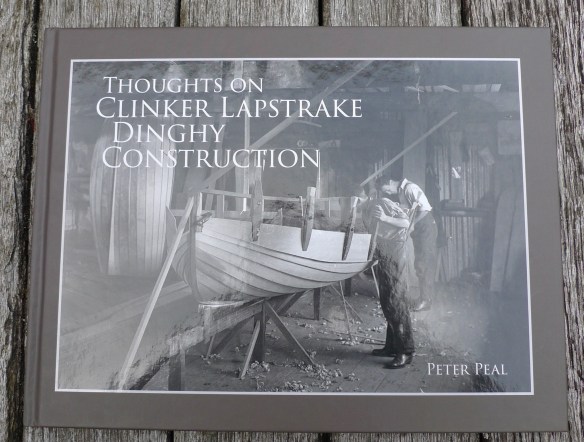
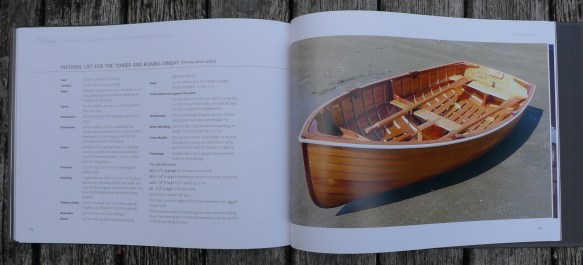
Morning woodys – Sorry no classic boat today, I had a story lined up & then last night I started to read a copy of the latest woody boat book to be published – its called ‘Thoughts On Clinker Lapstrake Dinghy Construction’ by Peter Peal. The editor is Baden Pascoe & the book design is by Steve Horsley.

Without a doubt this is the most interesting woody book I have started to read, now I say started to, because after a quick power skim I decided it was too good to read at home – it’s a on the boat read. If you have any interest in wooden boats & the Kiwi boat building scene this is a must have.

To quote Chris McMullen who penned the forward – “this book is more than ‘just another book’ about how to build one of these boats the quick & easy way with the aid of modern glue – it is a book that takes you back in time & puts you in the mode of becoming an artisan who uses the characteristics of wood to his benefit. This lies at the heart of the boat-builders art & is something of which New Zealanders can be proud”.

WIN A Copy: all woodys that correctly answer the question below will go into the draw to win a copy of the book. Entries must be emailed to me (address below). The draw will take place on or near 10pm 28/11/2016. Winners name will be published in Tuesdays ww post. waitematawoodys@gmail.com

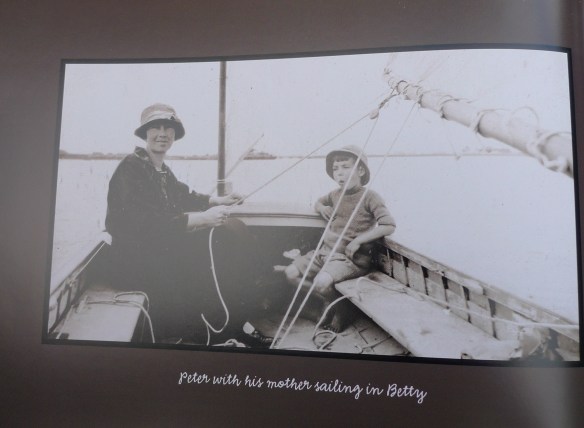
Q: What was the class of yacht first built by Peter Peal for his own use?

REMEMBER ENTRY IS VIA EMAIL ONLY – If you post your answer on ww, you tell everyone the answer, that’s if its right 😉

Below is a review of the book by the editor Baden Pascoe.

Book Review:

Thoughts on Clinker Lapstrake Dinghy Construction – By Peter Peal, editor Baden Pascoe, book design Steve Horsley.

There are a few good books on this subject from various authors around the world. As materials and power tools have progressed so has the content of these books explaining how to go about building a clinker / lapstrake boat that one can still call it “a wooden boat”. And to add to this the term a wooden boat is now more associated with art form and a thing you own because of the experiences, stories and history attached to it. Recent books on this subject all use the upside down method of construction and the use of high tech adhesives with super gap filling abilities. A good example is Ian Outhtred’s “Clinker Plywood Boat Building Manual” this book is in a class of its own and the results are stunning.

Here in New Zealand we have Peter Peal’s book hot off the press. From the outset he has set out to offer the reader and potential builder more than just an outcome. In the first section of the book he takes you back in time to the late 1930’s via a story line were you can almost feel the day to day atmosphere of the Percy Vos boat yard. A time when young men were immersed in knowledge and exposed to an experience were they got to know what a nice shear line or lay of a plank should to look like. A place where they learnt to touch a piece of timber and instantly know it’s capably of strength and durability. Working with wood was what they loved to do and they played with the results of their work during their weekends sailing, rowing and steaming their floating works of art that were so kind on the eye. The method used to build these boats without the aid of moulds or temporary frames made the task even more challenging but once mastered it elevated these young men to go on to be the legends of our marine industry that are now the cornerstones of the world class marine industry we now have.

The second part of his book his based on much the same principles as in the first section but ply planking can be employed instead of timber. Laminates can be used instead of natural crocks and to make it easier and moulds or temporary frames are recommended to control exact shape. May I remind you as I have been reminded by the few men left standing today who were taught this method, men who regularly built these boats without moulds could build more boats to near exact shape, something not recommended to the one off enthusiast builder. During the process the builder can experience all the aspects and challenges of the artisans of yester year.

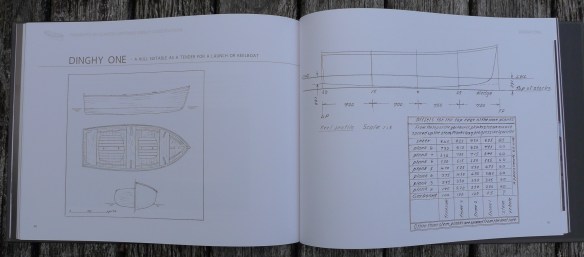
In the third section Peter offers three of his designs with full lines off sets and construction drawings. Boat 1 being a traditional launch or yacht tender, boat 2 a small rowing or pulling boat and boat 3 a clinker large enough to be a small out board run-a-bout. He also recommends designing your own boat.

Section four is a short glossary of the terms and slang used in the Auckland boat yards during his time in the trade. This is something very special and possibly unique to the Auckland area.

Yes, there are many fine tradesmen in Auckland and around the New Zealand coastline who have built what I would be proud enough to say, some of the best clinker boats in the world, but very few of them could explain how this is done via the detailed sketches and drawings from Peters very own pencil. Peter never held knowledge close to his chest, his first love was the parting of knowledge and this fact is reinforced in the forward written by one of his early students, Chris McMullen. This book is a life time treasure and a reminder of Peter’s values and high standards.

A huge thanks to a wonderful man who I have worked with to produce ‘Thoughts on Clinker Lapstrake Dinghy Construction”.

Sadly Peter passed way this year aged 95 – this book is a perfect testament to the man & his trade. – Enjoy


Note: This book is a very limited edition. It is at this time not available in bookshops.

Retail $60 + $7 post and packaging

For orders. Email Chris Peal: chrispeal8@gmail.com

Bank Account no: 01-0210-0030056-47   please include your name as reference.

NOTE: bank a/c number is now correct.

The Sinking of Lady Sandra

lady-sandra-sinking-2

The Sinking of Lady Sandra

Lady Sandra was built by the Lane Motor Boat Co in 1947, details on her past can be viewed at the link below. In previous ww posts Ken Ricketts was of the belief that Lady Sandra sank off Devonport but recent photos ex Ken Jones that have surfaced have revealed that the location was in fact Birkenhead, c.1948-49.

Lady Sandra

The tale goes something like this –  Lady Sandra had stopped to tow a grounded yacht on Auckland Anniversary Day & in the process managed to get the tow line around both of her propellers & pull them towards each other, thus pulling the propeller struts out of the bottom of the boat. They quickly managed to beach her, as the above photos show.

Interested to hear more details on the yacht rescue & subsequent sinking of LS, as there is still uncertainly around what happened.

Post the sinking & refit (mid 1950s) she was sold to Ken Woodhead, an Auckland businessman, who sold her late 1950’s > early 1960’s, to a Eddie McGoram, now aged 88 & living in Vancouver. In discussions with Ken Ricketts, McGoram confirmed that when he  purchased her, the original 2 Scripps flathead 6’s had been replaced with 2 x 120 hp Hercules 6 cyl flathead petrol engines.  Most likely the Scripps were replaced post sinking after she sank. McGoram only kept her for approx. a year & during this time replaced the Hercules engines with 2 x 4 cyl Ford diesels. He sold her to Owen & Margaret Cleave in the early 1960s & they kept her until well into the 1960’s.

The Cleaves did substantial remodelling of her coamings c.1966 & interior layout. At some stage she was lengthened & her engines were moved back to the new tuck position.  During the Cleaves ownership c.1964,  LS ended up on the rocks at Pakatoa Island & had to wait for the tide to re-float, other than bruised egos, there was no major damage.

Lady Sandra was  sold to a friend of KR’s (John Richards) c.1966-67. Richards also modified the previously modified coamings. According to Richards son, Ian,  John sold her to an overseas (Vanuatu) owner in the late 1960’s. Sadly she was wrecked on a reef in a storm – some would say that given her past dices with death, it was a only a matter of time 😦

Below are a selection of Lady Sandra photos that show various moderations undertaken by her owners.

lady-sandra-4-ex-ken-jones

Peckham ownership


ls-pre-1966-ex-margaret-cleave

As Built

lady-sandra-john-richards-gt-barrier-is-c1972

Richard ownership

lady-sandra-eddie-mcgoram-era-c1955-1

McGoram ownership

Signature (Beluga)

screen-shot-2016-11-08-at-6-12-42-am

screen-shot-2016-11-08-at-6-13-09-am

SIGNATURE (Beluga)

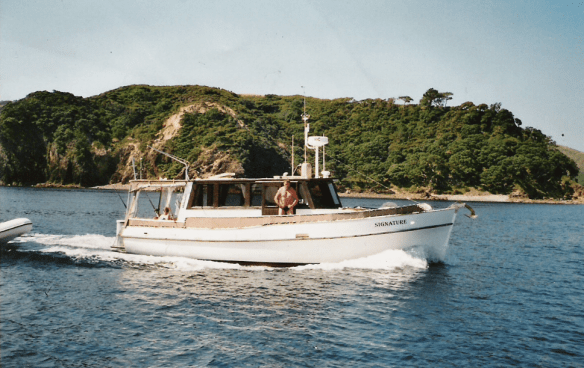
When Ian McDonald found the above boat  for sale at Westhaven she was named “Beluga” as someone thought she looked like a little white whale.

Her history Ian was told is roughly this:  Strip plank built in 1990 as a spec, to be a work or fishing boat, over 2 or 3 years when the Miller & Tunnage yard was quiet in Port Chalmers, then sailed to Nelson in the hope of an easier sale. She was sold from Nelson to become a long-liner out of Leigh. How she got to Leigh, Ian doesn’t know, maybe sailed up, maybe trucked.

In Ian’s words a trendy city fella bought her, post fishing, named her Beluga, and then sold her after a brief ownership. Ian bought her in 1998 having done a lot of sketches of what he would like to do to her, Ian commented that if one imagines her without the wheelhouse door, and no extension to the coach-roof aft, she wasn’t a pretty boat at all.  Miller & Tunnage didn’t seem to go for topsides looks, but their hulls are beautiful.

Ian visited the Miller & Tunnage yard looking for a genuine bronze M & T name plate and was helped by the manager who sent the plate mould into Dunedin and had some cast, one of which should still be in the boat today. During the visit, the manager took Ian up to the mezzanine floor and showed him the frames still there, off which she was lofted. They had previously built the “Deborah” of the same frames, for the older, about to retire partner, which was moored just up the harbour at Deborah Bay. Ian showed them a photo of what he was doing and they said  “that’s Signature”  and, when Ian enquired as to how she was thus named, they told him that when any new build was about to begin, it required paperwork, description, who it was for etc, and, a signature, so that’s what she was called.

The extension to the cabin top, aft from the door to the stern was designed by Ian in conjunction with Mike German & Graeme Lyons ( German & Lyons Boat-builders), in 1998 and fitted by Mike & Graeme in the shed at Half Moon Bay hardstand, as was the wheel-house door which didn’t exist when Ian bought her. The teak cladding around the windows was also Ian’s idea.  She was then powered by a 4cyl Isuzu and had a fuel capacity of 1,000 litres

Ian kept her until 2003 & she went on Jacob’s boat-haulage to Mana Marina & was sailed to Waikawa where she remained for a few years before once again being trucked north to appear again on the Waitemata. Then she was sold and appeared in Nelson, which is where Ian took the marina photo above in 2015. The second photo (of someone who resembles Ian, doing an Arnold Schwarzenegger impression), was taken just entering Port Abercrombie a few summers ago now.
In January this year Ian was at Mana Marina and spotted her being prepared for another trucking north and, Ian believes she now resides in Kerikeri.
This boat has done a lot of road miles 🙂 Anyone able to confirm her current whereabouts?

Photos below ex Dean Wright of Signature at Doves Bay Marina. Looking a tad different 🙂

20161108-_dhw7113

20161108-_dhw7114

20161108-_dhw7115

W1 Junior

OLYMPUS DIGITAL CAMERA

w1-and-john-bullivant

W1 JUNIOR

If you are a regular follower of the ww stories you will know that there are a several ‘woody nutters’ out there that have a thing for the ex WWII RNZAF coastal cruiser – W1.
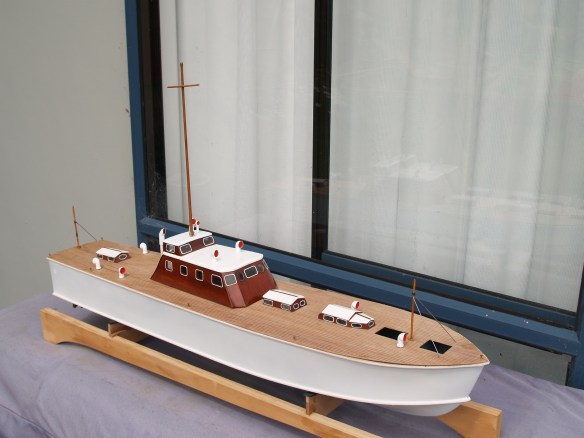
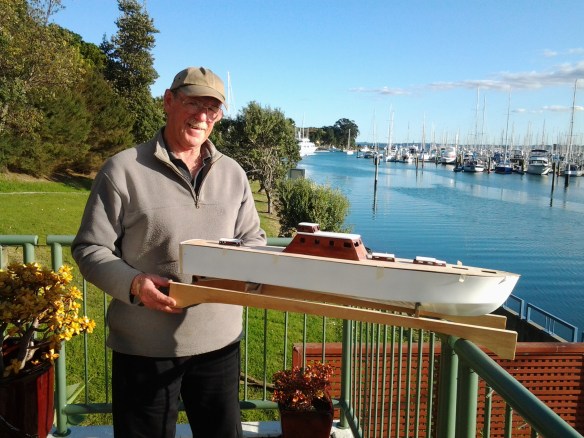
John Bullivant is one of them. John has been building a model of W1 & its very close to completion. The photos above show some of the build process.
John reports that he has purchased some cowl vents from the UK, (made them all rotatable)  fitted new water cooled motors, made rudders, masts, windows, rubbing strips and fitted LED lighting (courtesy of cheap solar garden lights). He has also made a decal pattern for the bow insignia to print out (see bow photo above). John has even bought a miniature water pump so he can have water running from the water outlets when the boat is stopped. This will sit where the centre engine usually sits. He is currently looking for an engine sound module. Thanks to Ken Ricketts for fowarding John’s email to ww.
Details on the ‘real deal’ here https://waitematawoodys.com/2013/09/11/the-story-of-w1-one-of-fastest-boats-ever-on-the-waitemata/

REAL BOATS

screen-shot-2016-11-04-at-5-03-00-pm
The Classic Yacht Association is holding one of its launch cruises to the Riverhead Hotel on Sunday – we are expecting approx. 20 classics to make the trip. so it should be a cracker of a day. If the sun shines, there will be lots of photos on Monday 🙂

Update below & photos from John Bullivant on his progress  (emailed in by Ken Ricketts)
“I have also re-done the lighting using LEDs from Xmas string lights which are smaller and can be made to fit better. Getting there slowly but it’s almost like building a full sized boat as you can spend hours making the smallest things. The lighting alone took about 3 days, as it’s hard to hide any sort of bulb in a small model and get it shining in a reasonably scale manner, eg trying to get the nav lights shining in the correct arc takes a lot of fiddling and painting but they look the part when they are on so that’s good enough for me. I’m not being too fanatical about the detail as long as it looks ok on the water.
I have a theory about the location of the real W1 in the photo of her with the survivors on board and where she was headed which I am working on with the help of Google Earth and some info I read on the rescue effort. This was regarding the position the survivors were picked up from. I am trying to find the info again but it was in an obscure site (to do with recovering the gold I think) which gave the co-ordinates of the ship and the lifeboats positions before rescue and the crews communications. Just a bit of a fun challenge to see if I can pinpoint the exact spot.”

The History of Invader

invader-1966

1966

DCF 1.0Ricoh Company Ltd.

INVADER

The launch Invader appeared on ww in early Sept 2016, looking a tad sad, being partially submerged (link below). This story prompted her owner for the last 30 years, (sadly the late) Morrie Dunwoodie to contact ww. Morrie’s uncle bought the boat in 1966. Morrie included the above photos & well documented details on her past. Ken Ricketts & myself have edited this into the story below.
Sunken Invader Link https://waitematawoodys.com/2016/09/13/sunken-launch/

The History of Invader (as told by Morrie Dunwoodie)
Invader measures 36′ with a 10′ 2″ beam & is a single skin hard chine, kauri hull & originally had a 6 or 8 cyl petrol engine, with an auxiliary wing motor, with a port side shaft. The wing motor was removed some time before the present owner bought her.
 She had been bought by Peter Harrison, in 1957, who owned her until 1959, at which time he sold her, because she as too slow, & had a 40′,  22 knotter built, to replace her, by Owen Woolley.
Between the Laidlaw & Harrison ownership (later 1940s &/or early 1950s) she belonged to the Townsend family. It was during their ownership that she sank, as seen in the perivous ww story. 

She was bought in 1959, by Jim Ansell of Hamilton & moved to Whangamata. He owned her until 1966. During his stewardship he repowered her with  75 Hp TS3 Commer diesel.
 
In 1966 she passed to George H Morrison & remained moored at Whangamata Harbour. He did some upgrading adding sponsons, ‘Tauranga’ deck & new rails.
 
George M. sold her in 1986 to Morrie J Dunwoodie of Thames, the boat is kept at Whangamata. He has replaced the 75hp Commer TS3 with a newer larger 117 hp TS3.
In 1988 she underwent a refit with new windows, stainless rails, re-glassing of cabin tops. Then in 1995  replaced decks with ply, & glassed them. She was extended at the stern in 1998,  by .9 of a metre to 42 feet. In 2004 Morrie added 3′ to her stern & a 3′ duck board. 2008 saw her get a major out of boat, engine overhaul.

Interested to uncover details on her builder & launch year?

07-05-2018 Update from Mark Dunwoodie

“Invader moved a couple of weeks ago from Whangamata to Hobsonville marina. Her new owners are fantastic people, an experienced sea family and passionate about her. Mum, my sisters and I are very chuffed.

Mark Erskine, Tom Hunt….thank you for your wise counsel in all matters since Dad’s death….and even more so, thank you from Dad for your long friendship and shared passion.

Dad was out on Invader with Uncle George as often as he could from the day George purchased her. From that time he only missed 1 or 2 of the annual end of February trips to Great Barrier….around 50 trips. As soon as we were old enough my sisters and I (and then our children) were regular crew on the daily summer and overnight excursions from Whangamata. Speed mightn’t have been her forte but her seaworthiness, easy layout and the steadiness given by hull shape made her a fantastic vessel.

With the contact from this website Dad had been reinvigorated to research Invader’s history and was enjoying it immensely. Ken, thank you for your kind comments, Dad was enjoying talking to you as well. In the past he had said that it was hard to get to the right people and records from Thames…but had recently been making progress.

I’m not sure where he got to researching her construction date.Uncle George had always said she was built by Lanes in 1936. When Dad lengthened Invader’s hull, he removed the original copper fish tank. The tank had a 1936 coin soldered into the side of the tank. With no hole behind the coin there seemed to be no other reason to put the coin there other than to mark the construction year. From the comments above it looks like this might not be the case.

Anyway, thank you to all.”

08-05-2018 – Update ex Ken Ricketts – overhauled 2008 Roots T23 engine being installe


11-05-2018 New photos ex Mark Dunwoodie

In the gallery below the b/w photo of her high & dry is on the reef, south side Whangaporoa Peninsula. Invader has had her share of oops – in another WW post she is seen submerged  https://waitematawoodys.com/2016/09/13/sunken-launch/


Screen Shot 2018-05-10 at 4.15.53 pm

Update from John Wicks – Invader hauled out at Hobsonville Marina Nov. 2020 for some TLC

Cockpit Table

fullsizerender-1

Finished Project

img_5665

Romance II – the inspiration

The project

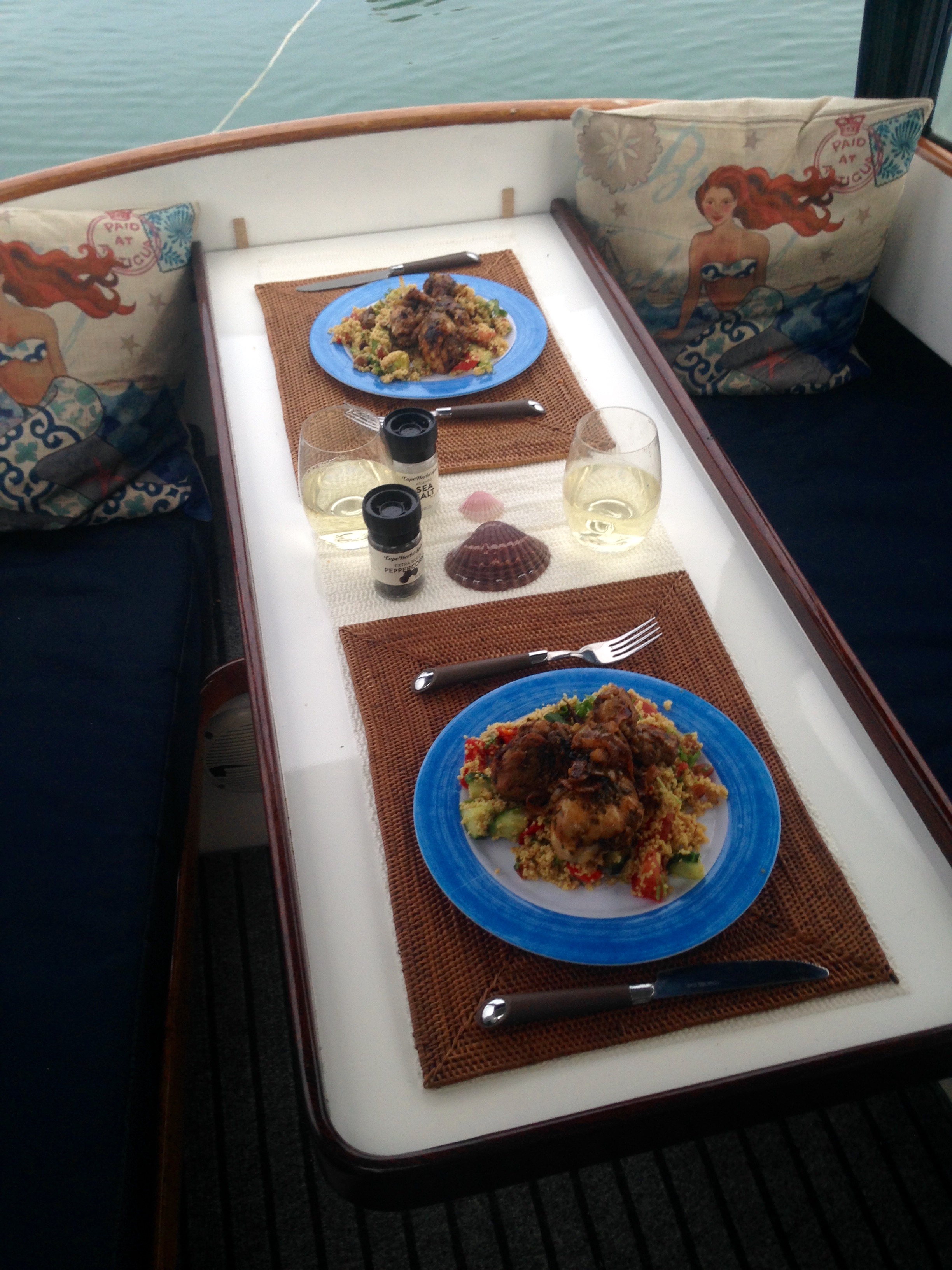
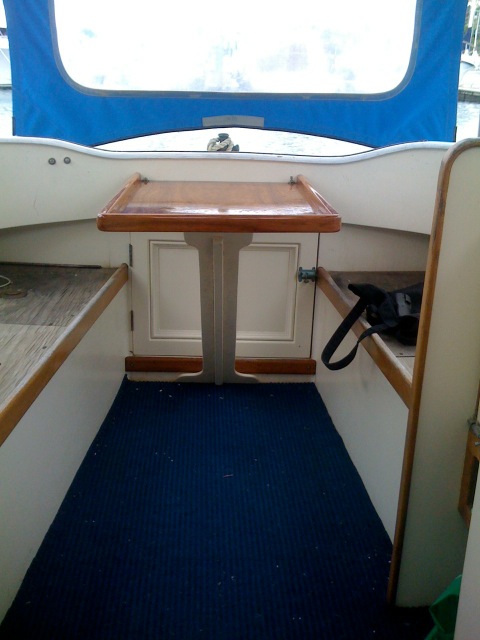
Cockpit Table Project
As I tend to do I had been admiring & gathering ideas for a cockpit table for Raindance for a long time. Then one day I was aboard Harold Kidd’s launch Romance II & I spied his set up. He had the table ‘hanging’ of the stern & a drop down leg. This was enough inspiration to start me off.

I bought an old table on trademe for $30 (horrible yellow formica top & a bloody big drop down leg) & I started playing around with how I could adapt it to fit on Raindance. Being a bit of a wood butcher, I was lucky to discover a wonderful wooden craftsman, a perfectionist, by the name of Lional Barkle & we started the project.
I already had the bronze stern mounts, bought in Germany from the marine chandlery ‘Toplicht’. I striped the table & had custom-made s/s brackets that fit the bronze mounts.
Lional being much cleverer than me came up with the idea of an arched / cantilevered leg/support. It’s almost like a tiller & slots into a foot. Makes the area so much more open & frees up the space underneath.

Lional made the leg from 116-year-old kauri timber I discovered underneath my grandparents home in Herne Bay, actually ceiling boards. These (x8) were cleaned up & steam bent & laminated together. The leg fits into a teak & kauri base with pins to hold it in place. It took an unbelievable number of hours, as everything had to be tailor made – measure, make, dry fit, adjust, dry fit, adjust etc. We had to rebuild in the stern locker to take the strain of the leg set up. I love the suspended look & its just so practical. The leg also sits in a ‘boot’ under the table to secure it more.
The finished unit is perfect & has so much more Lional B in it than Alan H 😉  he is just so talented. Also makes other wooden products – toys, chopping boards etc – his website is http://www.woodspark.co.nz & on facebook as well, reach search woodspark.

A Lap of Waiheke


rd-oct2016c

jonquil-little-o-oct2016a

w1-mow-labour-weekend2016

rd-oct2016a

A Lap of Waiheke

Over Labour weekend we did a lap of Waiheke Island in Raindance – bumped into a few classic’s, some will appear on ww in the next few days.
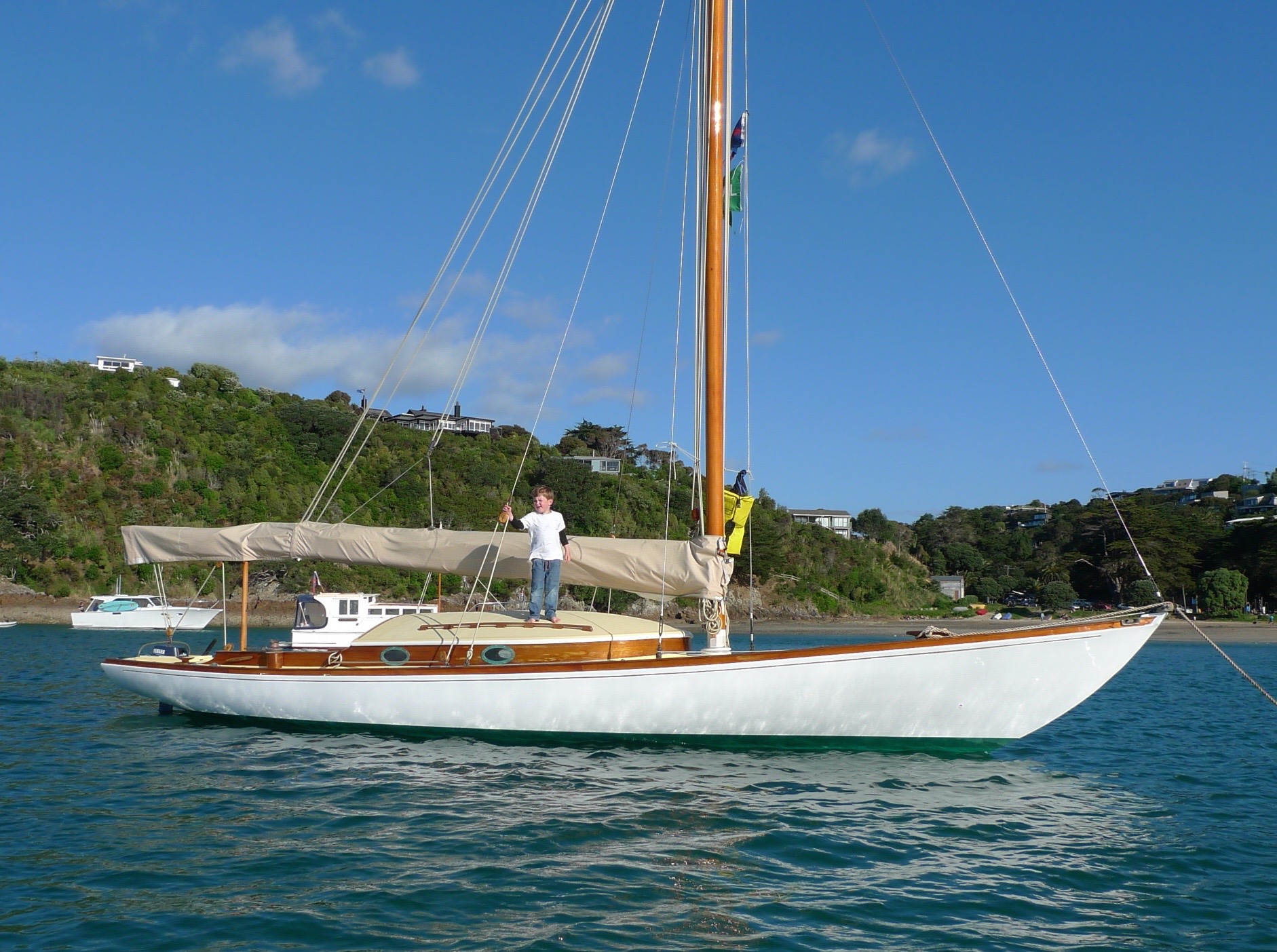
As we approached Oneroa mid afternoon on Saturday the weather was doing exactly as predicated  & the southerly was starting to pick up, coming around the point & it was blowing dogs off chains. Headed over to Little Oneroa & it was almost a mill pond, dropped the pick between James Mobberley (Moon Engines)  & Dan Ranell’s stunning N. Herreshoff designed yacht – Jonquil, pictured above with George Ranell ‘on watch’. Potentially it could have been a disaster i.e. 3 kids under 5 between the 2 boats – but good parenting saved the day. A few late afternoon coldies on Jame’s launch ‘Cartel’ was the perfect lead in to dinner – a wood fired pizza on the beach from the resident pizza caravan. Saturday was a cracker of a day on all fronts. Nice weather, people & boats.

For the first time (that I can remember) we had a peaceful night in Little Oneroa & woke to a stunning day (Sunday), one out of the bag. A quick breakfast ashore at ‘Wai’ & a few provisions from the ‘new’  store on the roundabout, called ‘The Island Grocer’ – its where the old general store (fruit & veg focus was) used to be. Less hairy armpits on display these days & a great hole in the wall coffee operation. Perfect spot to people watch.

Headed down the north side to the bottom end, very pleasant trip & a lot of people both fishing & catching fish. Mooched around a few bays & anchored in Man ‘o’ War Bay. The vineyard operation was a zoo with Island day trippers, so held off going ashore until late afternoon for a drink. Quiet night in the bay, except for 2 sets of very young children doing laps of the bay in dinghies with 2hp outboards – I do not lie when I say it went from 6pm to 10pm, if I had had a gun – I would have popped the tubes.

Slow start in the morning, had to wait for the tide, appears I had discovered a wee mud bank, never went a ground but I draw 2’3″ & the depth sounder was showing 0.700m (27.5″) 😦 So it was a leisurely breakfast 🙂 Th day was overcast & forecast to rain later on, so we headed home at lunch time. As we were leaving MoW, W1 was coming in – first time I had seen her ‘live’ on the water – way more narrow than I expected given her length, but still an impressive sight & a credit to the owner, who under took a lengthy restoration in his driveway in Herne Bay.
Saw Deodar (#1) in MoW looking very smart – photos tomorrow on ww.

A fantastic weekend, only takes a few days of good weather & one quickly forgets all the cursing & swearing over winter about bloody old wooden boats.

Below are a couple of photos from Rod Marler of the classic’s –  Arohanui, Trinidad, Lady Crossley & Nereides (looking none the worse for her oops at the Whangateau boat yard) at Kawau over the weekend. I hear the Kawau Boating Club was going off on Saturday night for the All Blacks v Aust rugby test.

Photo below of Wairangi at West Bay, Rakino Island on Sunday, taken by her owner & emailed in by Ken Ricketts.

wairangi-rakino-23-10-16

Boyhood memories of the Hauraki Gulf

screen-shot-2016-10-12-at-10-05-41-pm

BOYHOOD MEMORIES OF THE HAURAKI GULF

The story below was sent in by Greg Skinner, written by his late great uncle , B.T. Daniel, in May 1991. To view & read more on the launch Anzac (Freedom) mentioned in the story, click this link https://waitematawoodys.com/2016/04/05/anzac-freedom

The Hauraki Gulf is considered by many, particularly those who live north of Hamilton, to be one of the finest cruising grounds in the Southern Hemisphere. Australians, with their Hawkesbury River and Queensland Barrier Reef, could excusably be critical of this claim. Southern Argentina and Chile possess a vast area of channels, inlets and fjords whose atrocious weather reduces their popularity for cruising. As a boy who grew up cruising in the Gulf, there was no place quite like it, until later in life I discovered the Marlborough Sounds nearly fifty years ago. The Gulf has taken second place since those days.

To return to the Gulf, however, and its scope as a training area in the ways of the sea, this tale about cruising does not deny the wealth of talent that its waters have produced over the last 120 years. These are the ship and boat builders, designers, engineers, seamen and yachtsmen of world renown whose love for these waters has brought fame and fortune to this land.

In 1921 my father, Captain C. Daniel, joined the Fisheries Branch of the Marine Department as an Inspector of Fisheries. His duties covered the Hauraki Gulf which, viewed from its chart, is a large body of water plus many islands and tidal inlets. To cover this ground he was supplied with a launch called ANZAC and a deckhand as a mate. The ANZAC, built about 1915 by a Mr Collins I believe, was a noted “flyer”, her dimensions were 40‘L’x9.5‘B’x3.5‘D’, powered with a four cylinder Doman petrol engine. She had, prior to acquisition by the Department, won a number of races for her class. The reason for her purchase was the speed at which she could apprehend any fishing inside restricted limits. The ANZAC’s appearance on the fishing grounds and her known ability for speed acted as a deterrent on any illegal activities by fishermen – an ability considered justified by modern day patrol boat design, poaching a part of life that has intensified the vigilance to combat these occurrences.

During the summer school holidays our family, Dad, Mum, plus three children, spent a lot of time cruising in ANZAC. My father now had four assistants – his mate taking his annual leave – to help.

The ANZAC had a few alterations made by my father, two masts that spread three sails, more ballast added and a dodger over the open cockpit. The luxury of a toilet was a rarity in those times. A bucket was the usual means of coping with hygiene on a boat when in company with other boats.

One trip I made in ANZAC was to Mokohinau and Cuvier Islands. The Fisheries Branch did the odd servicing of these important lighthouses in the approaches to Auckland Harbour. Mokohinau lies about 15 miles north west of Miner’s Head on Barrier Island, the site of the wreck of the “WAIRARAPA” in 1894 with the loss of 32 lives. Cuvier lighthouse is about 12 miles from Cape Barrier on the southern end of Great Barrier. The occasion for this trip was the return of a keeper’s wife and a new-born infant to Mokohinau, plus stores and mail for both lighthouses, manned in those days by three keepers to each station and their families. We left the old Nelson Street wharf, now reclaimed land occupied by the city produce markets, at 6.30am bound first for Mokohinau about 60 miles from Auckland. The ANZAC could average 10 miles per hour – fast for those times – arriving at Mokohinau, with good weather, around 1pm that day. The mother and babe were ferried ashore followed by mail and stores. The keepers wanted time to reply to some of their mail, but time was pressing. The Captain, anxious to get on his way to Cuvier, was adamant – “twenty minutes and I’m off”. At the expiry of this limit, and hastily written letters, we departed on the second leg. The passage to Cuvier, about 50 miles, was set inside the Barrier in perfect weather with three sails assisting, good time was made, arriving about 6pm and being summer, sufficient daylight to complete landing the mail and stores. Cuvier Island is larger than Mokohinau but surrounded with plenty of reefs and rocks and landing there, difficult enough in good weather, now began to show signs of deteriorating with an increase in the wind. Departure and course set for Auckland. Cape Colville, about 20 miles from Cuvier, was reached around 9.30pm, the wind from W.S.W. increasing near gale, backing to West, “a dead muzzler” for Auckland, our destination. Capt. Daniel decided to head for the southern end of Waiheke Island bringing the seas, quite a bit now, onto the starboard bow quarter easing the motion, helped with the small staysail, the only sail ANZAC could carry.

Two events I actually recall were my father’s instructions to George Migan, his mate, to stay close to that “B” old machine and make sure it kept ticking over. Fortunately the fuel tank had been topped up before leaving Cuvier, benzene engines of this period, whilst rugged enough, could be temperamental brutes at times. This remark describes the conditions we were experiencing now, rain reducing visibility down to zero, at the same time trying to keep to a rough compass course, judging the seas now steep and short, and I quote “Ye Gods, it’s as black as the inside of a pig’s gut”. The motion was so violent sleep was impossible and I spent a miserable time hanging on in the cockpit, our speed down to three knots until we began to get a bit of shelter in the lee of Waiheke where course was altered for North Harbour on Poniu Island, anchoring there at 3am.

ANZAC had steamed about 160 miles in 20/21 hours – the number of times she went up and down in the same hole from Colville to North Harbour on the 25 mile passage another 25 could be added. Between 10am and 11am we turned out of our bunks, had a mighty breakfast, and the Captain, mug of ship coffee and pipe going well, remarked “What the devil happened to Spotty?” (my dog) – “I booted him in the guts when he got under my feet while steering – I must have hefted him overboard.”

The mention of the name “Spotty” produced a quiet little thumping sound and the next we knew out he crawled from the tiller flat! This is where he had gone to sulk and nurse his grievance over the treatment given him by a man he loved as only a dog can love.

Those long gone days, like the actors and the sets of this play, have passed on or disappeared, but the memories of it are retained by the boy fortunate to have played a minor part, forever indebted to the experience gained and to those who gifted it to thousands of boys on the threshold of life.

A Woodys Weekend

p1230719

p1230695

A Woody Weekend

After the last few days of inclement weather – its time to leave the house & get a wooden boat fix.
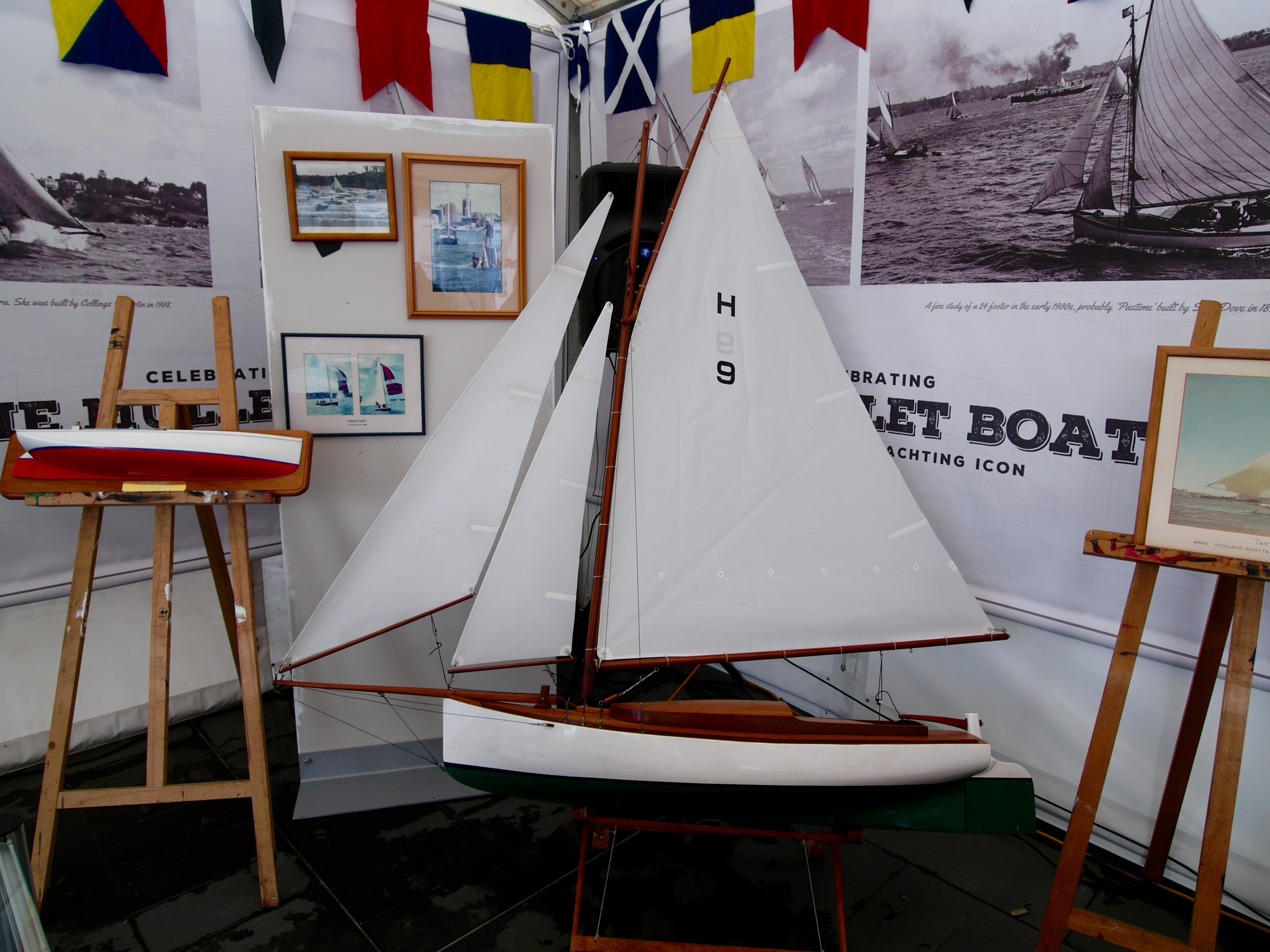
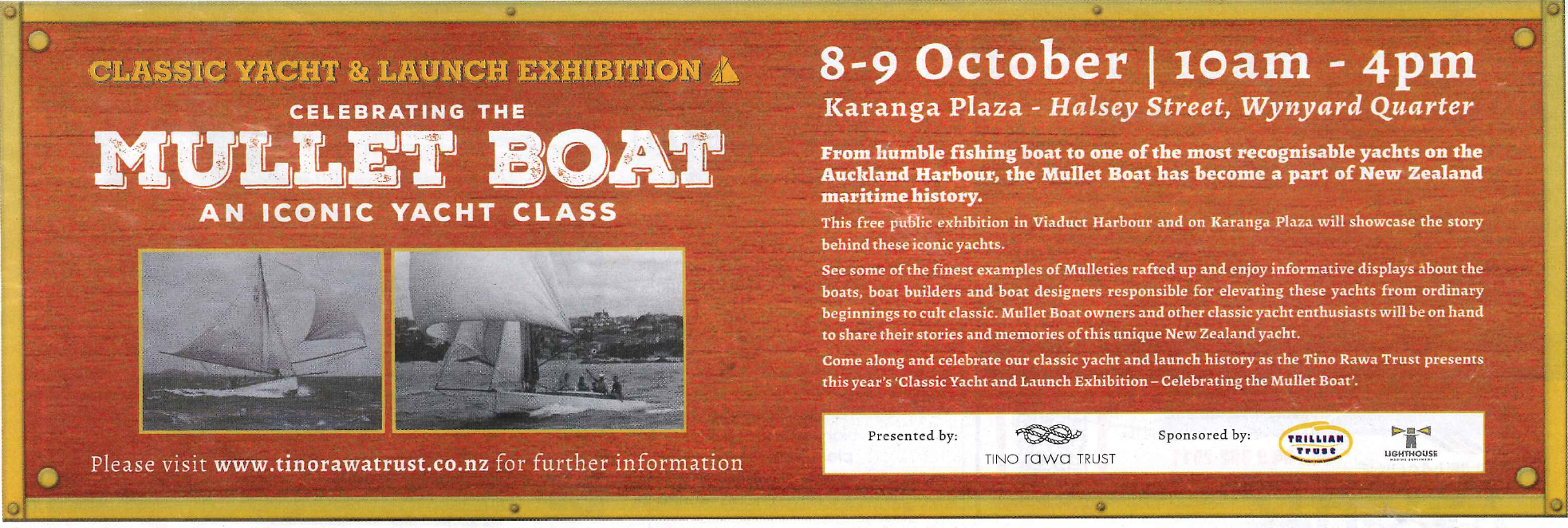
This weekend at Auckland’s Viaduct Harbour the Classic Yacht & Launch Exhibition is celebrating the iconic Mullet Boat.
Yesterday at the official opening – aka,  morning tea 🙂 Tony Stevenson from the Tino Rawa Trust, welcomed over 100 of Auckland’s yachting identities to the exhibition. The photos above give you a peek at the displays – on & off the water BUT only a peek, if you can, do make the effort to visit the exhibition – its open 10am > 4.00pm Saturday & Sunday at Karanga Plaza, Halsy St, Wynyard Quarter (in fron of the old Team NZ base)

As always with these events, the team have produced a 48 page booklet (below) to support the exhibition, this years one – ‘The Mullet Boat, is a cracker & from the pen/s of Harold Kidd & Robin Elliott, truely is a must have for any serious woody.
I have a copy to give away – so the first woody that can email me at waitematawoodys@gmail.com & tell me the name of the mullet boat that appears the most times on the Lipton Cup, wins the book.

screen-shot-2016-10-05-at-1-30-01-pm

COASTAL PATROL DURING WWII

screen-shot-2016-10-07-at-12-35-17-am

CALLING ALL VESSELS COMMANDEERED FOR COASTAL PATROL DURING WWII

On November 19th 2016, the Royal New Zealand Navy are holding the 75th Naval Review & have extended an invitation to the owners of any historic vessels that might be interested in taking part in the Review procession.  Interested owners can check out the Op Neptune website http://nznavy75.co.nz/international-naval-review/ & are asked to make contact with Commander John Butcher via Andrew Watts – the email address is,  ANDREW.WATTS@nzdf.mil.nz , please include details on your vessel & a photo/s.

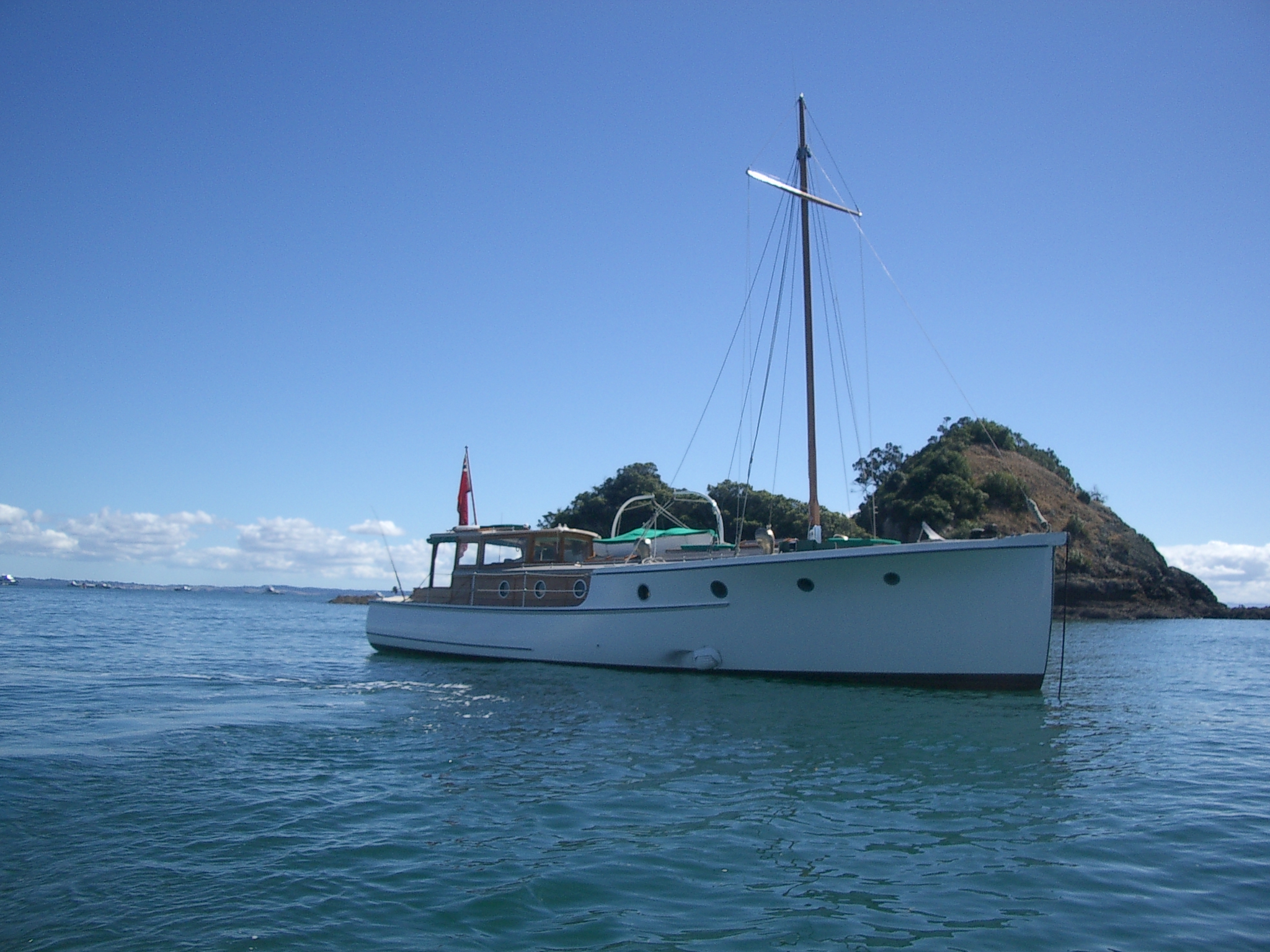
The 1932 Colin Wild built classic launch ‘Wirihana’ was one of a number of vessels commandeered by the Royal New Zealand Navy during WWII to run supplies and to patrol the coastal waters around the Hauraki Gulf and up to the Bay of Islands. Her identification was Q01, photos above & below. Wirihana took part in the 50th Naval Review along with a number of the other classics that served as patrol boats and will be participating again this year.

A lot of our classic fleet played a very important defence role during WWII, its not well recorded but the Hauraki Gulf was mined. It is NZ Governments best kept secret. The NZ press often quote the closest NZ has come to war was the Rainbow Warrior bombing! This is BS, they just don’t know. A lot of the records make the patrol work sound like a boys own trip but  Wirihana and the other boats were on patrol for two years summer and winter, it would not have been much fun in these small launches.
The crews made their own navigation sketches so they could recognise headlands by their outline in poor visibility. Similar to those in the NZ Pilot. They had no chart plotters or navigation aids (only a compass) and often ran without Navigation lights.

So woodys if you own or know someone that owns one of the launches – get in touch today with the RNZN

wirihana-today

Chris McMullen found the  letter below on board ‘Wirihana’. Chris commented that he would imagine the writer has now passed on. Chris hopes the letter may draw
some history from others with photos and letters hidden away. Photography
was illegal during the war but it certainly did not stop people from
recording their life at the time.
Chris  recalls going to school with a John Rhodes who he thinks lived at Bassett Rd.
Remuera. Maybe the same family?

screen-shot-2016-10-07-at-12-48-04-am

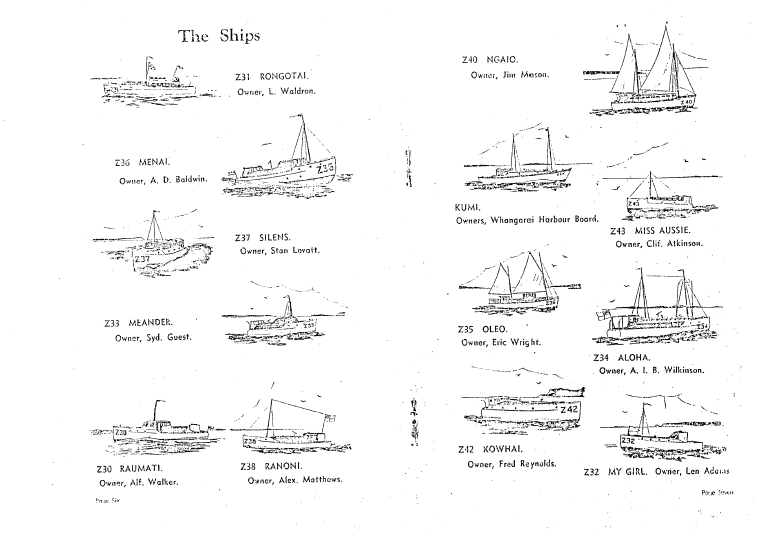
Below is light hearted list of NAPS boats out of Whangarei. Sent to me by Brian Fulton.

screen-shot-2016-10-07-at-5-14-59-pm

08-1-2016 Input From Chris McMullen
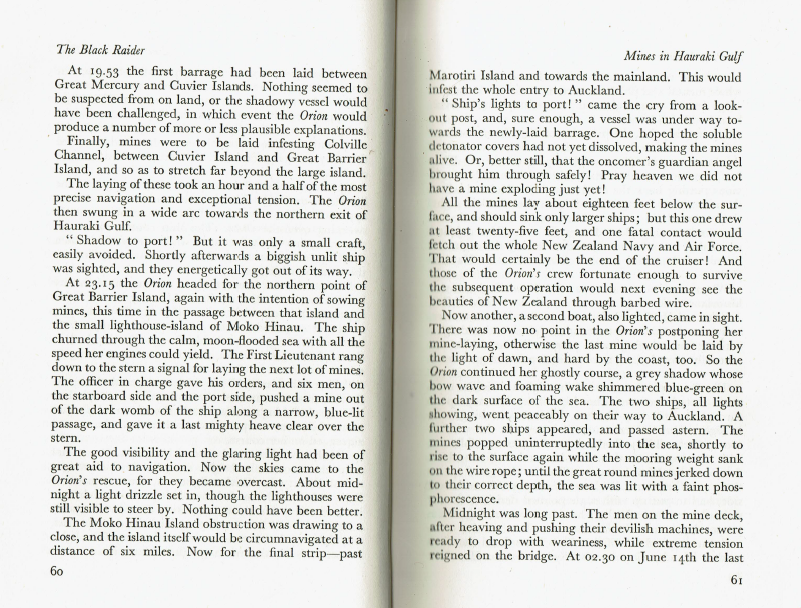
A German Raider mined the outer Hauraki Gulf. An account is recorded in the translated from German, a book listed as “The Black Raider”by Kurt Weyher and Hans Jurgen Ehrlich.
Chris’s copy dated 1955. Below are the relevant pages but there is more. This happened June 13th 1940. As a result the SS Niagara was sunk 19th of June 1940.
The Raider Orion sunk many ships off the New Zealand Coast.

mines-in-the-hauraki-gulf-1

mines-in-the-hauraki-gulf-2

mines-in-the-hauraki-gulf-3