AVANTI – A Lot Of Boat From One Sheet Of Plywood

AVANTI – A Lot Of Boat From One Sheet Of Plywood

Now I know its not a NZ story and the boats made of plywood but when I read this story in the May 2021 issue of Small Boats Monthly it just made me smile – so today I share it with WW readers. Enjoy

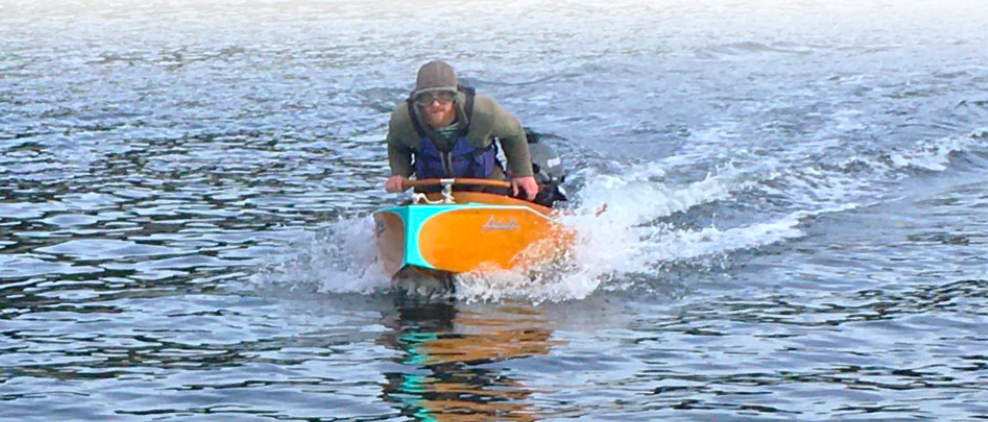
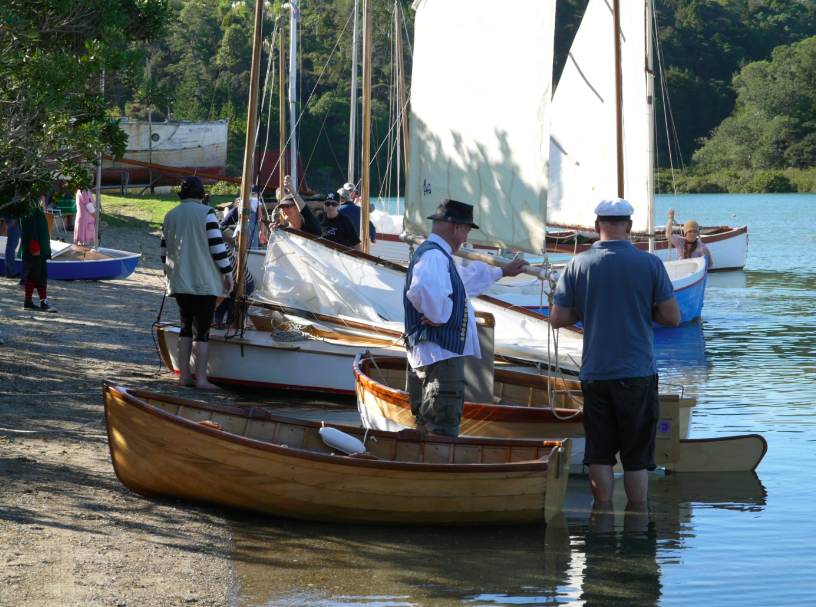
Riley Hall was born and raised in Gig Harbor, Washington, a quiet town nestled around a narrow, mile-long inlet that shares the town’s name. The shoreline is bristling with piers and the water is dotted with boats at anchor. Surrounded by boats, it was only natural that Riley began building and working on them at a young age. He kept at it through high school and began restoring a 1940s-vintage canvas-covered cedar-strip rowing boat at home. For his senior-year project, he chose to work at the Gig Harbor BoatShop, documenting and disassembling hull #2 of the Ben Seaborn – designed Thunderbird.

After graduating, his interest in the restoration of old boats led him to move across the country to Rhode Island to study at Newport’s International Yacht Restoration School (IYRS). While enrolled there, he spent winter evenings and weekends restoring a 1963 Snipe. After graduating from IYRS in 2012 he got a job maintaining and restoring mostly classic racing yachts at Baltic Boatworks in nearby Bristol.

During the time he had been on his career path—restoring large yachts and working boats—Riley had been toying with the concept of small boats built from a single sheet of plywood. He designed and built his first one-sheet rowing skiff  while home for Christmas in 2014. He had brought the paper patterns for the skiff with him to Rhode Island and shared them with Don Betts, a local boatbuilder who had built a 31’ six-oared Cornish gig, and the one-sheet skiff Don built  led to two more, built with the help of a group of Sea Scouts.

After about six years at Baltic, Riley moved back to Gig Harbor in 2018 to take a job with Harbor History Museum. There, as a restoration/preservation specialist, he was put in charge of the volunteers restoring the 65′ purse seiner SHENANDOAH, which was built in Gig Harbor in 1925. The SHENANDOAH project kept Riley busy during his working hours but left him with some free time and a creative impulse to design and build something new.

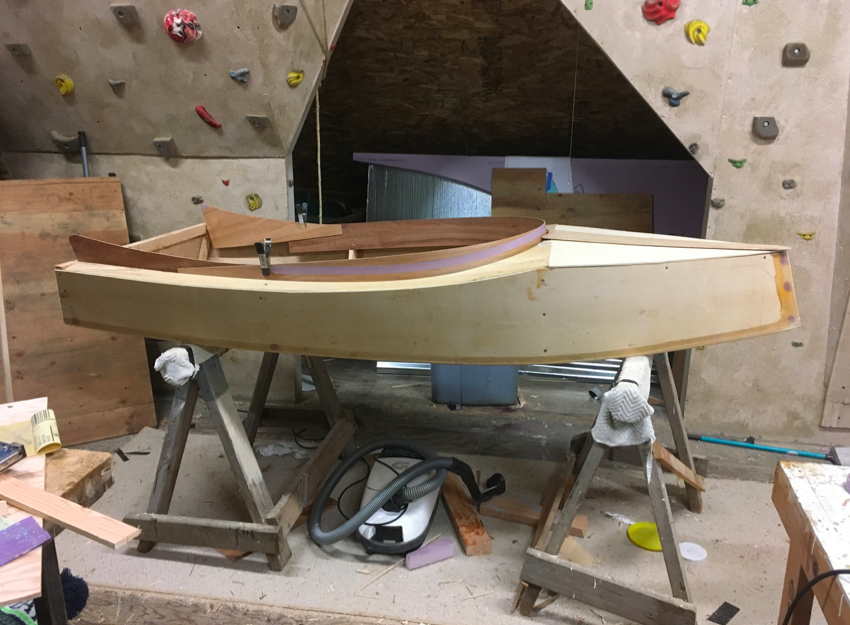
Working in the studio above his parents’ garage, he built three more one-sheet rowing skiffs, trying new iterations of the concept each time.  The 2.5-hp four-stroke Yamaha outboard he had for his 16’ Calendar Island Yawl set him to wondering what kind of speed it could produce with a boat made of a single sheet of plywood.

Cocktail Class Racers naturally came to mind.  Developed in 1939, they’re outboard-powered racing skiffs with a length of 8′ and a beam of 4′, just like a sheet of plywood, and limited to 6-hp motors—8 hp for racers who weigh over 200 lbs. They top out at 26 mph, far beyond the potential of Riley’s 2.5, so, with racing off the table, he was free to lavish attention on aesthetics and let visual elements from racing kayak, vintage bicycles, Beetle Cats, and ’50s nostalgia work their way into his design process.

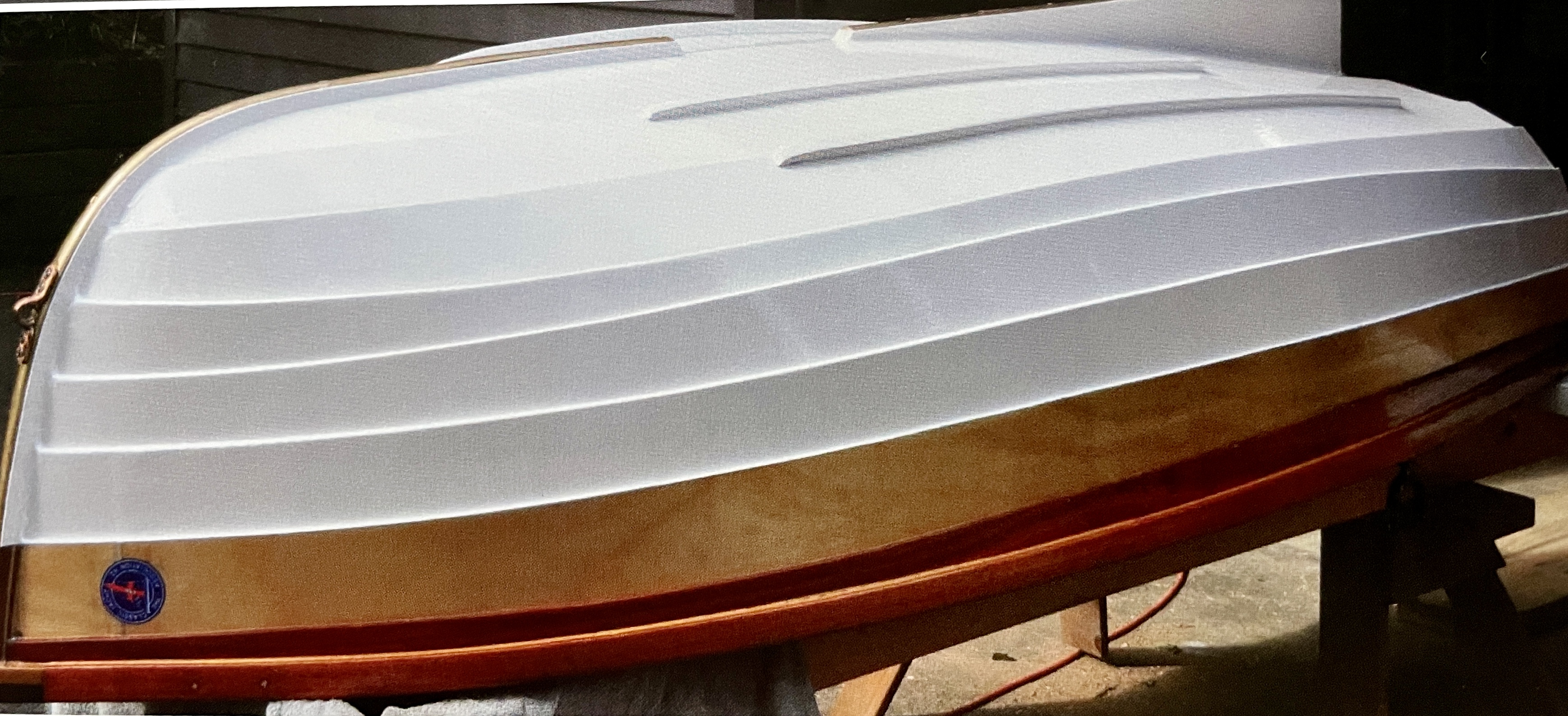
He started with a wedge shape for the hull: a plumb stem to part waves and a flat run for planing. As he explored the shape with a model of stiff paper, the sides came together in a way that suggested a raised foredeck and stem with a reverse rake. The foredeck required a break in the sheer to sweep down to the stern, which, as Riley put it, “revealed a slightly strange shape, like little ears, between the side and foredeck standing out as rather odd and unconventional. I decided it was similar to what you see on racing kayaks, which look cool and go fast, so why not?”

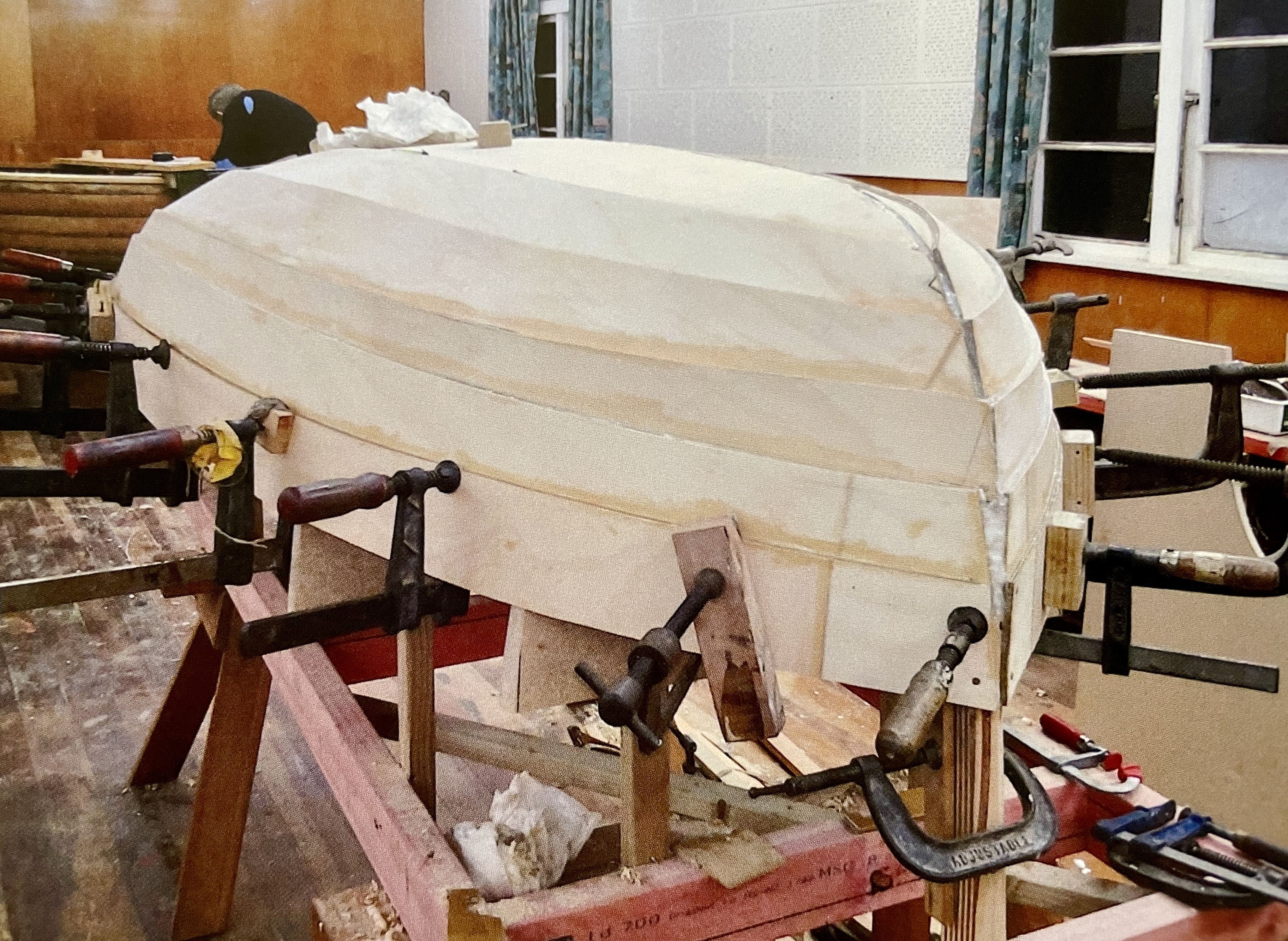
Riley started construction in a workshop space over his parents’ garage. With the shape established by the model, Riley could take the pieces apart from each other to “expand” their shapes and scale them up on onto a piece of plywood. After cutting the full-sized panels from plywood and fairing the panels, he temporarily assembled them with Gorilla tape, fine-tuned the shape, and used the plywood “skin” of the hull to take measurements for the boat’s two frames.

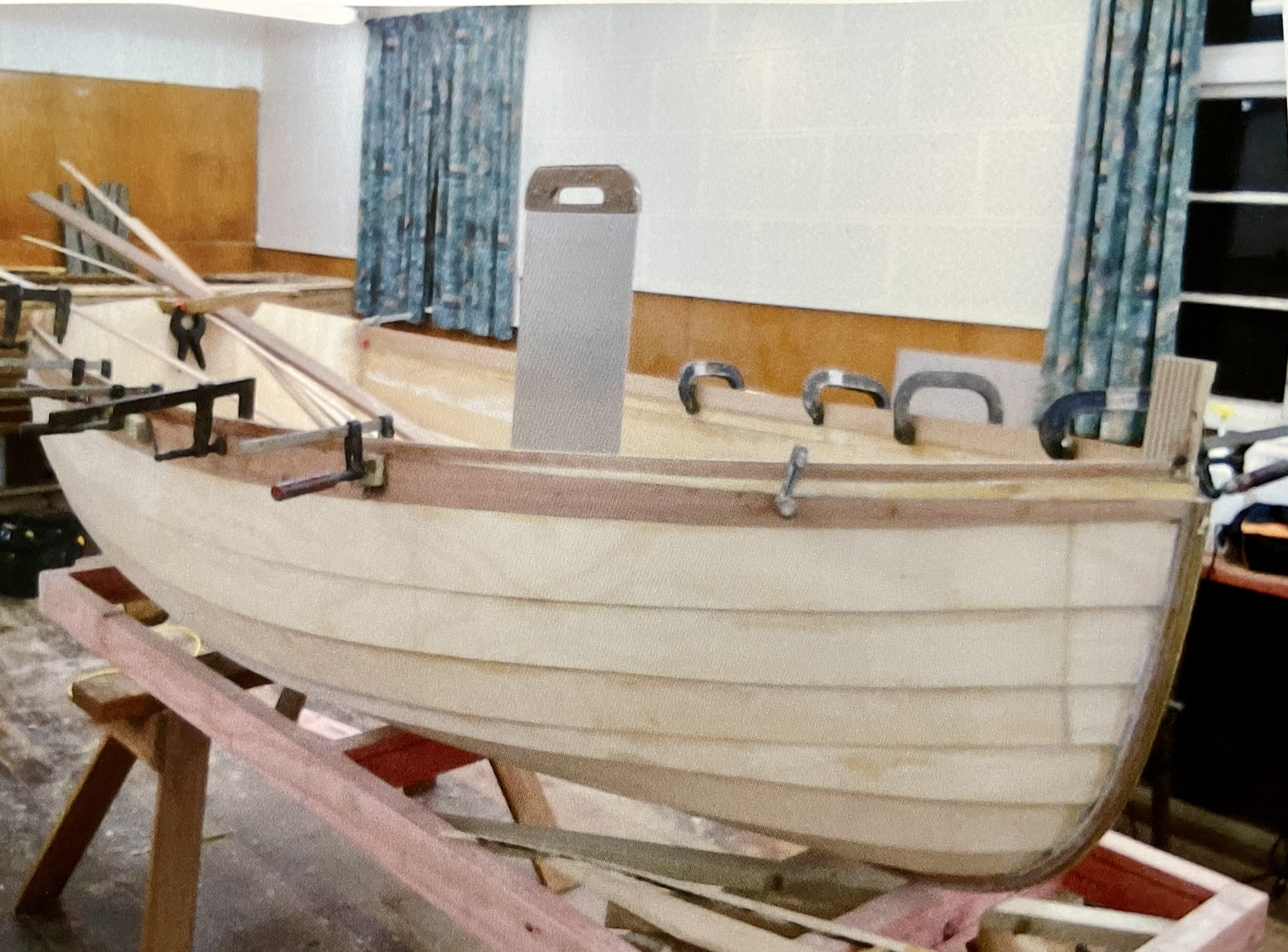
After Riley had installed the foredeck and a Beetle Cat–inspired coaming, he invited his father, Curtiss, an art teacher at the high school Riley graduated from, for a consult on aesthetics. As soon as he laid eyes on the boat, Curtiss said, “It looks like a Studebaker Avanti.” The iconic Avanti, a high-performance car with a distinctive “reverse rake” on the front end of its side panels, was Studebaker’s swan song, released in 1962 as the company was closing down.

Curtiss’s comparison set the boat’s name, AVANTI, Italian for forward, and pointed to an automotive aesthetic direction for the rest of the project. Riley had been looking to Herreshoff’s boats for a suitable shape for the aft ends of the coaming, but nothing looked quite right on AVANTI. While the Studebaker coupe didn’t have fins, it was produced in the final years of the fin craze, and the combination seemed to work for the boat.

For steering, Riley opted for handlebars instead of a wheel. Cocktail Class Racers require that the drivers lean far forward to keep their bows down and they’re forced to wrap their stomachs around the wheels. Riley found a bow fitting at a marine thrift store that could have easily been a classic-car hood ornament; the nameplate his dad made, replicating the one Studebaker put on the Avanti, was the finishing touch.
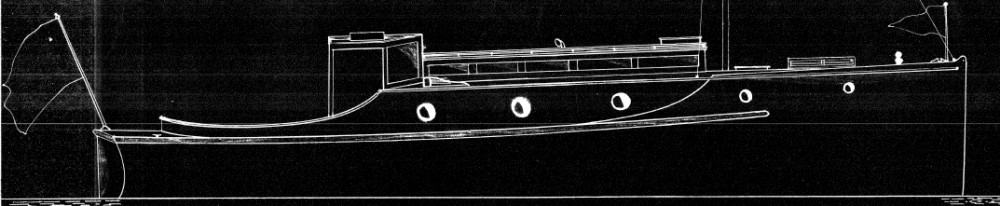
CLASSIC LAUNCH – LADY CAROLE RESTORATION – UPDATE #5

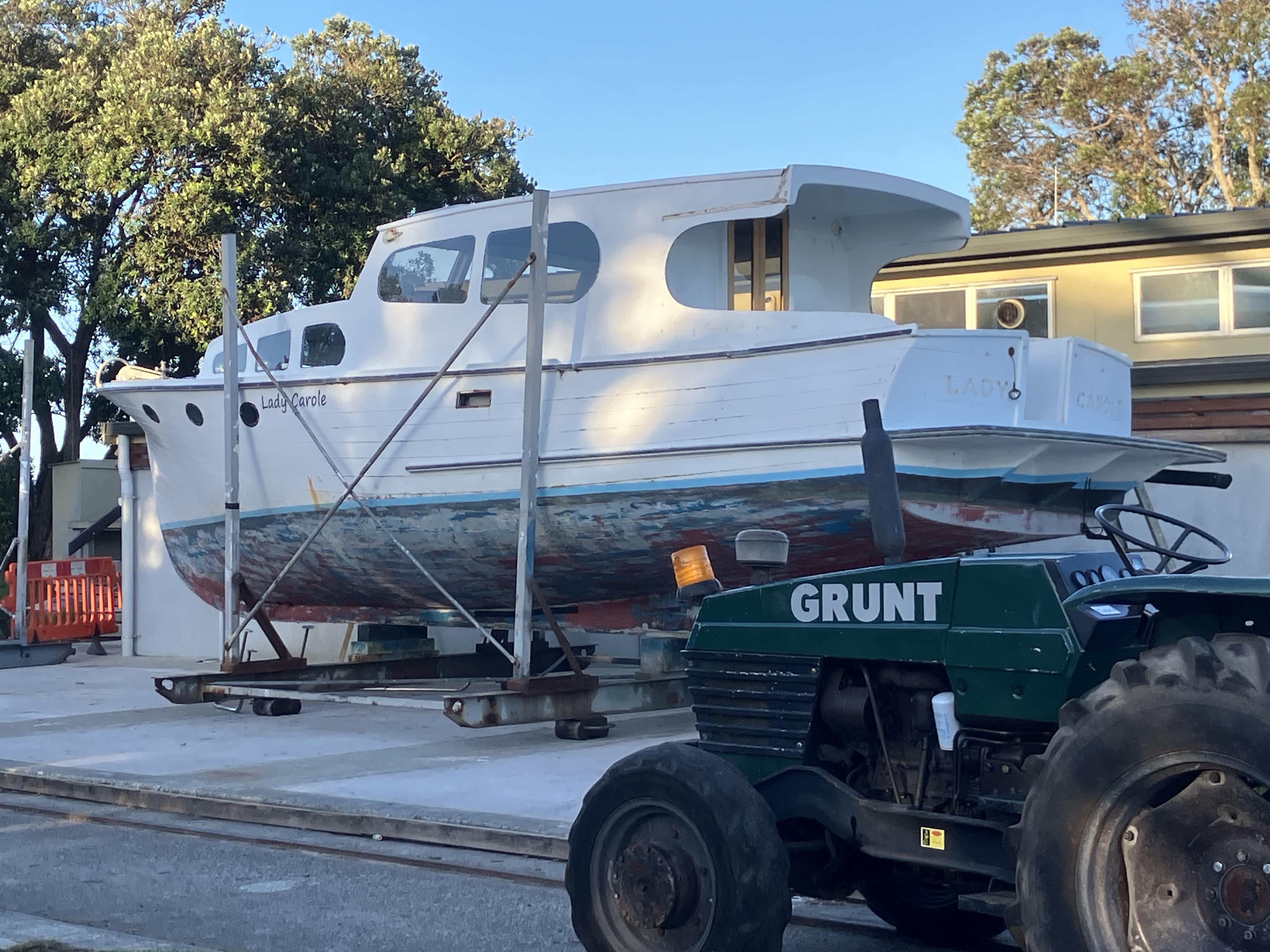
CLASSIC LAUNCH – LADY CAROLE RESTORATION – UPDATE #5 Another update on the work in progress from co-owner Patrick Crawshaw.

UPDATE BELOW: 

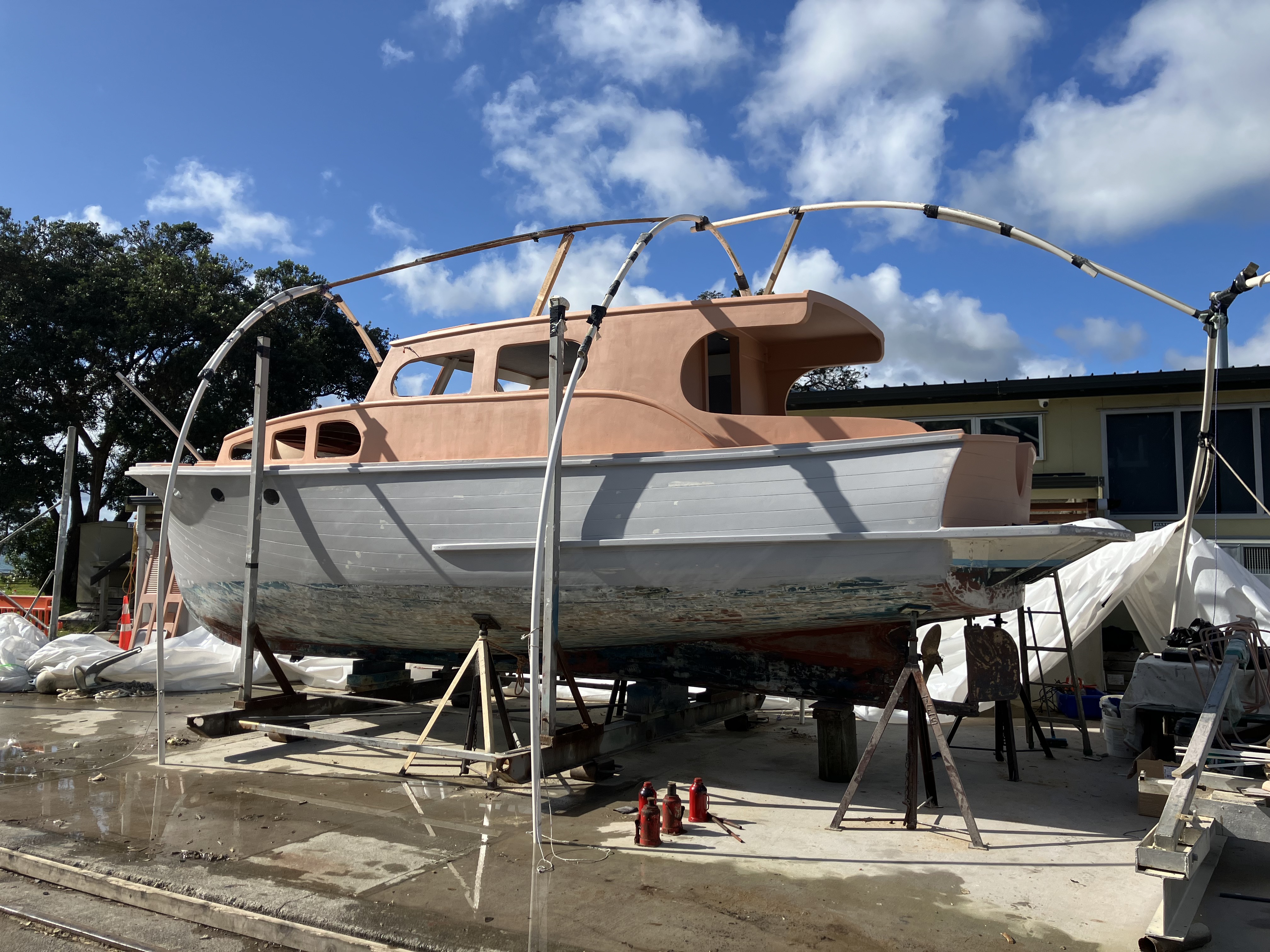
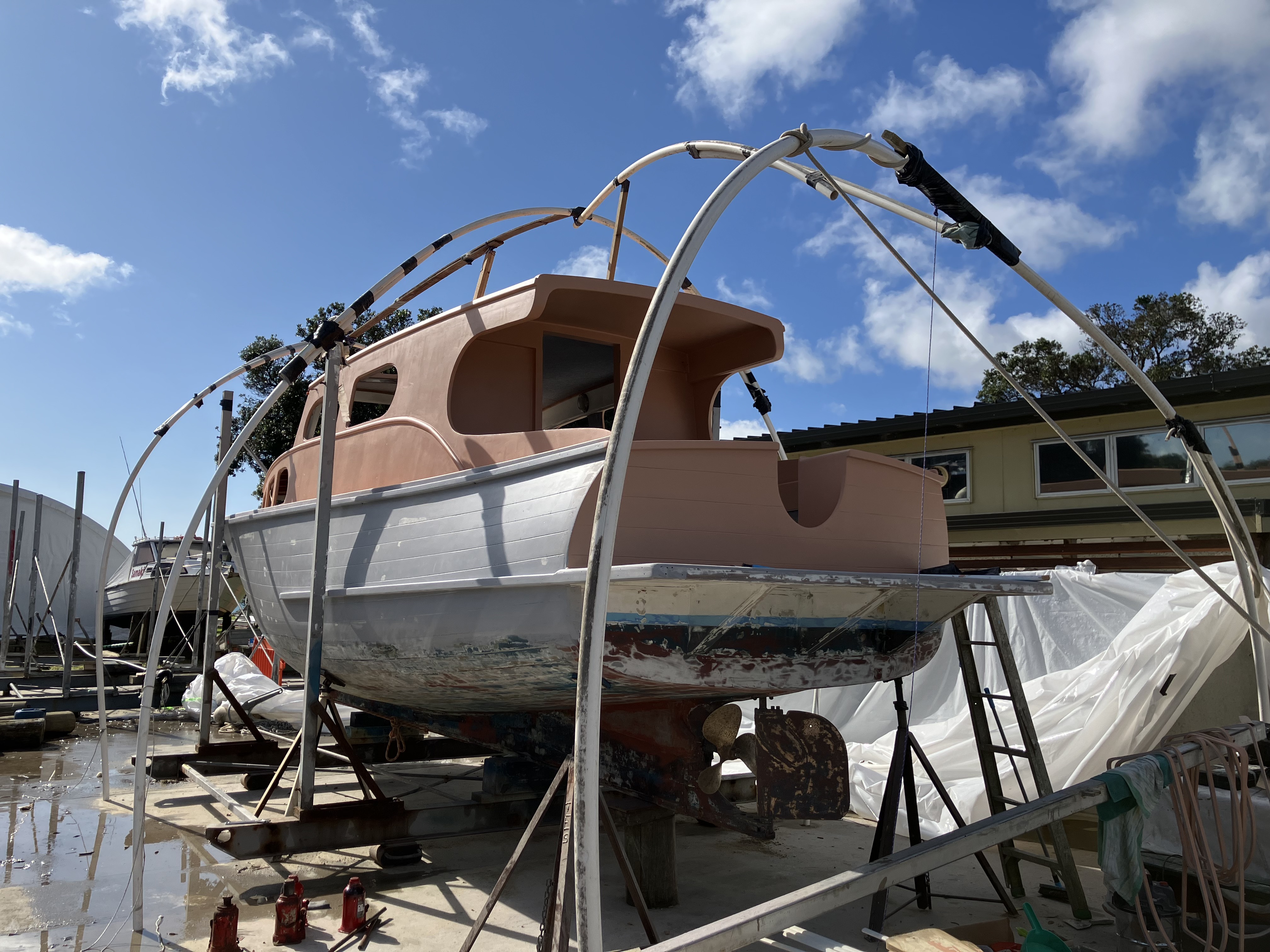
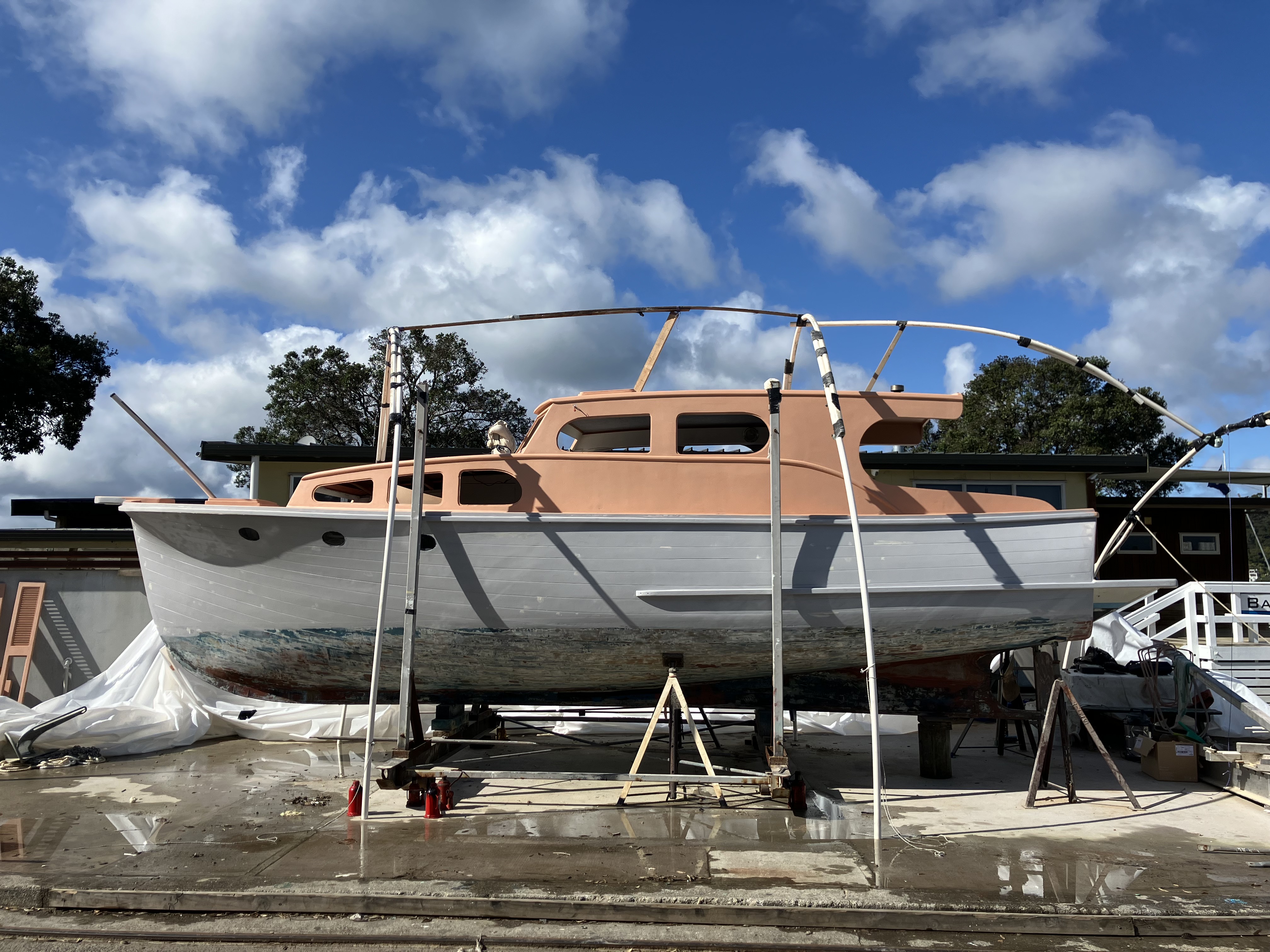
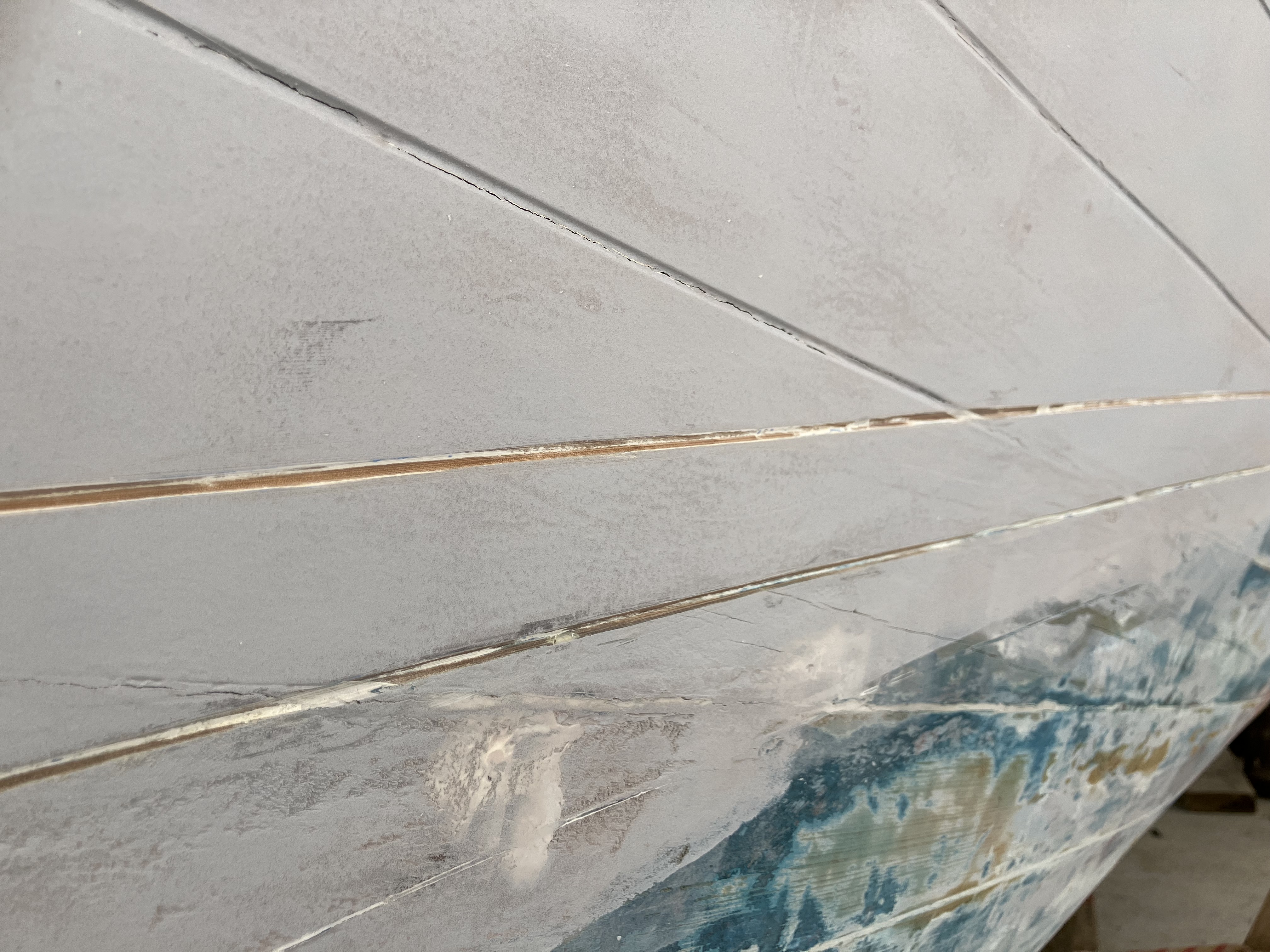
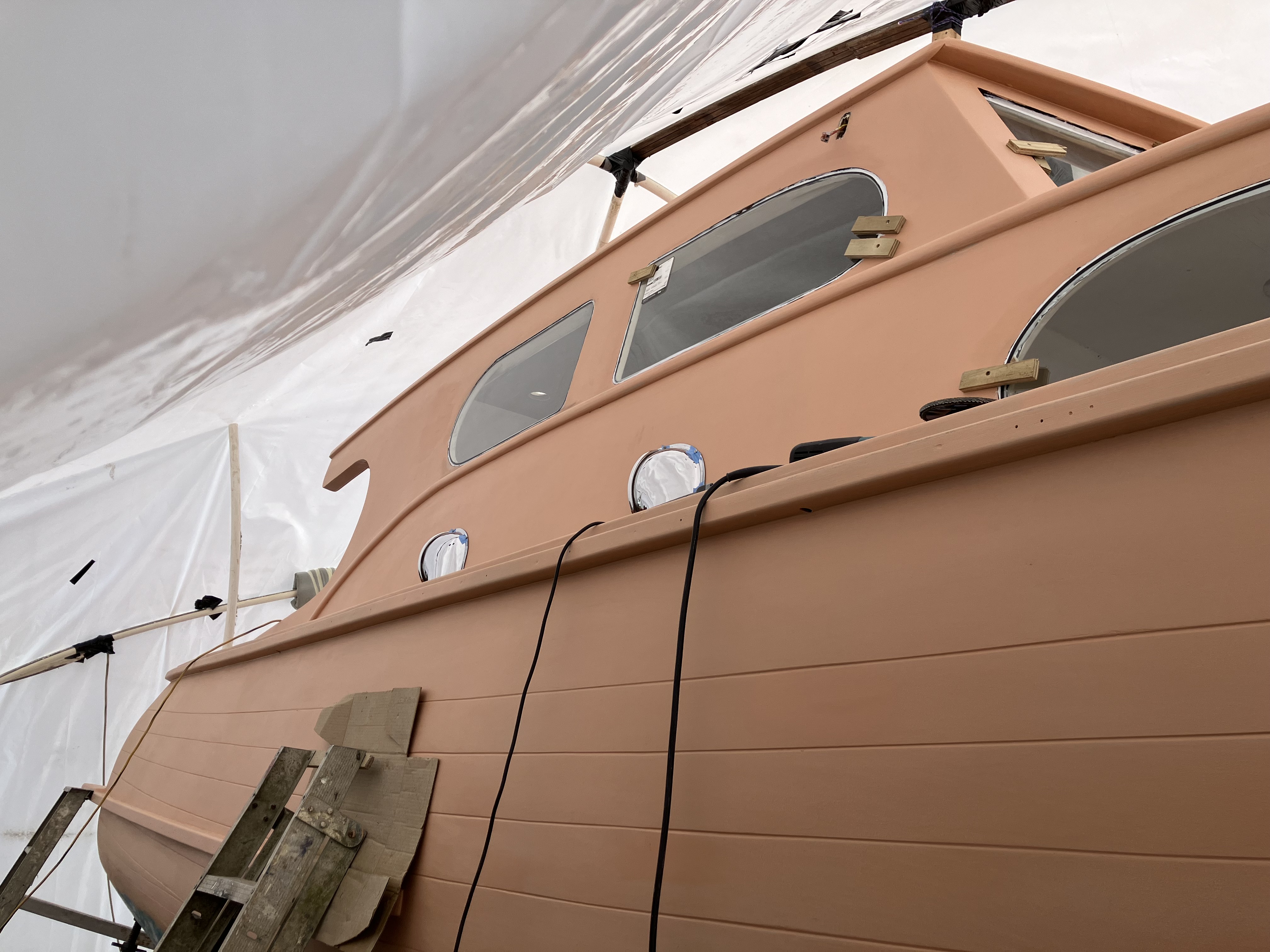
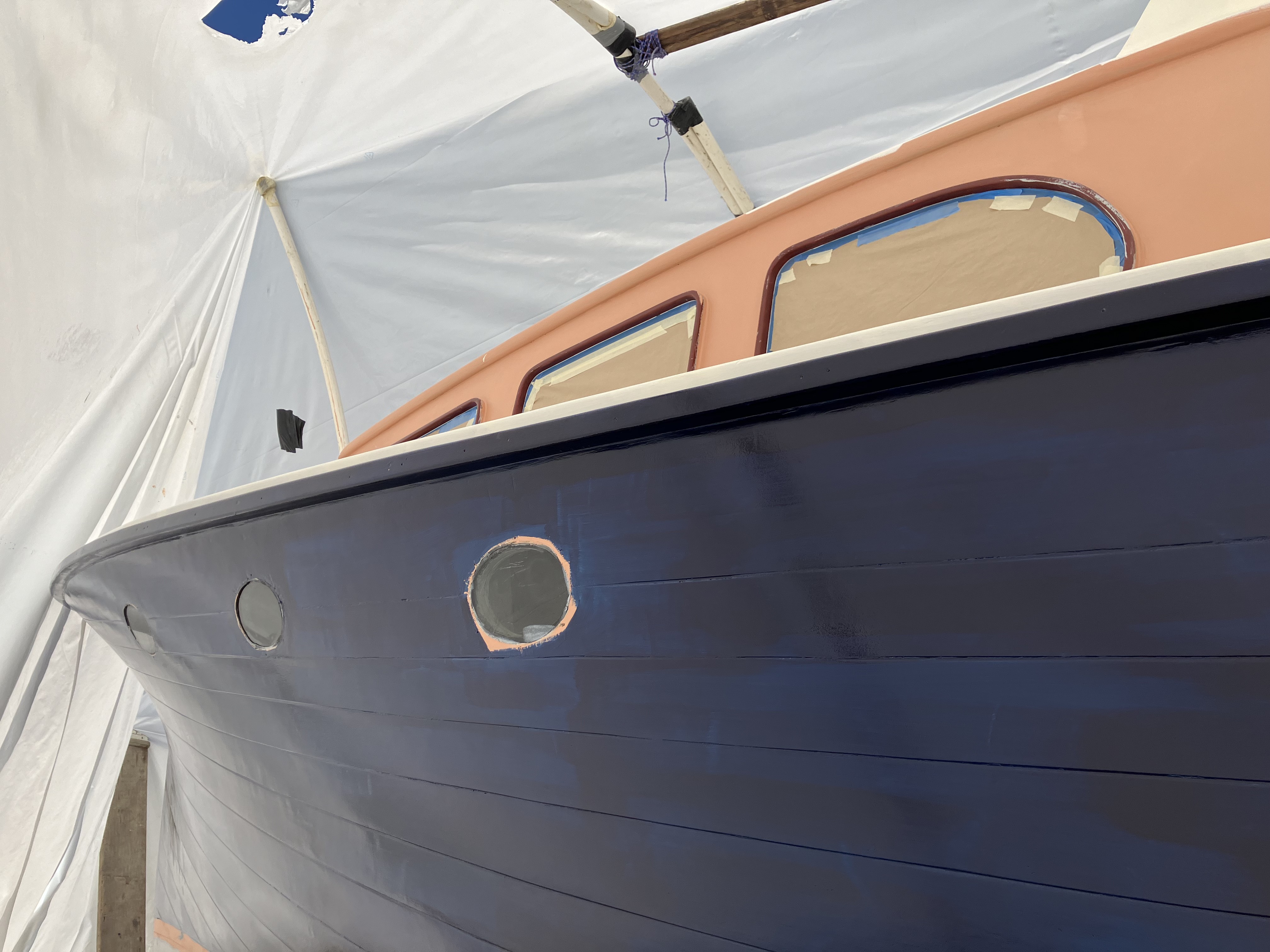
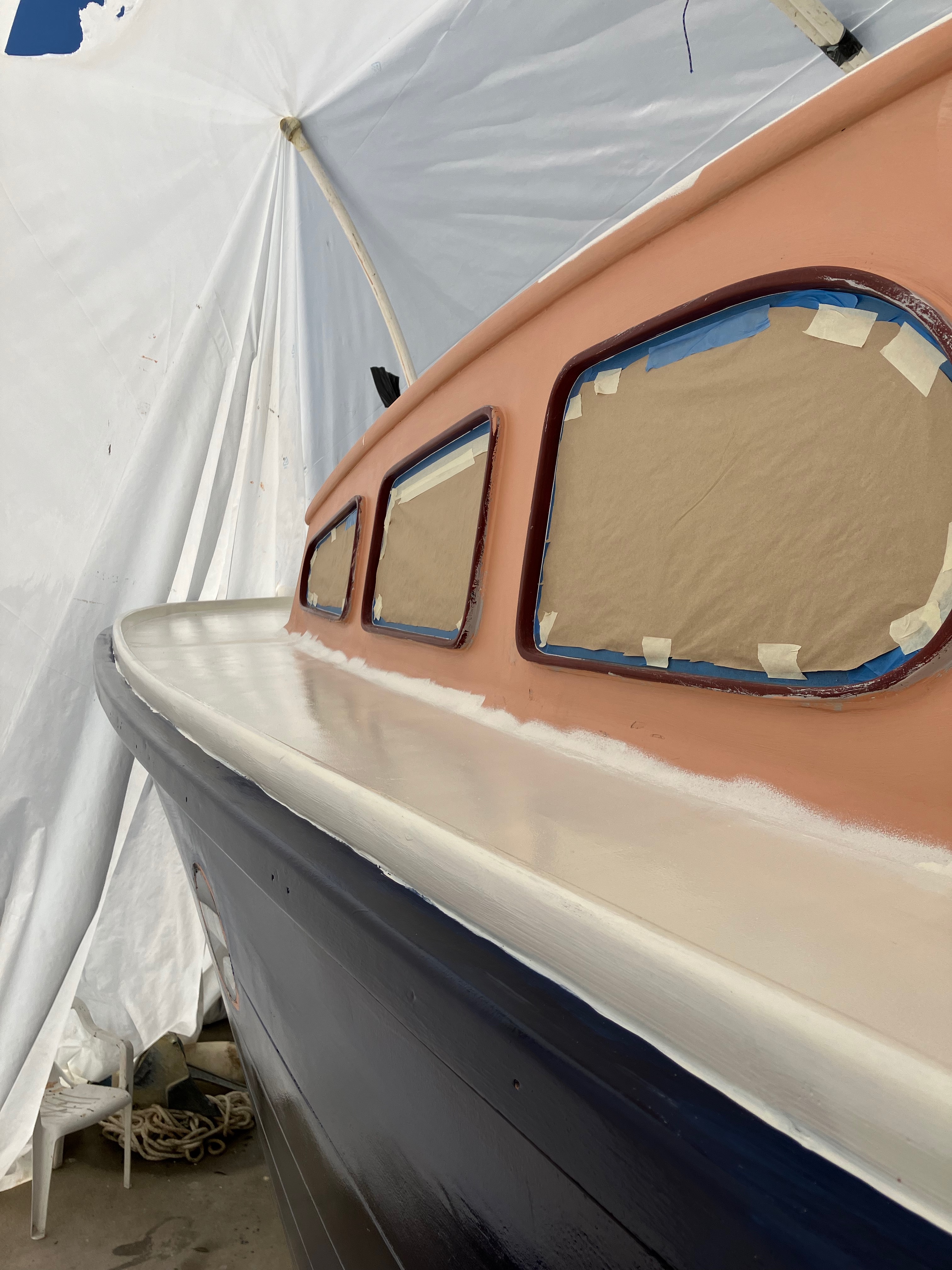
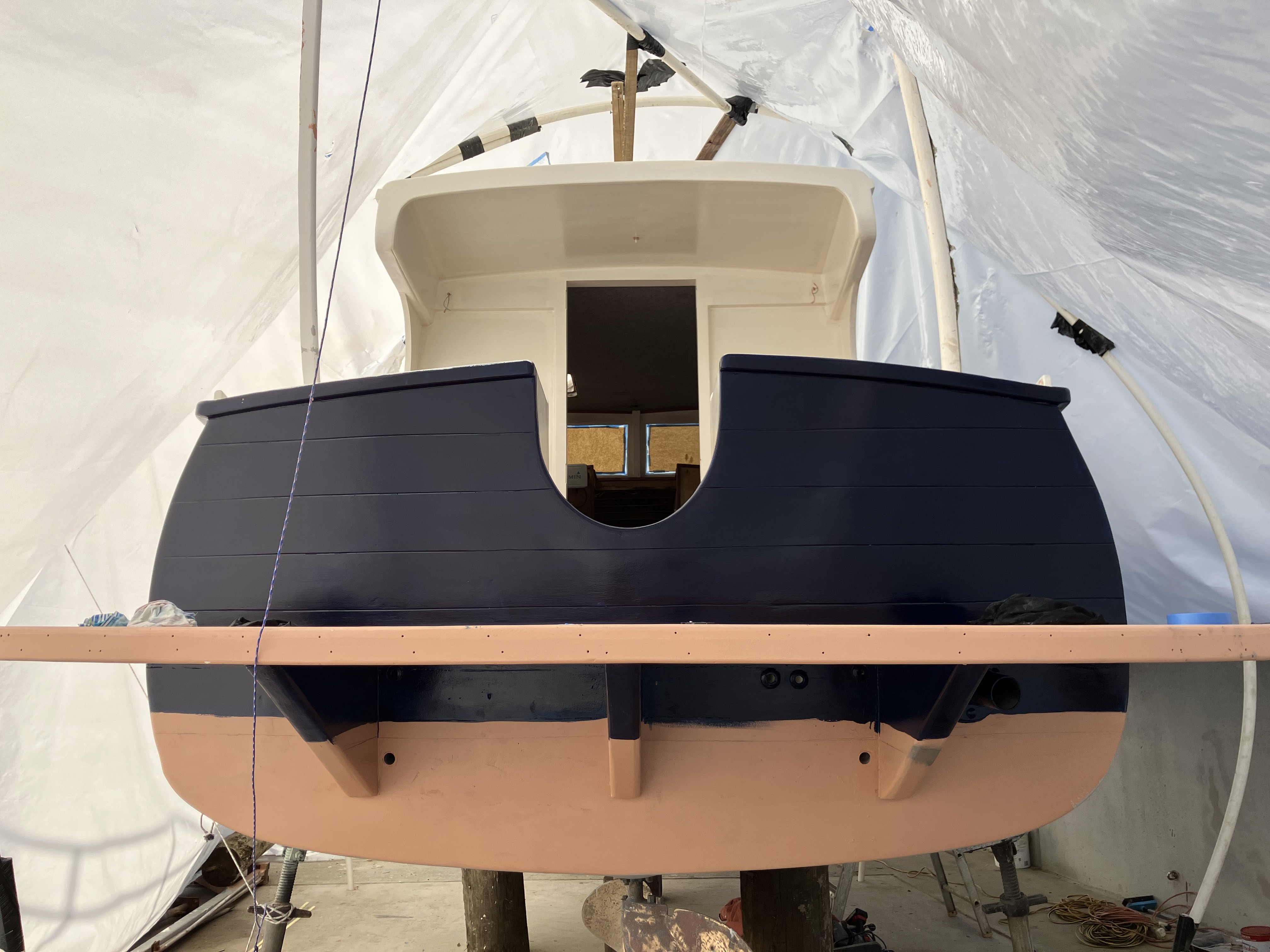
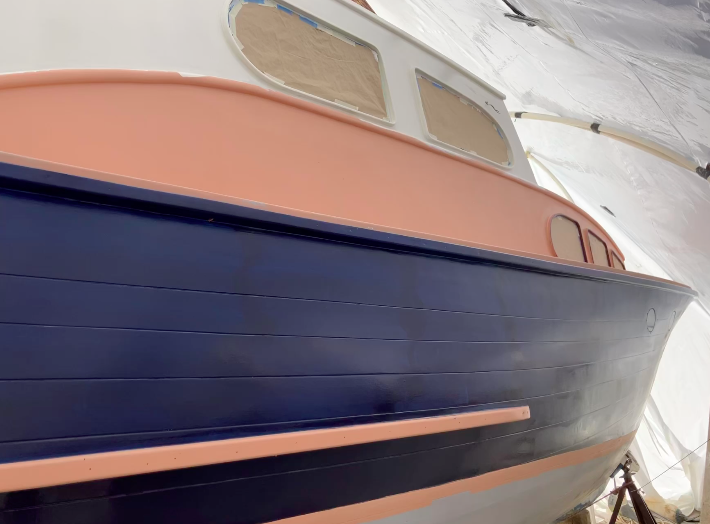
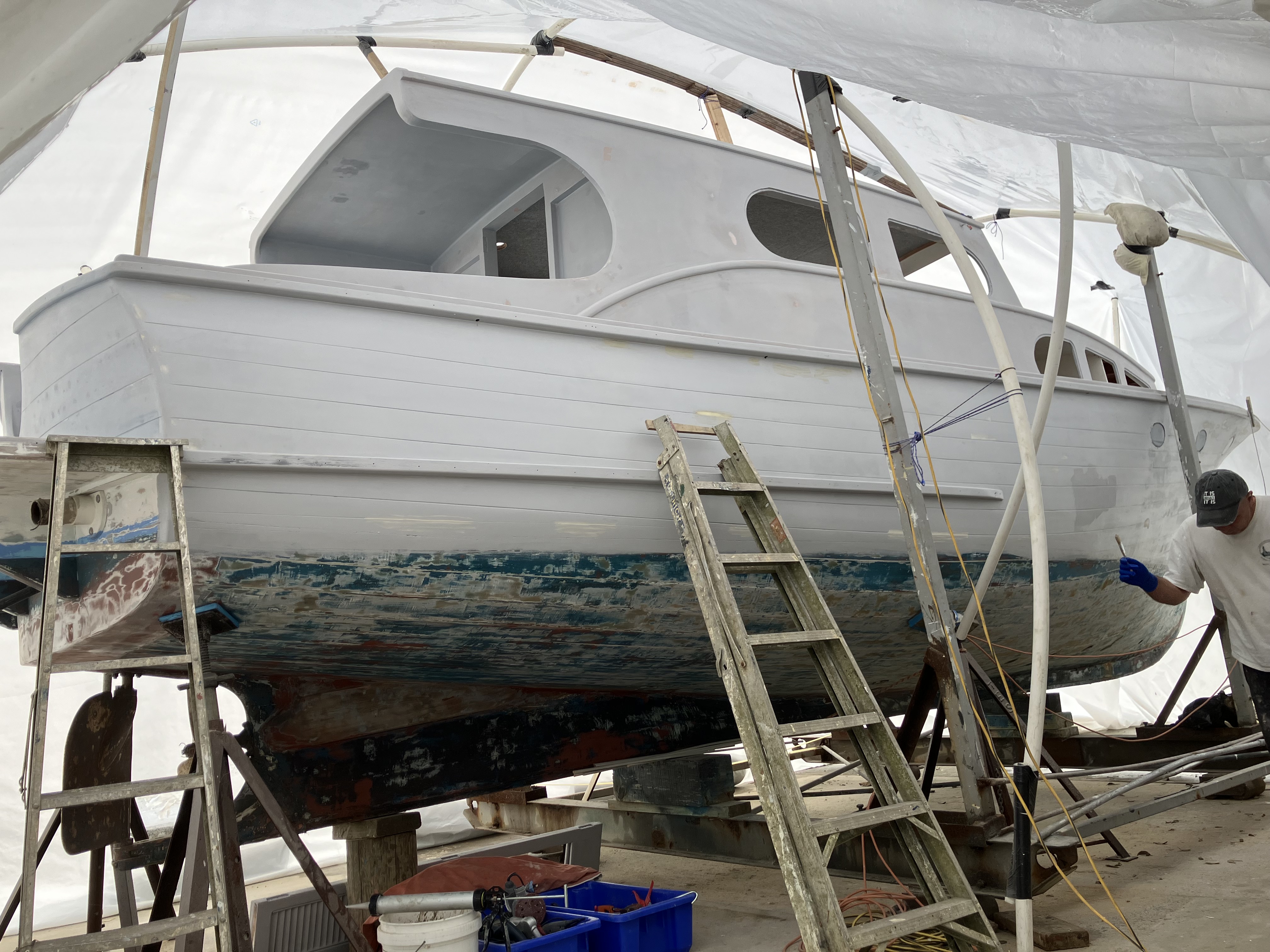
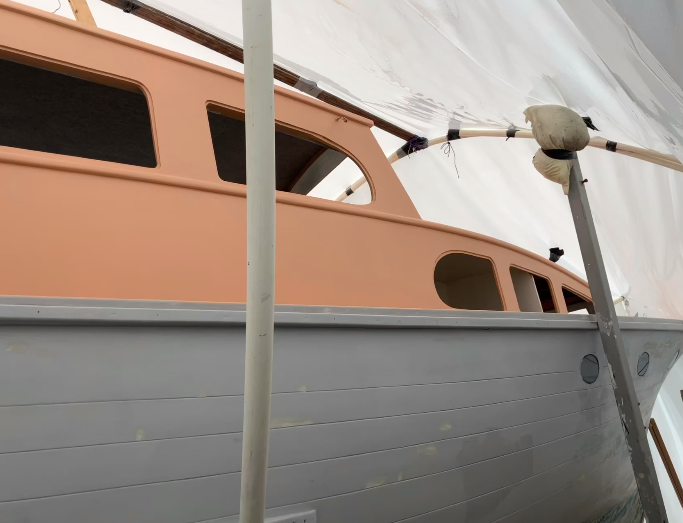
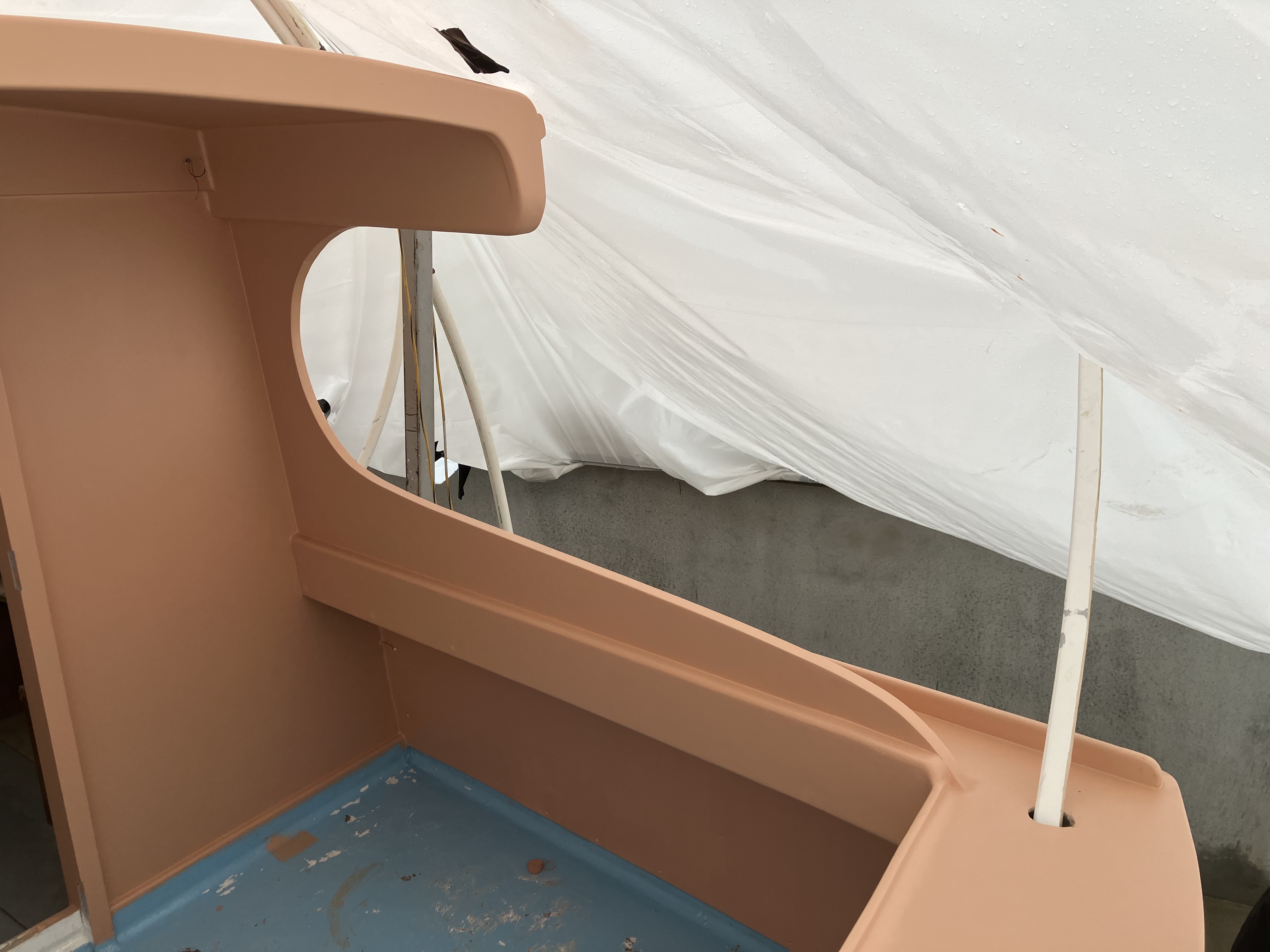
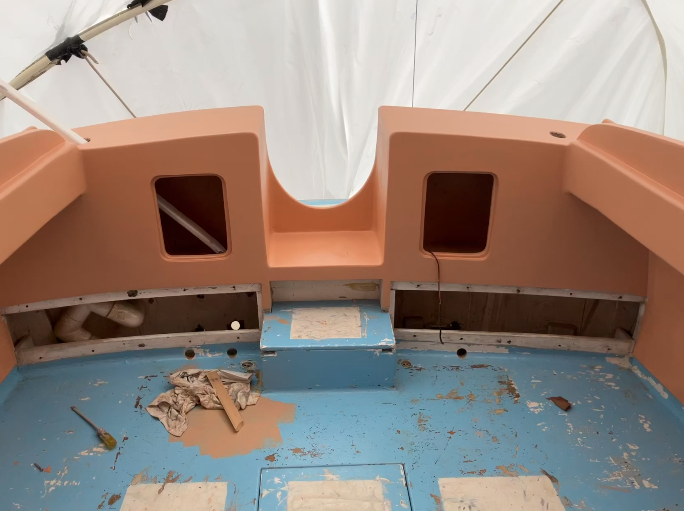
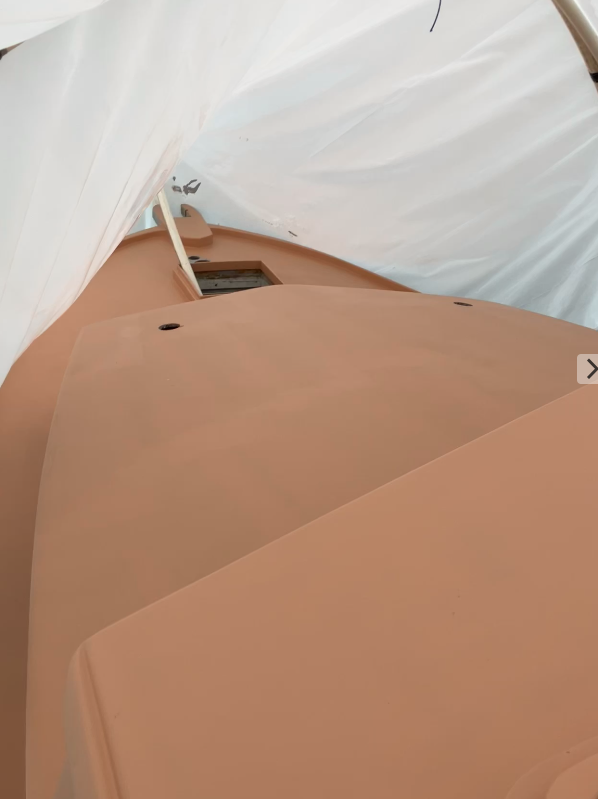
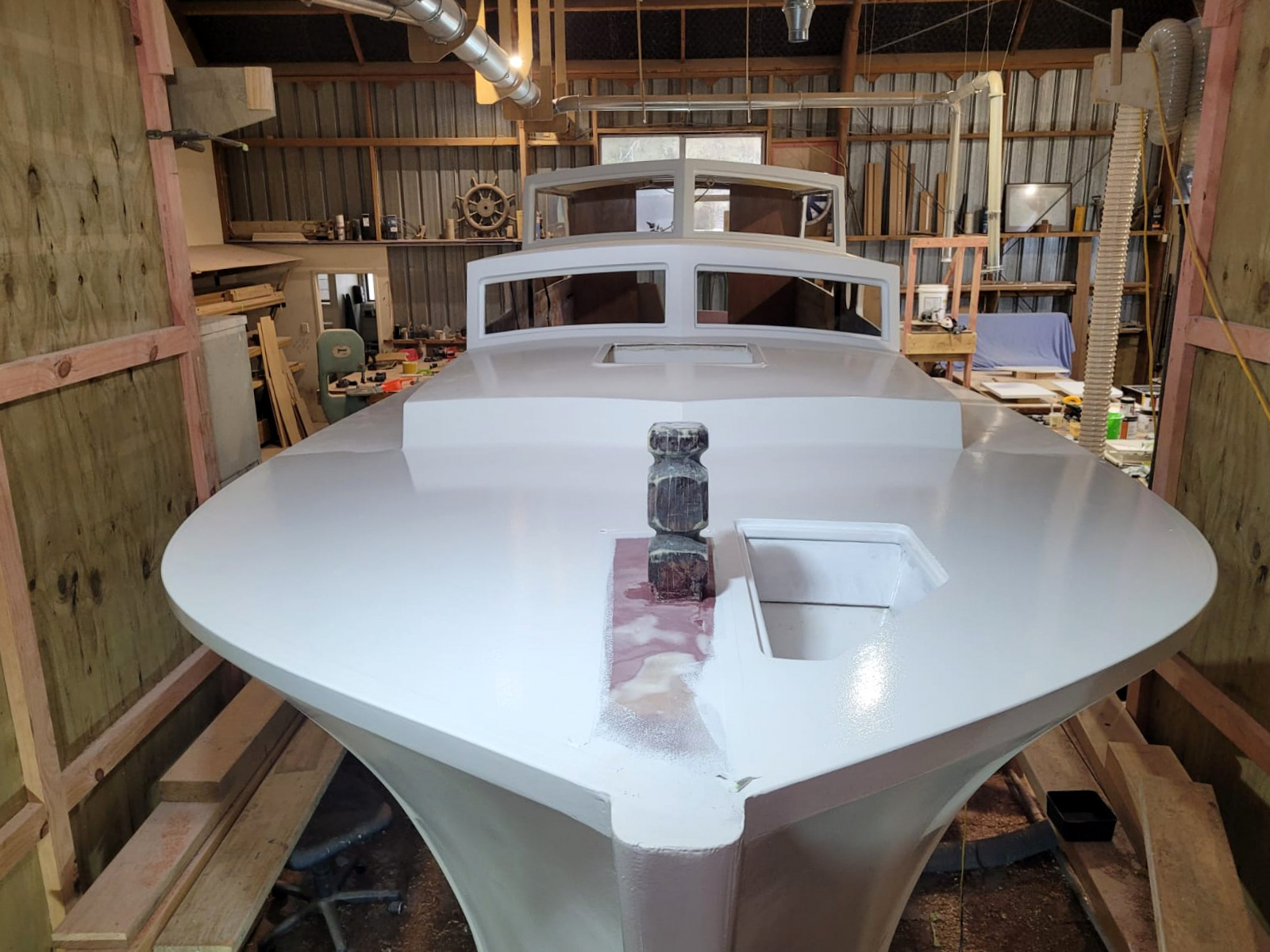
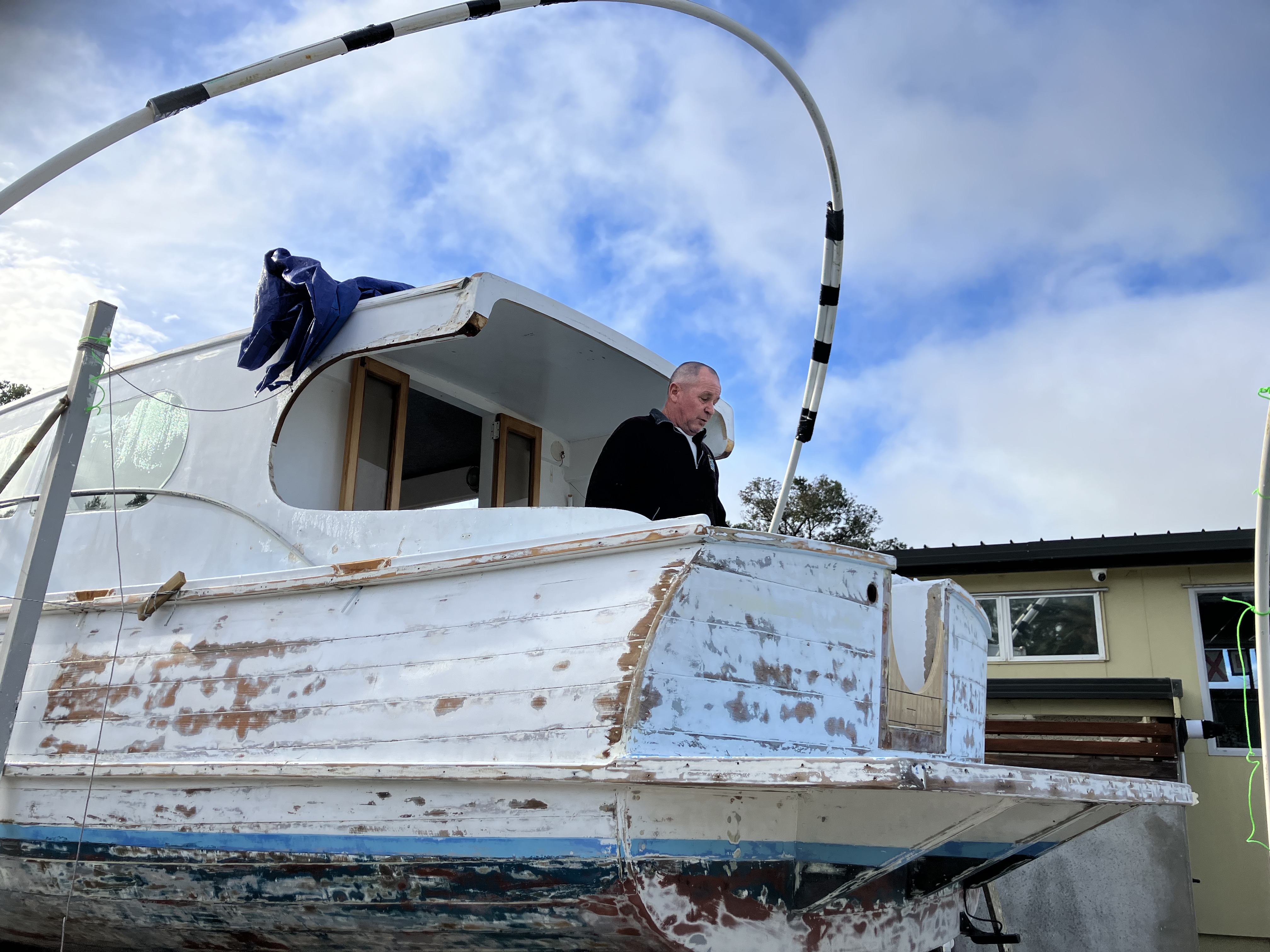
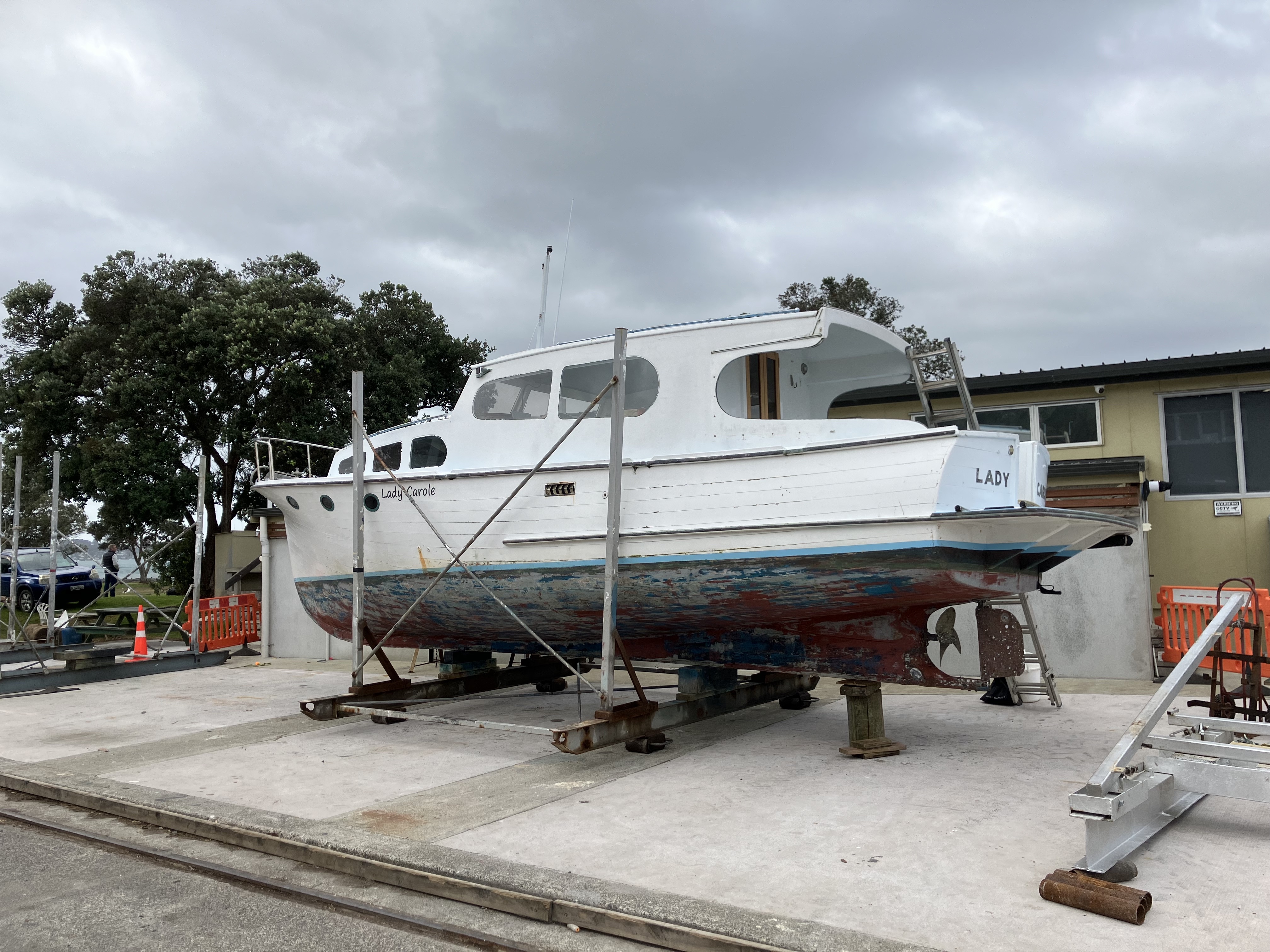
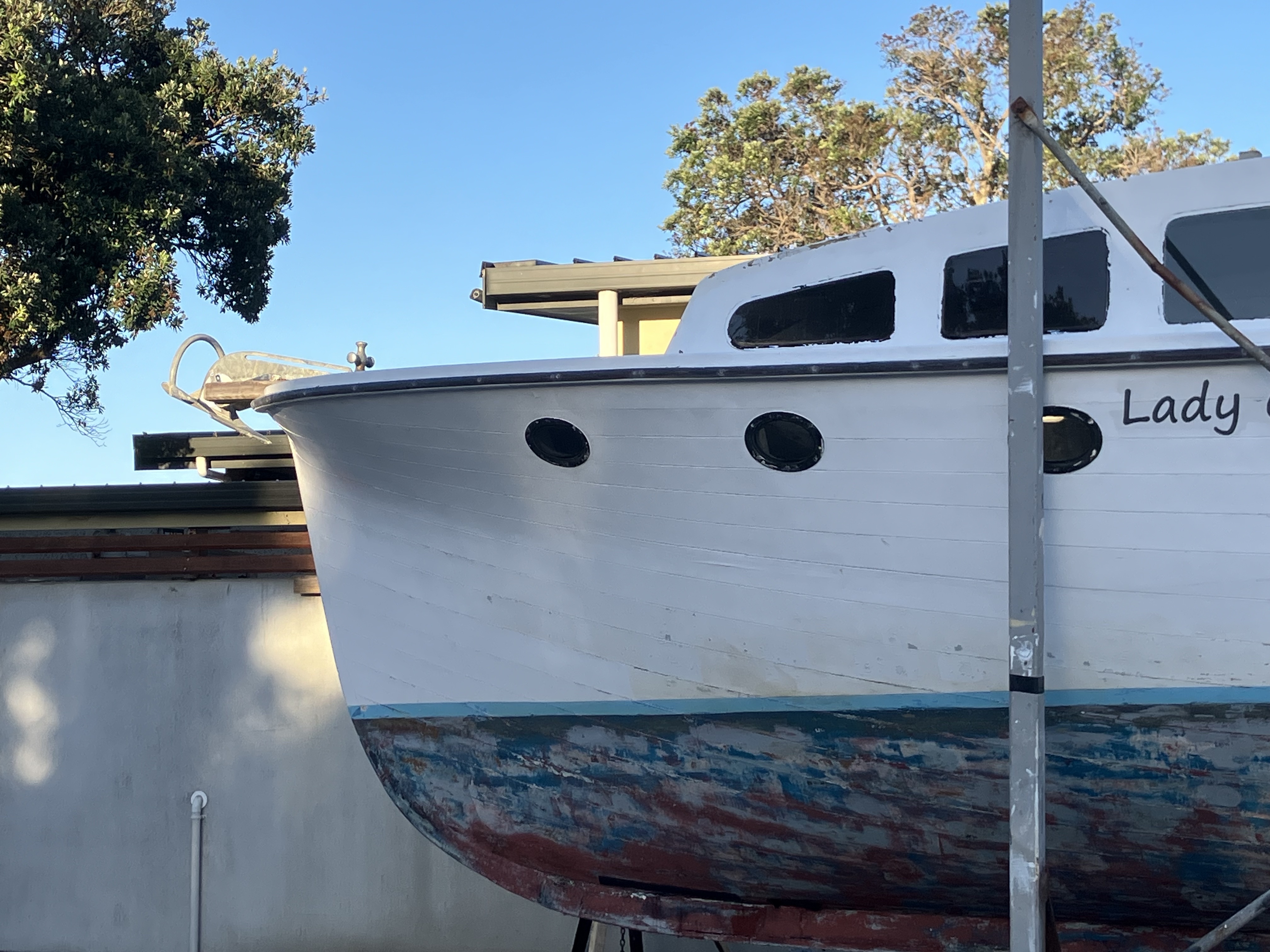
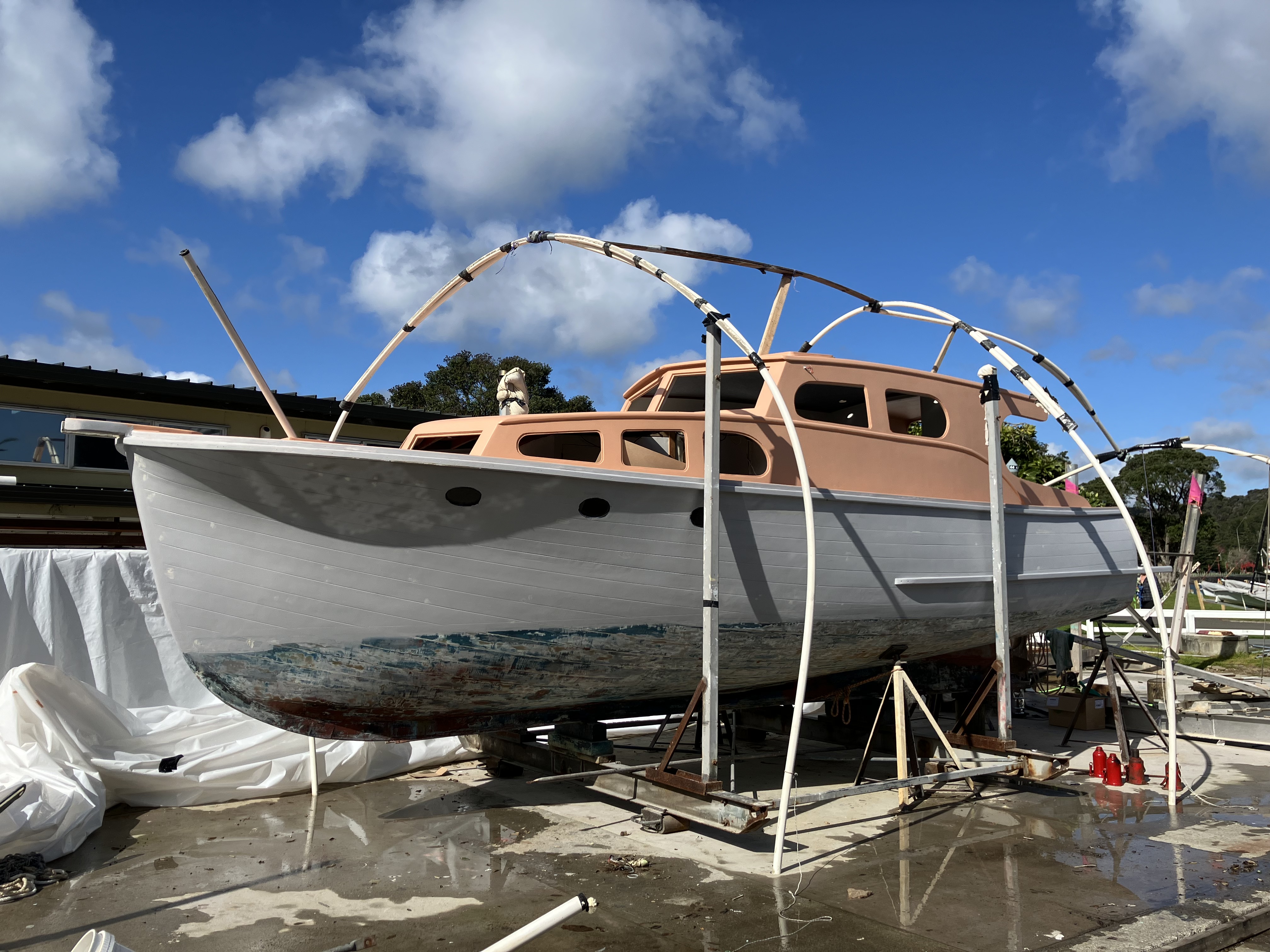
It’s been about three weeks’ since the last update and in that time we have finally got to the stage where she is ready for painting. We are working from top down and have got to the final undercoat (orange) down to the gunnels.  We have gone for a low-sheen, two-pot system for the whole boat with two primers, two undercoats and two top coats.   

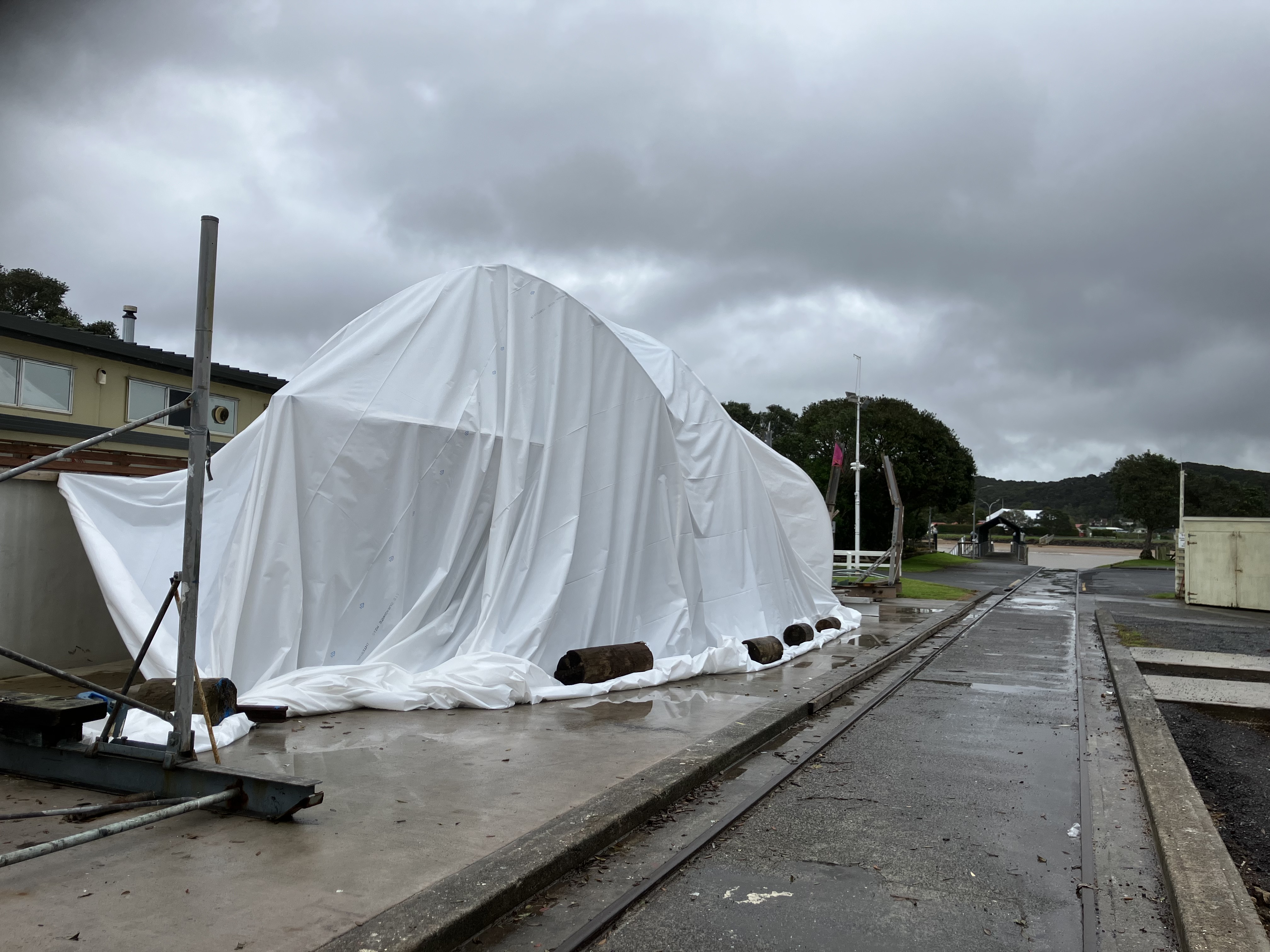
There has been the usual wild-Winter-Northland weather, which has hammered the cover, but it’s still holding up – not long to go now so. It just has to last until the windows go in and we get the finish coats on up top, which will be the week after next.

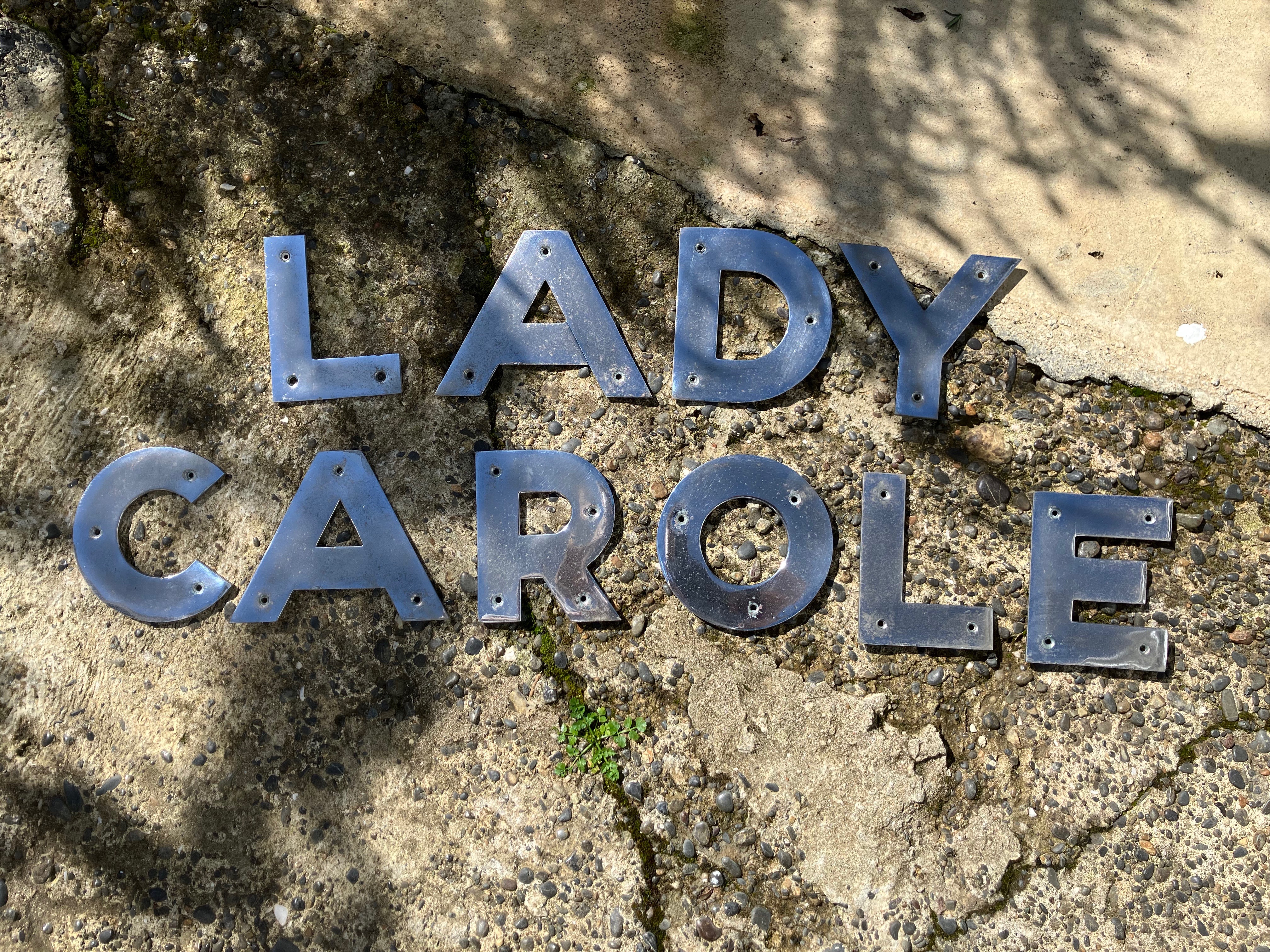
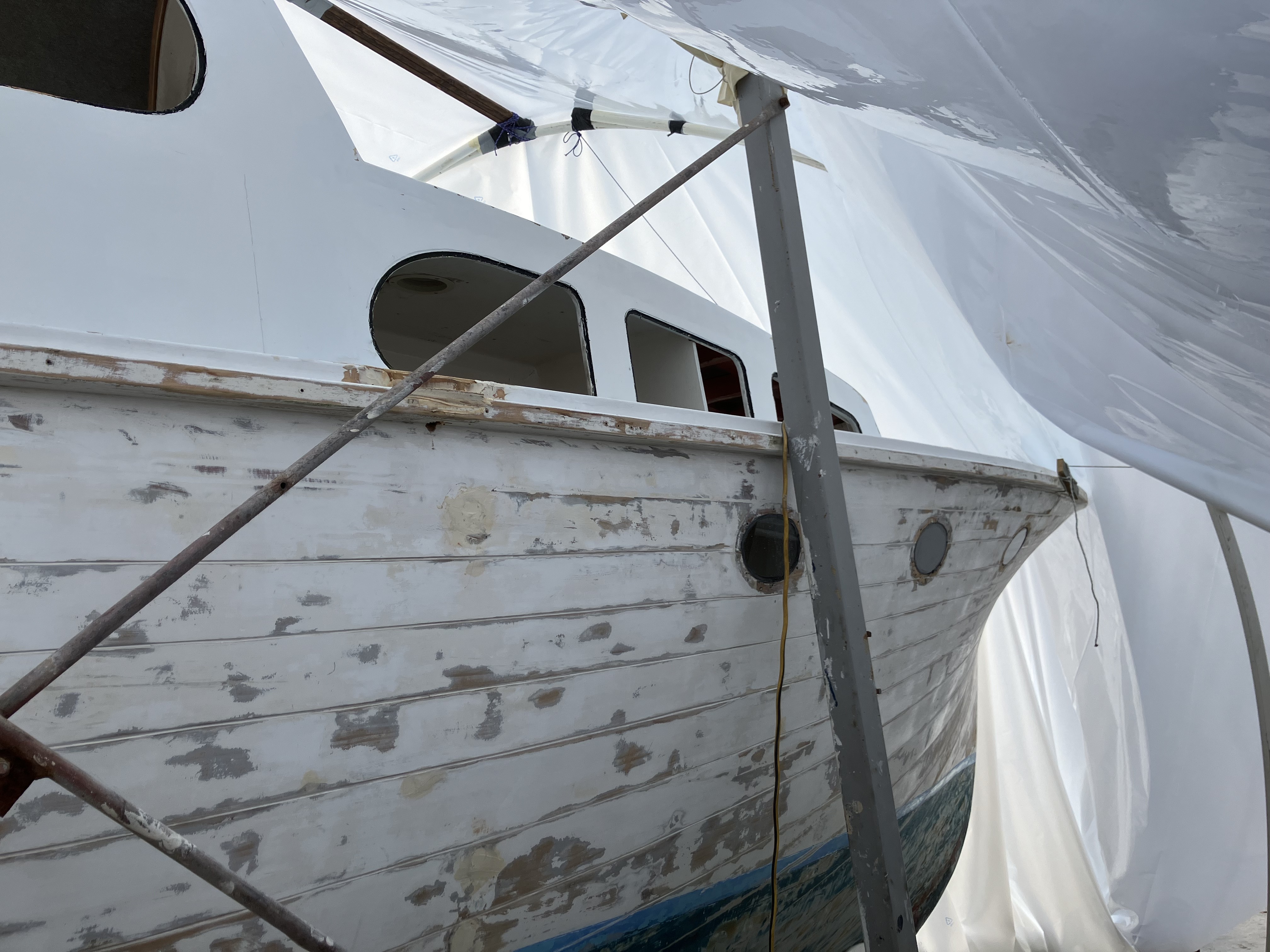
She had holes all over the place and many were in the side of the hull – including bilge ones. So, they have all been re-directed and moved to the under the duckboard where you can’t see them. The hull now is without any unsightly grills/holes/lettering, etc, etc. Nothing now to draw the eye away from the lines. 

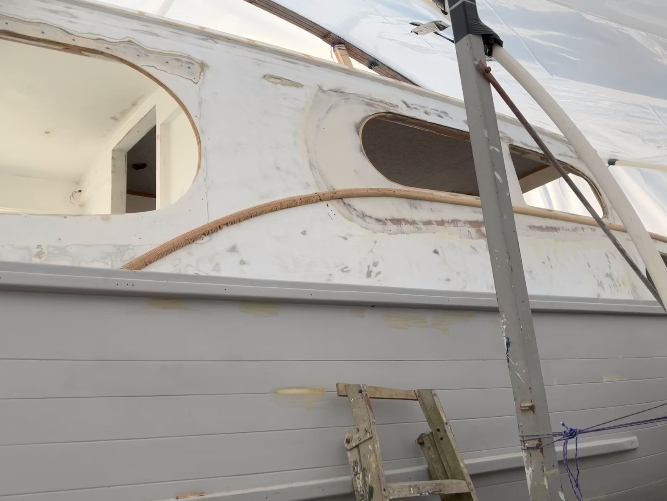
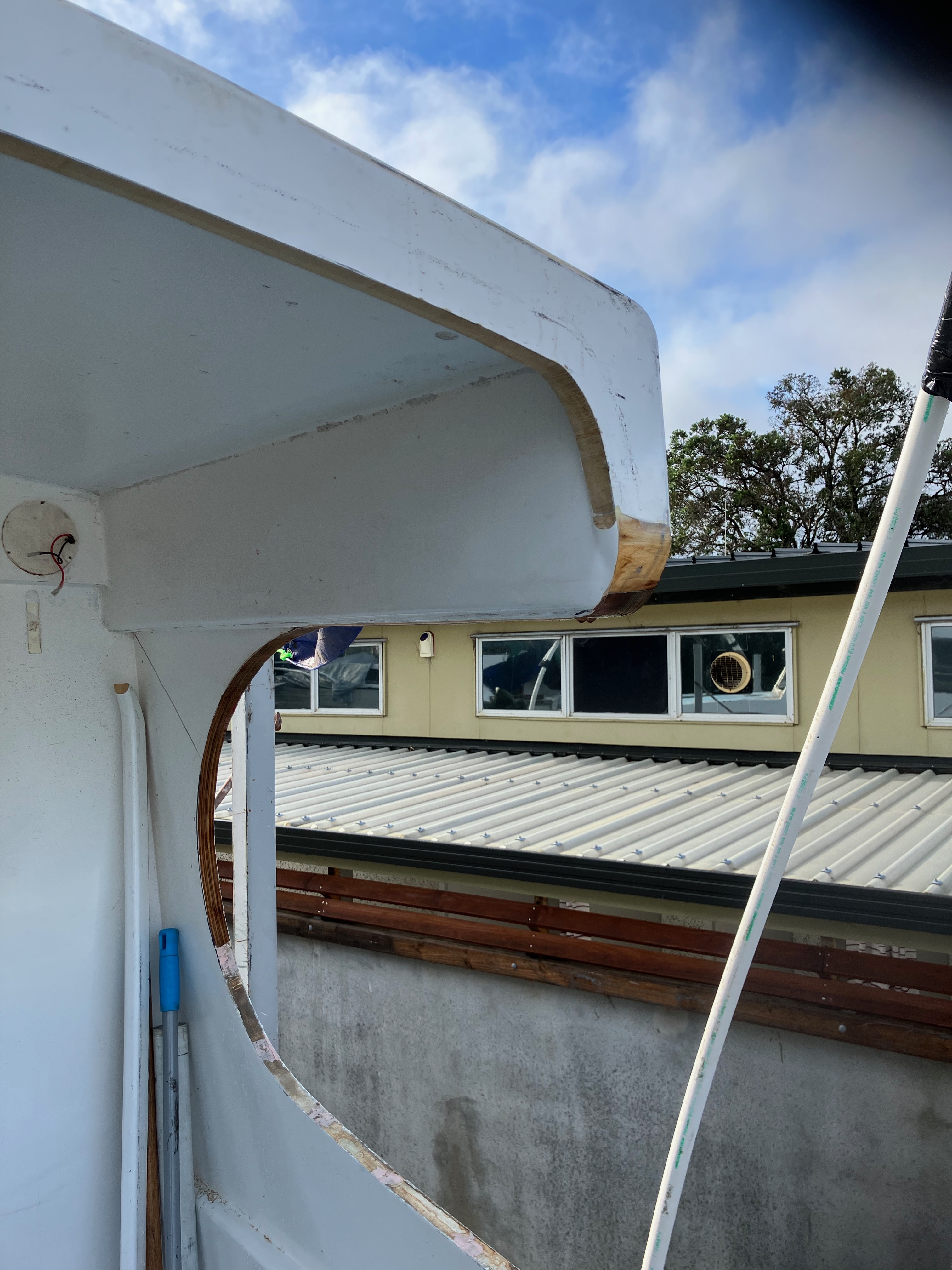
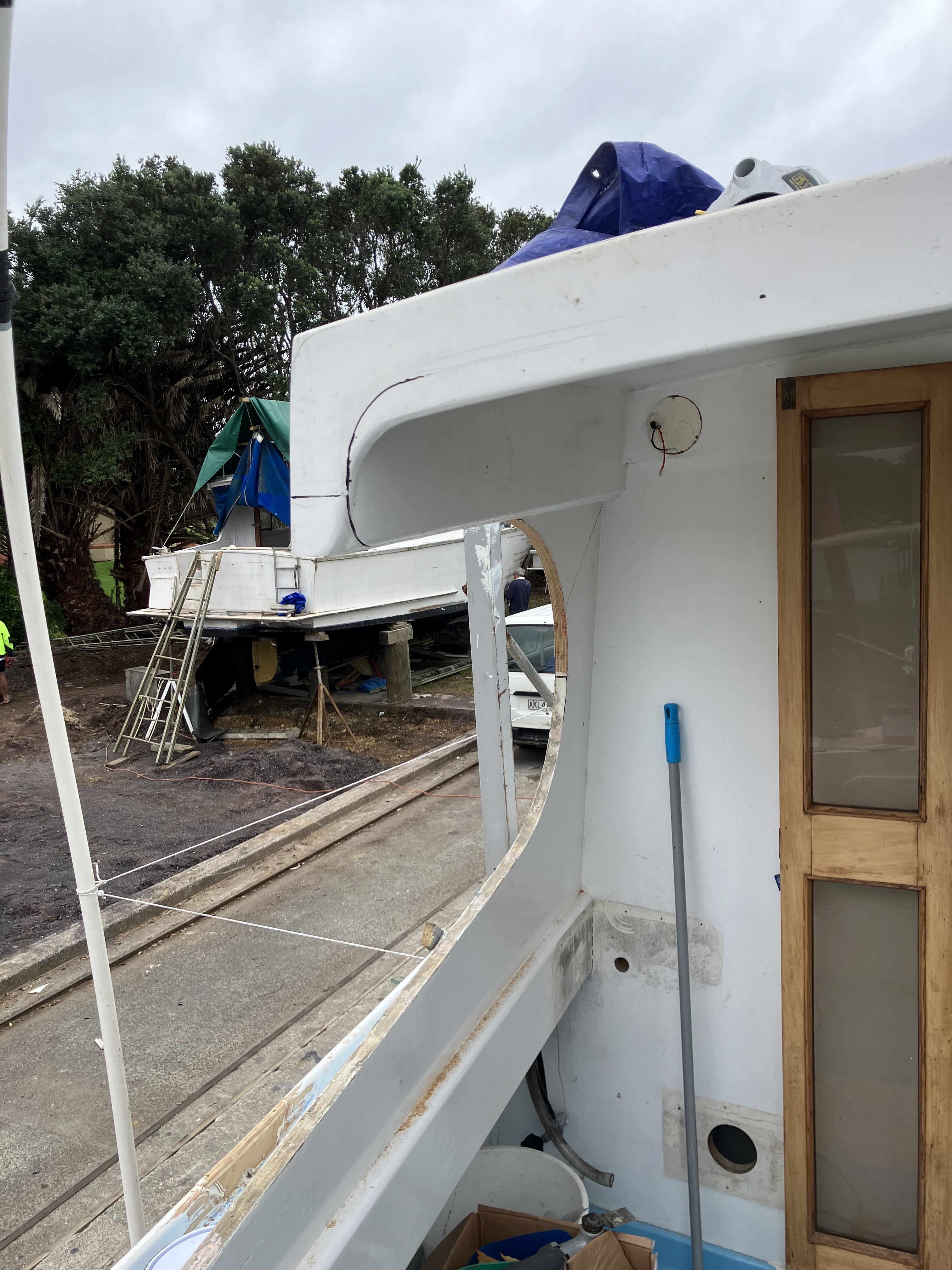
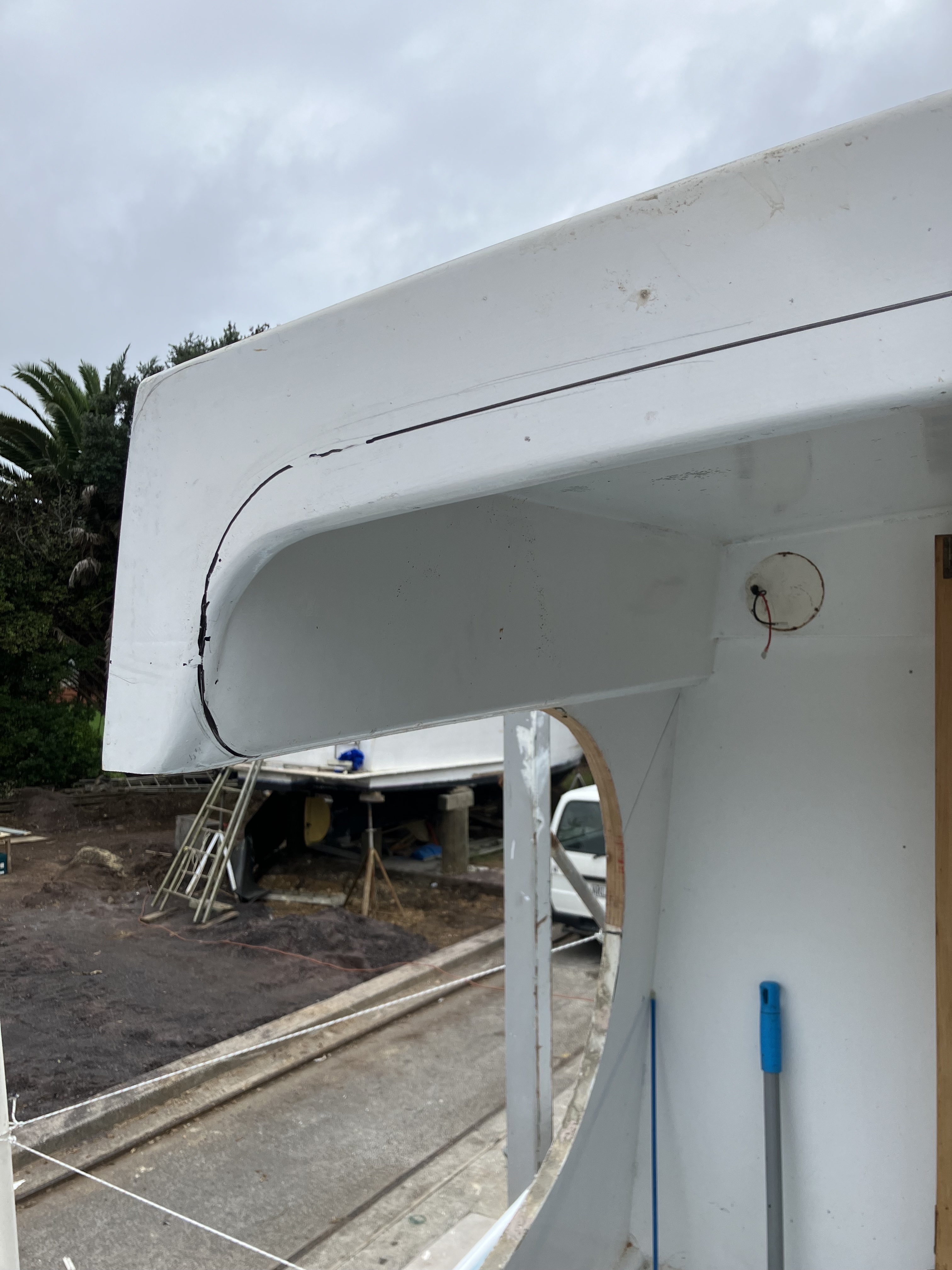
The line that connects the forward cabin to the aft deck is now re-instated. That was fun…Hundreds of cuts later, we got the curve, although it wanted to keep snapping. We took it all the way to the front of the forward cabin as it was. This has given the forward part above the windows a really nice profile.  Finally, the lines of the LADY CAROLE have been restored working nicely with those reduced windows. 

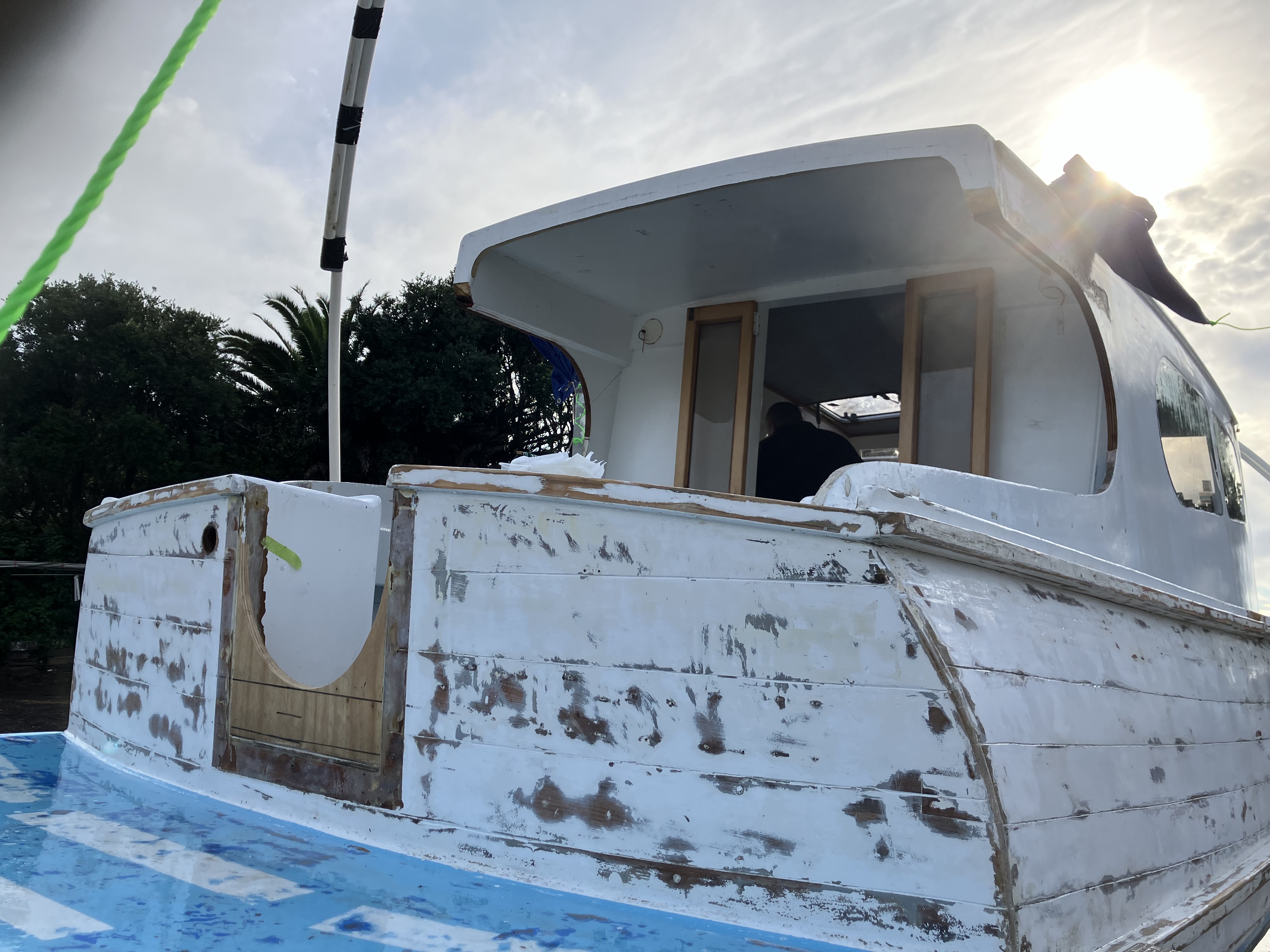
The cockpit drainage was a plastic box with a float switch. This never really worked properly and was prone to blockages, so the drainage for the cockpit has been returned to self draining with larger holes so they don’t get blocked. 
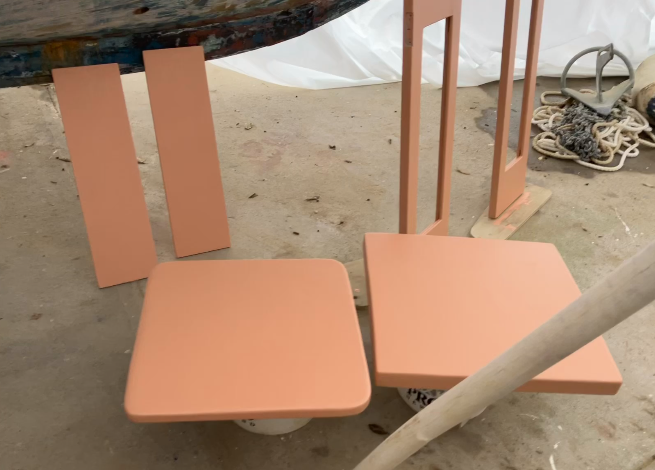
The back doors had brown smoky glass in both sections, so they were taken to a local joiner to have slats put in the upper section so we can improve cabin ventilation. Here they are almost ready for the top coats. 

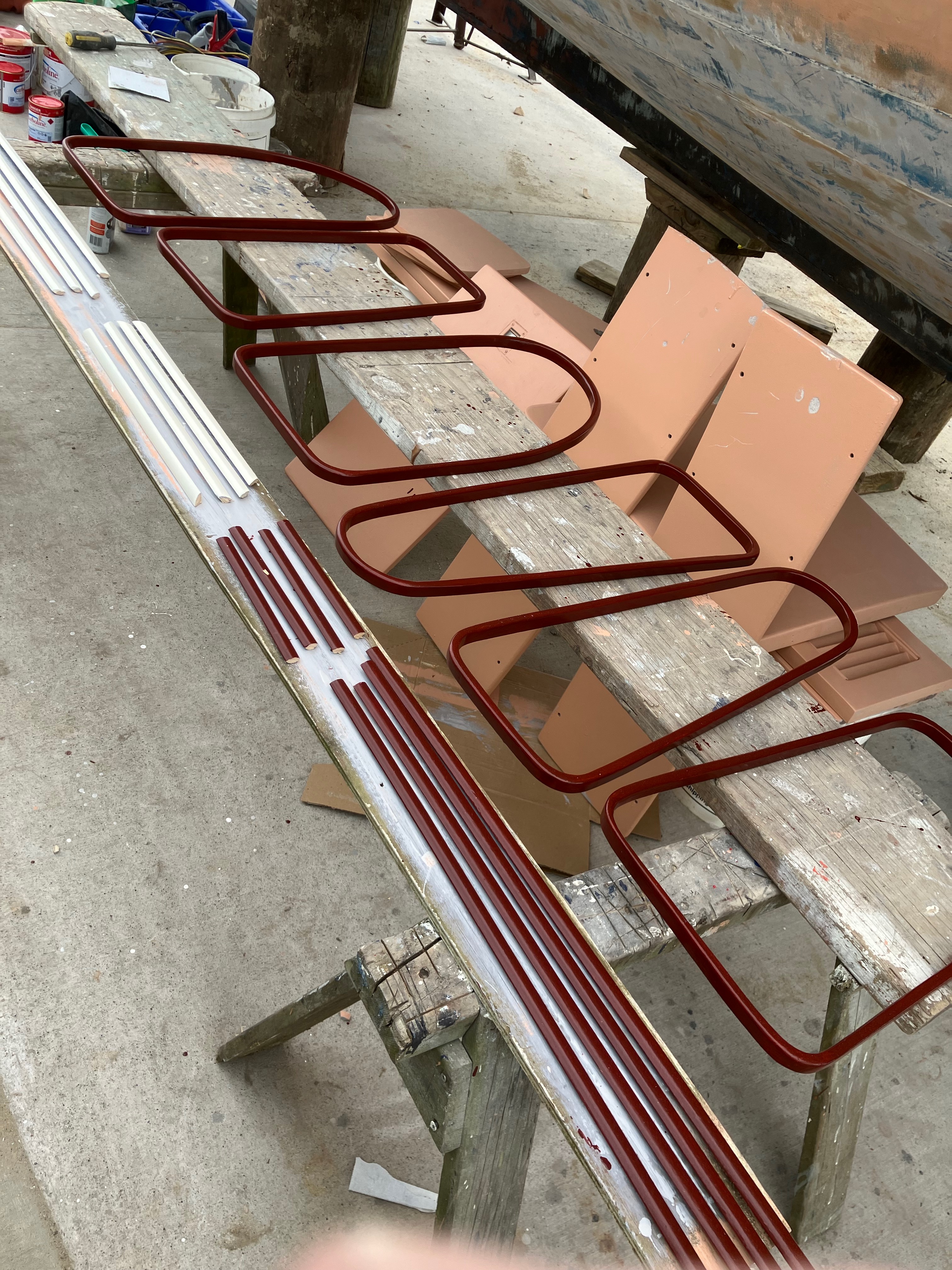
We decided that the trims should be put back on the windows to give it some profile and finish the look. Originally L.C. had trims, but these had long gone.  

The hatches are finally finished and pretty much ready for their top coats. 

CLASSIC WOODEN LAUNCH – ALMA G II Restoration Updates #3 & #4

CLASSIC WOODEN LAUNCH – ALMA G II Restoration Updates #3 & #4

We have been following the refit / rebuild of the1927 Collings & Bell classic wooden launch – ALMA G II for a while now, the last WW story was back in December 2023 Dec 2023 and I have a confession to make – Update #3 slipped between the WW cracks so today you get a two-4- one 🙂

UPDATE #3 from Sian Steward at CMC Design below – 

“So much has been going on in the last few months, the team have been working very hard and things are looking great.

After the long long months of initial work of bringing all the bones of the Alma G II back together and many coats of white paint in the hull interior we moved onto the next phase.

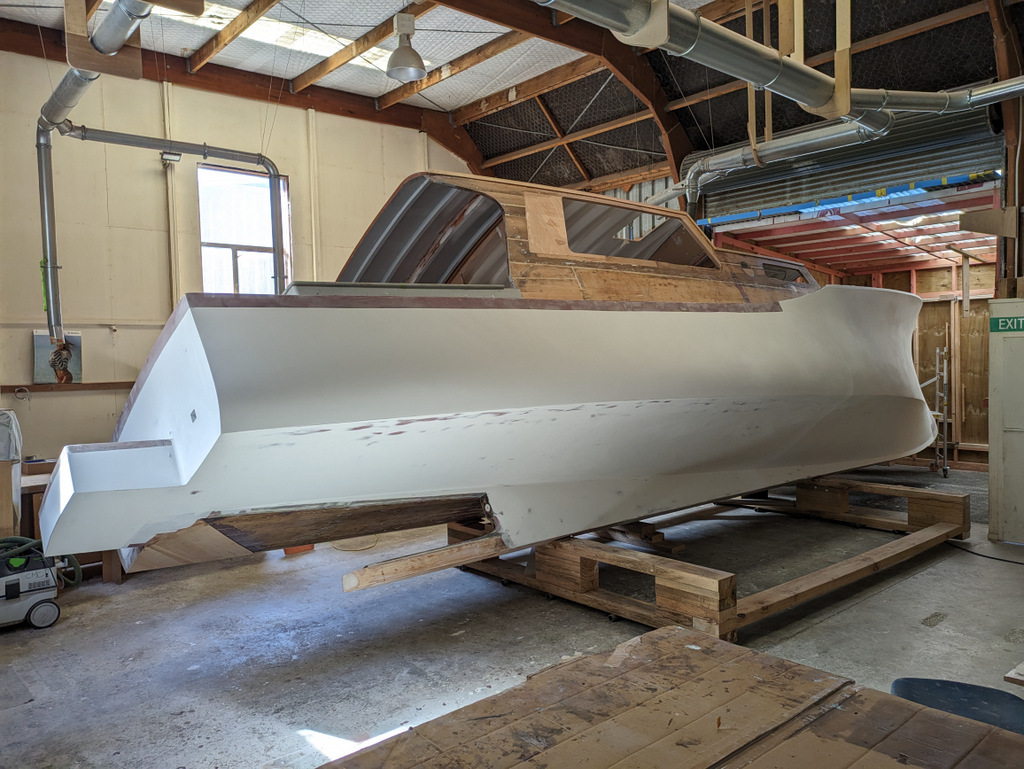
The hull has been double skinned with kauri planks, filled, fared and prepped for fiberglass. It was a shame to say goodbye to seeing all the beautiful original timber underneath, but a boat that floats is the ultimate goal.

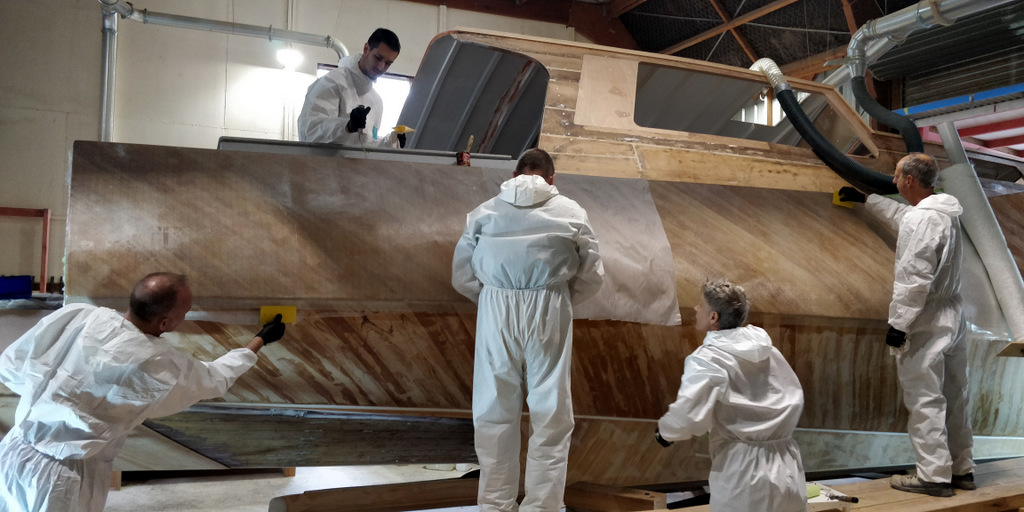
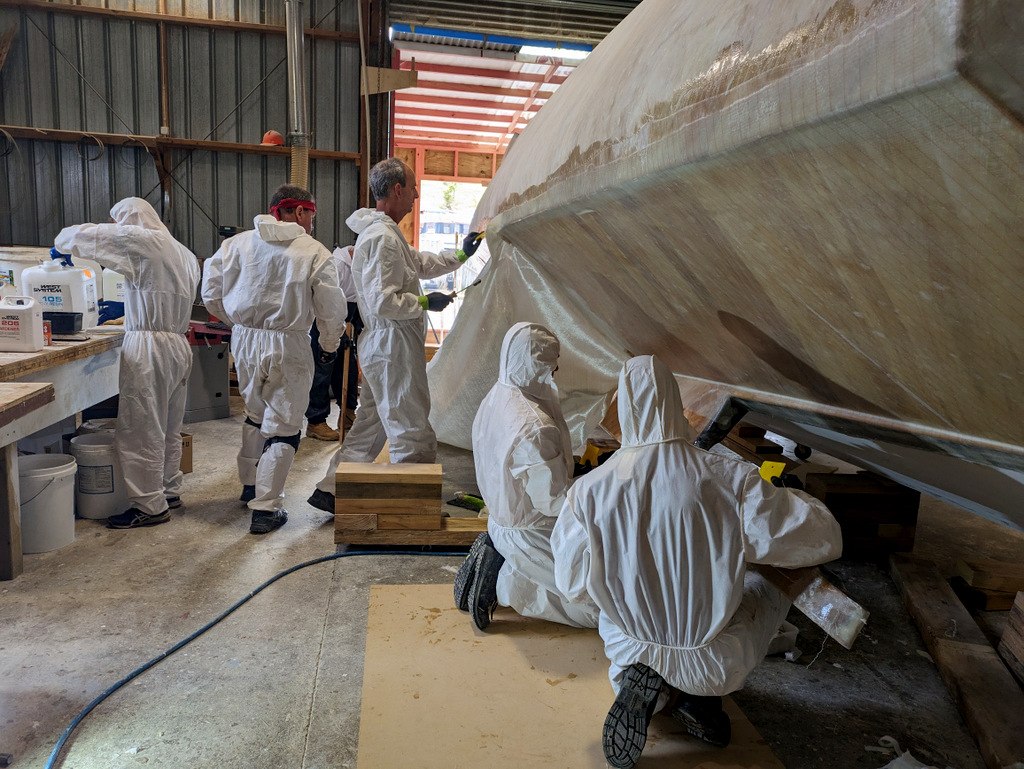
It’s good to have all hands available for this aspect of the build, working together makes the tough job of glassing much more streamlined and quicker. No one wants to draw out glassing for too long and we are grateful it isn’t a regular part of our day-to-day job..

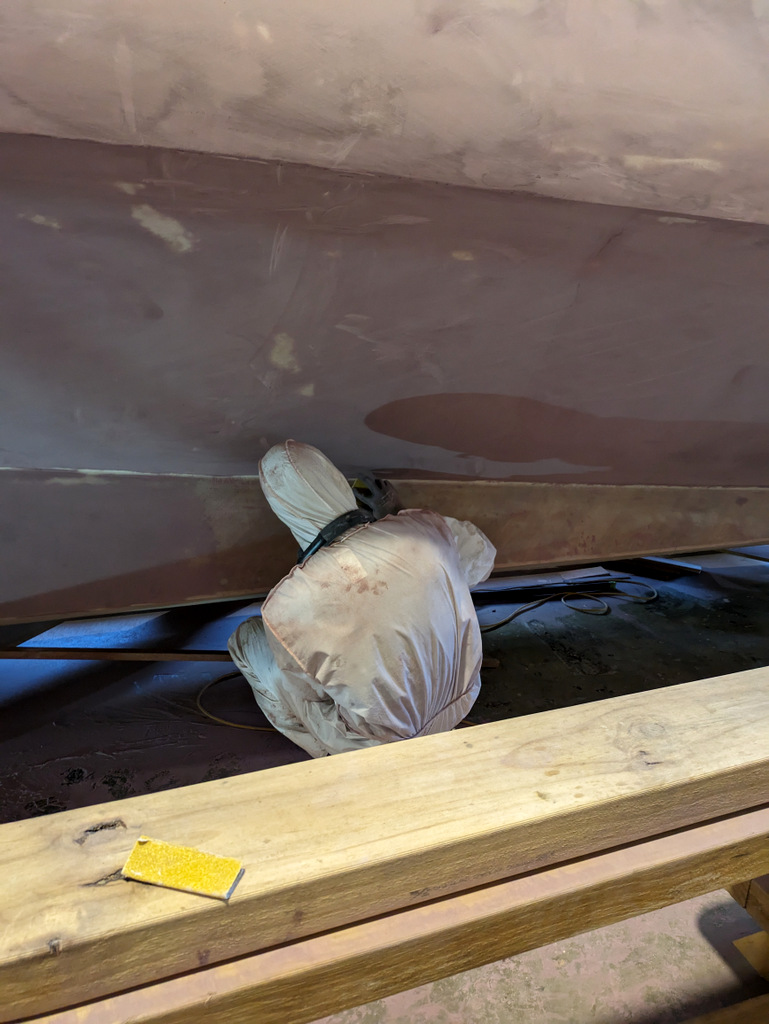
More full suited days in the hot hot heat bogging and readying for paint. This is where the restoration really looks like it is getting somewhere. We have been going since last April and these milestones are meaningful to both the workers and the boat owners.

The Alma G II has been carefully rolled once more and the whole process starts again on the port side.

From there, back to upright and some more detailed discussions on the interior finishes and fixtures. The owners are keen to honor the traditional elements of the boat and have been sourcing some really lovely items from navigation lights to the bench top surfaces.

Top coat paint colour choices are being made and we keep moving on…”

UPDATE #4

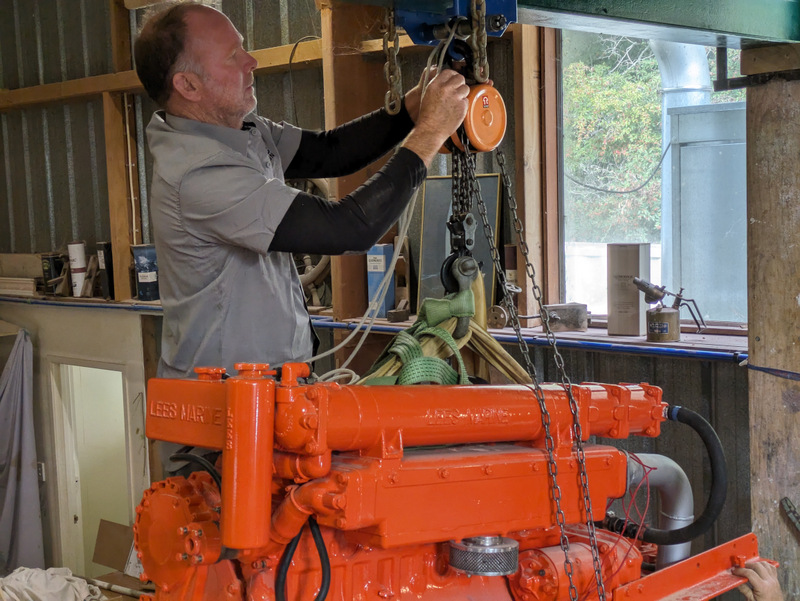
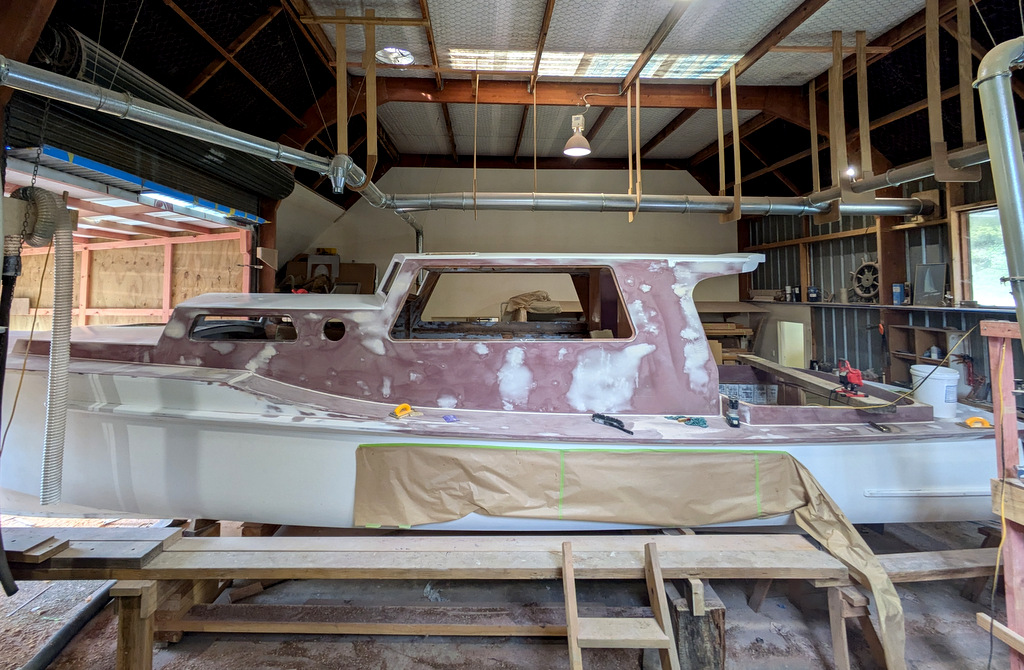
“Further updates on the Alma G II. We have layers of paint going on!   More hard work has been done in these last few months with the Lees engine going in, fiberglassing, long board sanding and bogging and fairing.  Real backbreaking stuff. Onward we go with paintwork and then the interior fit out. “   

LINKs TO PREVIOUS STORIES FOLLOWING THE PROJECT

WW May 2023 Story https://waitematawoodys.com/2023/05/01/restoration-of-alma-g-ii-begins/

WW Dec 2023 Story  https://waitematawoodys.com/2023/12/06/alma-g-ii-restoration-update-2/

CLASSIC LAUNCH – LADY CAROLE RESTORATION – UPDATE #3

CLASSIC LAUNCH – LADY CAROLE RESTORATION – UPDATE #3

Again co-owner Patrick Crawshaw walks us thru the latest work

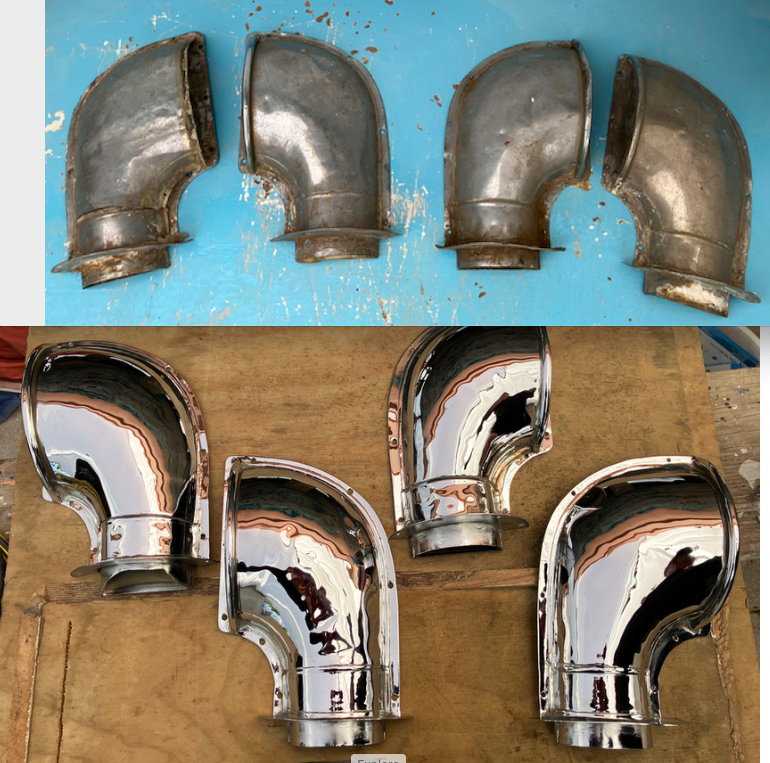
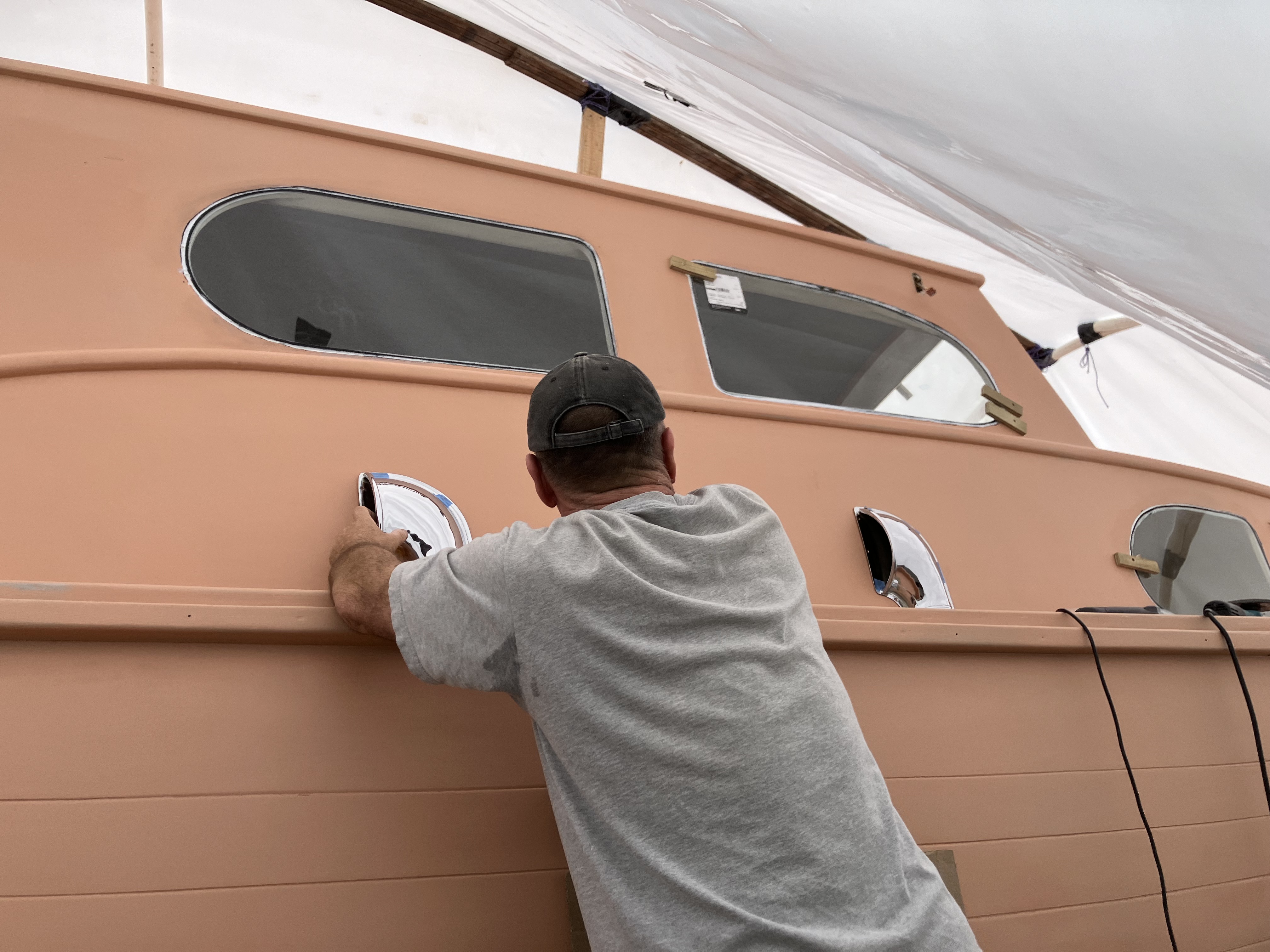
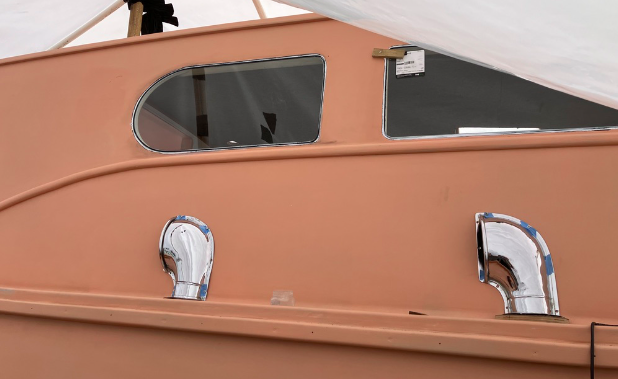
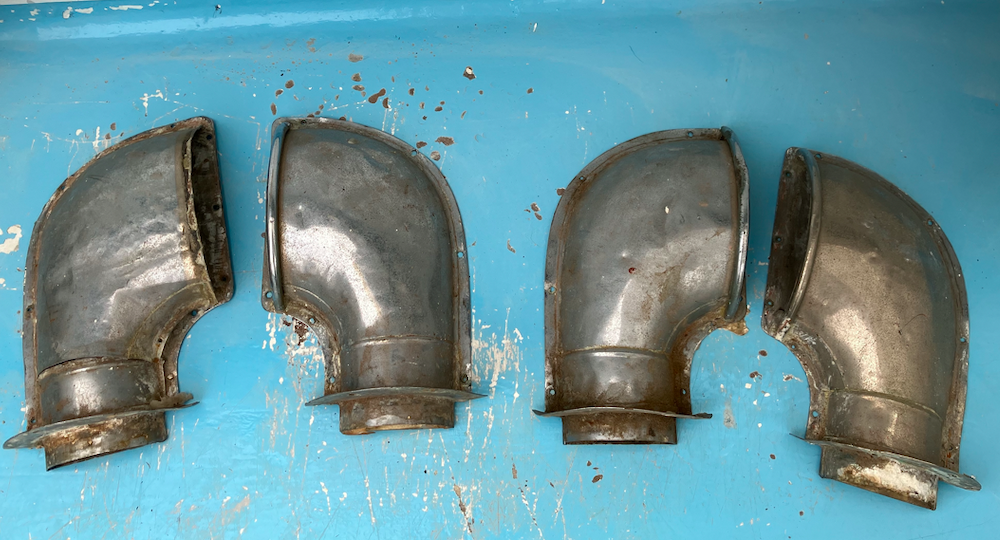
“First thing, I would like to say a massive thank you to Ron Trotter who after last week’s post got in contact with waitematawoodys to say he had the original cowl vents. He posted them up to the Bay of Islands and I had them on Tuesday.  This website is incredible for putting the right people together and after spending literally hours and hours searching the world online for these things, I was very happy that I have the original ones back. One closer inspection when they arrived, I could see they were made back in the day by hand, hence the reason I could not find them and even more of a deal that we had the original ones to go back on LADY CAROLE.  They will get panel beaten and tidied up and then have to go to be re-chromed.

This week has been a little more challenging, not in what LADY CAROLE has thrown us, but more in what mother nature has. 

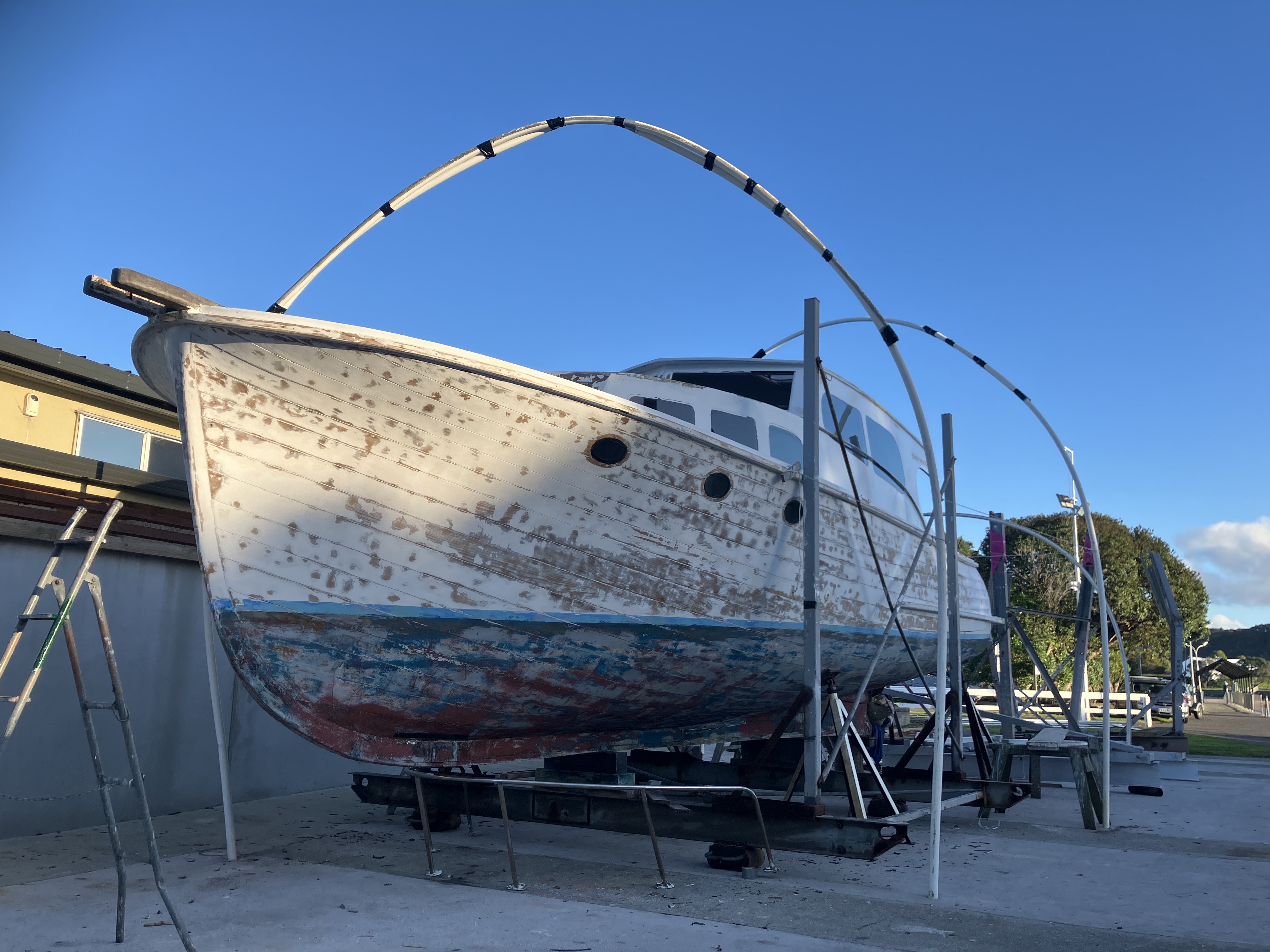
We are working through the Winter and have a limited time frame at the yard. The slipway closes during the Summer season because of the cruise ship passengers, which tender to the wharf there.  So, we ordered a large – very large – piece of plastic, the type of which is used for tunnel houses, to cover the boat and then we waited on a certain freight company who shall remain nameless,  and we waited…. 

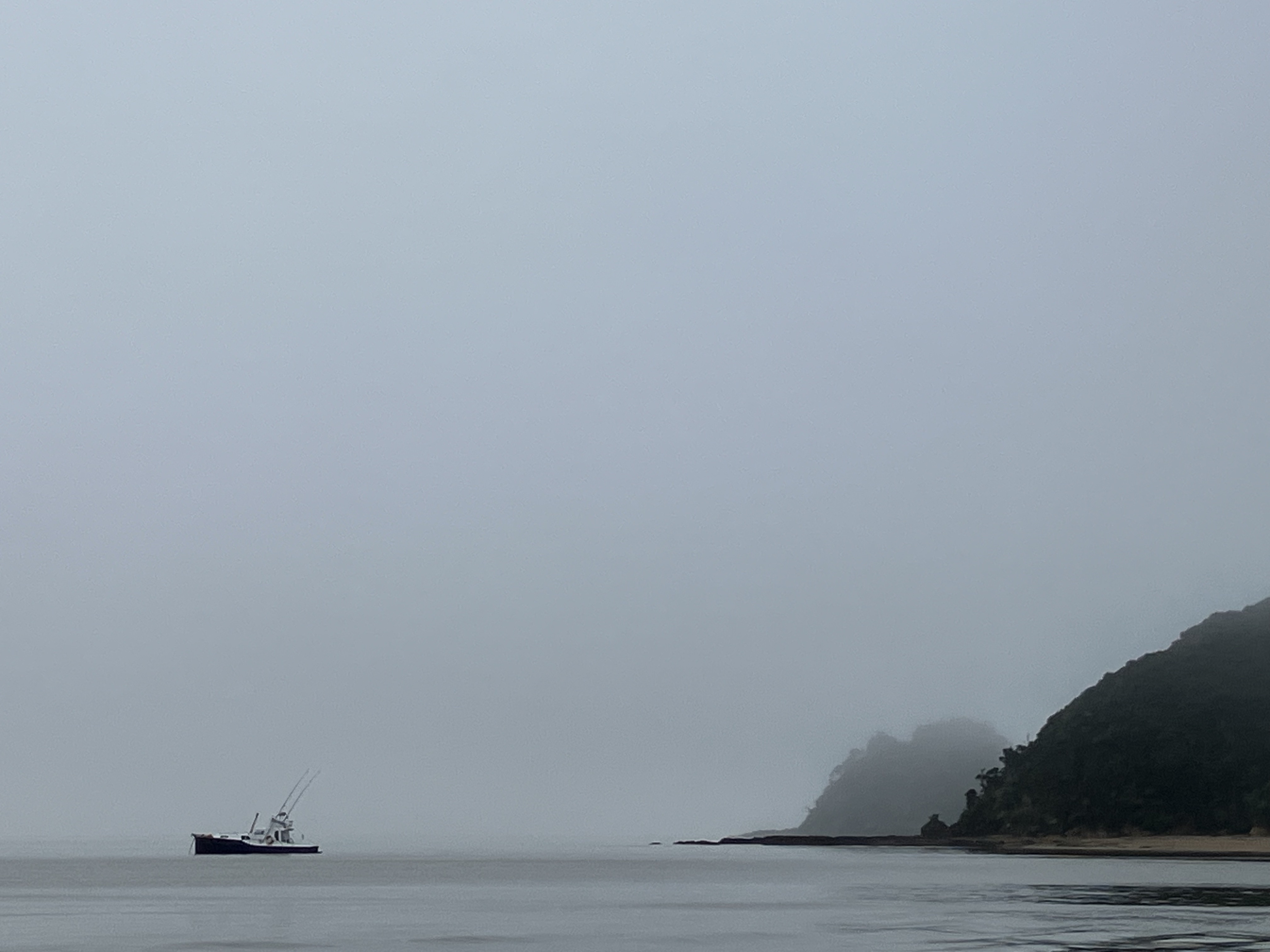
On Monday the weather delivered very low lying persistent fog, which hung around for most of the day. The boat was so wet, no sanding could take place, then on Tuesday and eight days later the plastic arrived. We tented the boat just in the nick of time and the heaven’s opened –  it hasn’t stopped raining since then. Then the power went out…., but luckily we could press on…

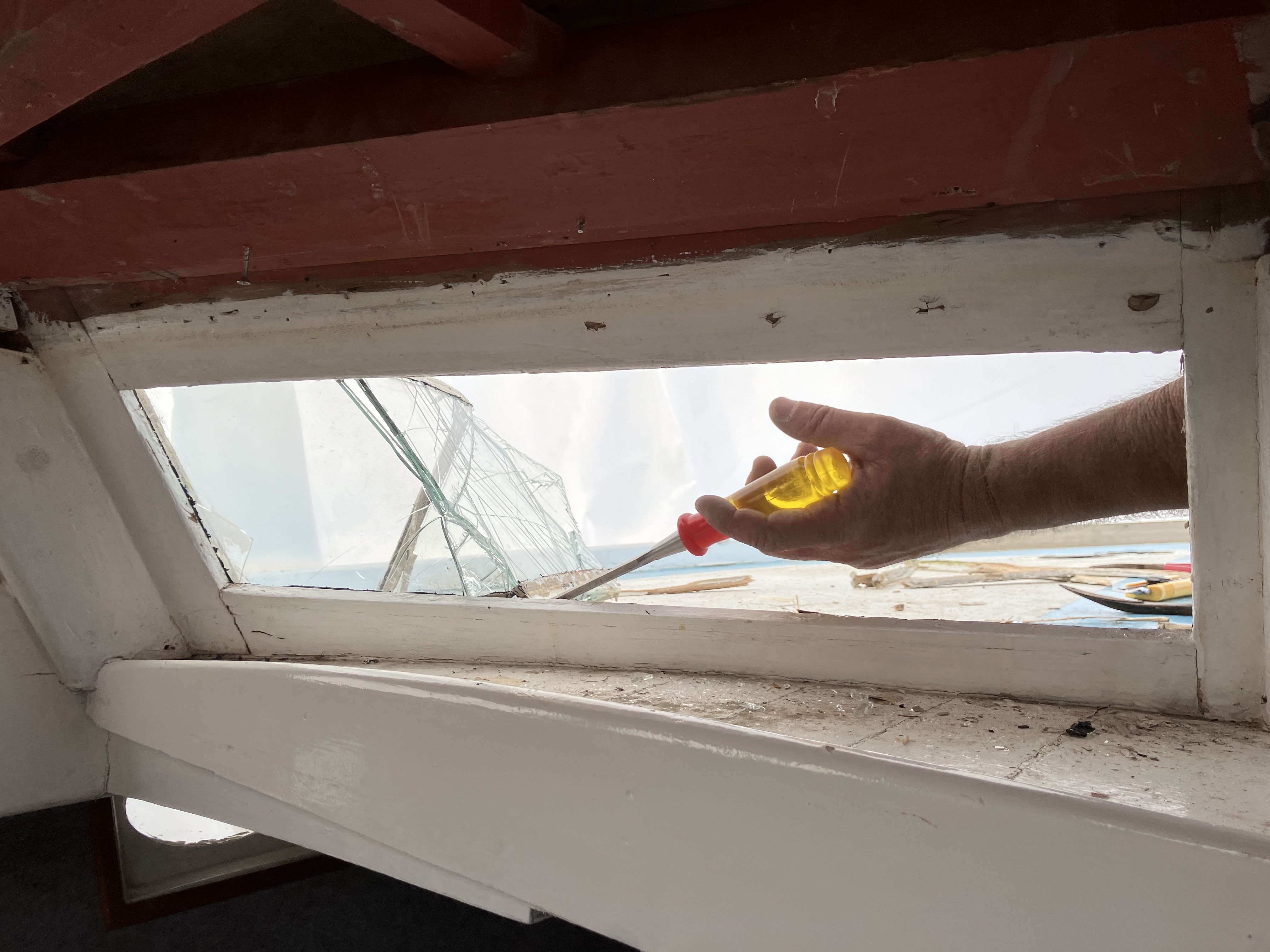
Now she is tented, we can remove things like steel/glass hatches (wooden ones need to go back) and the windows, which was done yesterday. 

The windows were a tricky one as I am trying to keep as many of the original elements of the boat as possible and did not want to remove them, but we discovered over the years that they had been replaced as they broke, or as they were changed. The boat had a complete mix of different tints and types of glass and most were leaking, so they all had to come out. I decided after much deliberation to go for clear glass. The objective of this restoration is to try and get LADY CAROLE back to her launching look, and she would have had clear when launched, so that’s what we are going for, but in safety glass of course. 

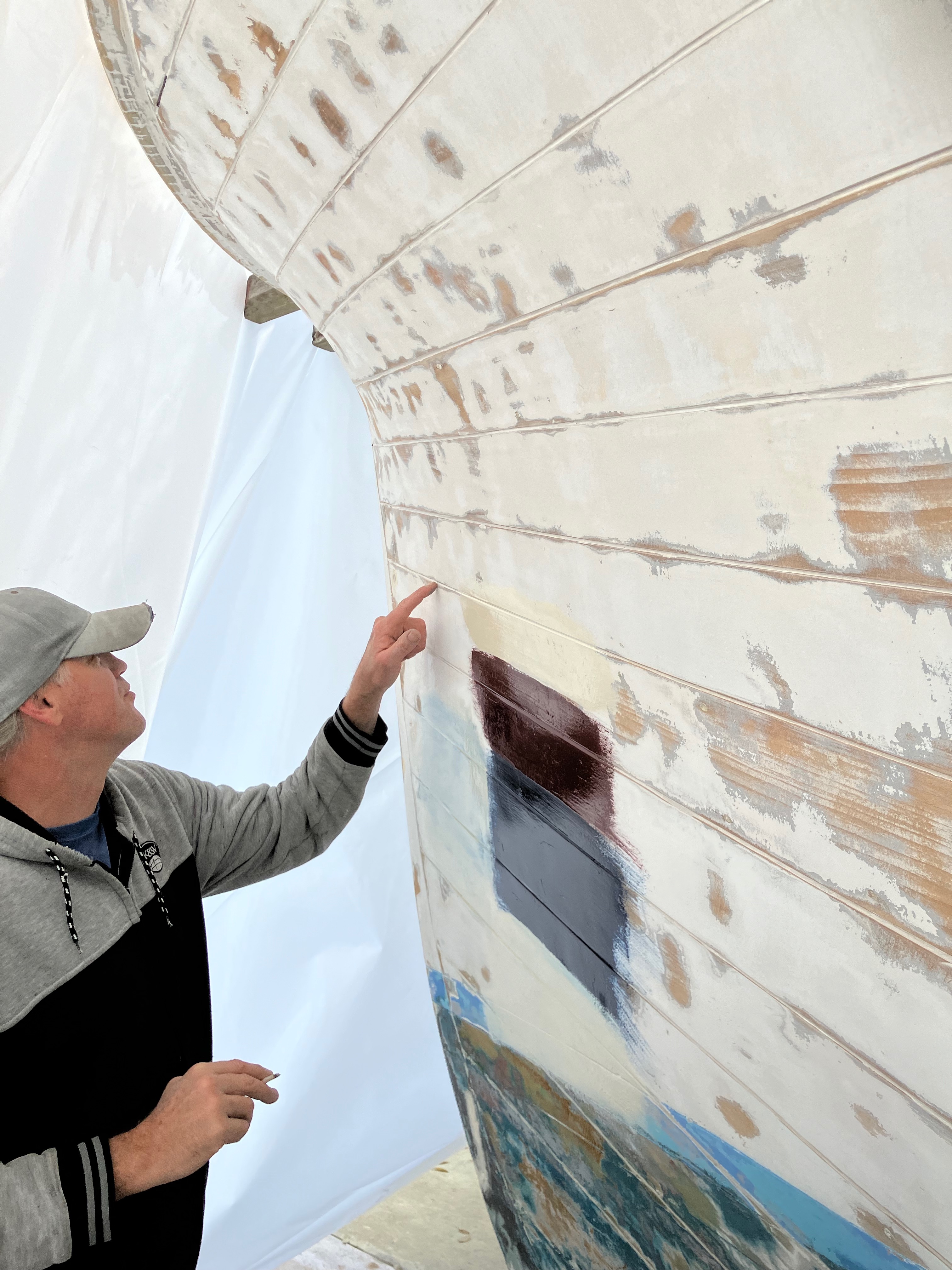
Sam, the Wynn Fraser rep has been helping with the colour scheme, which was posted previously.  The inspiration behind the colour scheme is the reddy brown she had in the 70’s on the side section, with the added addition of a deep blue hull with white pinstripes to break up the blue and make her lines pop even more.  It’s crucial that the blue works well with the reddy brown and that the white is not a bright white, more subdued almost like a mellow antique white.  The finish will be low sheen, not gloss as I think that belongs to the modern boats with their perfectly finished hulls.  The low sheen will give her more forgiveness.  The whole boat is getting a flexible two pot system for strength and durability.  Sam supplied the paint cards and test pots shown below to make sure they work on the boat and in the outdoor light.  The test pots were glossy, so the finished look will be more subdued than the photograph. 
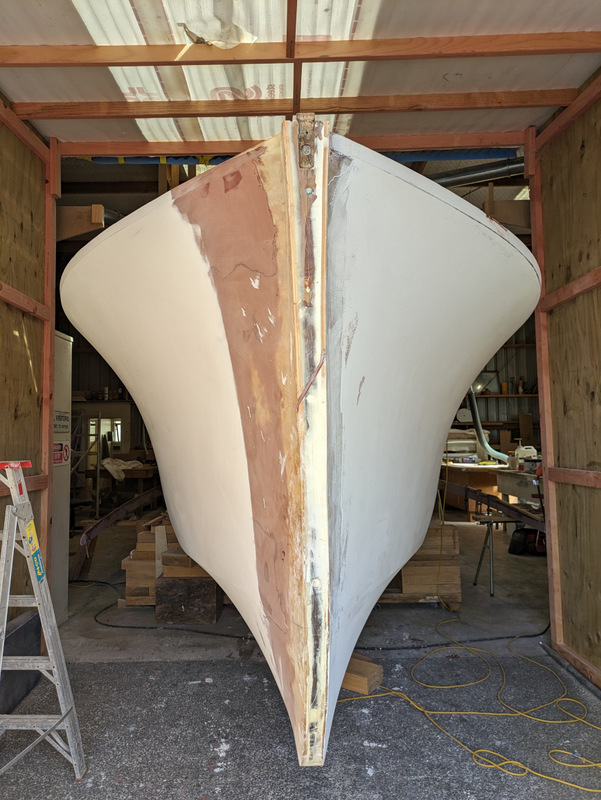
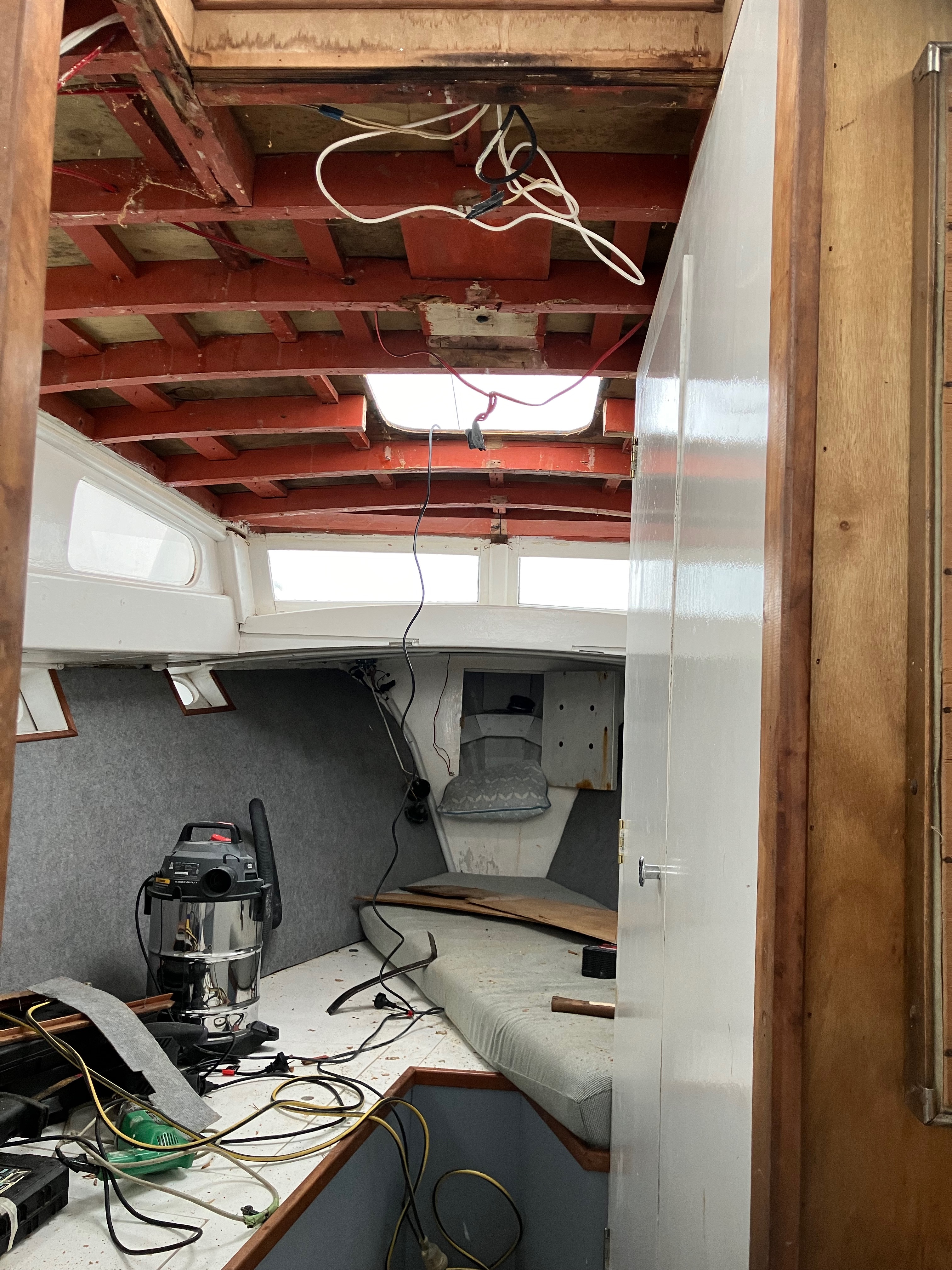
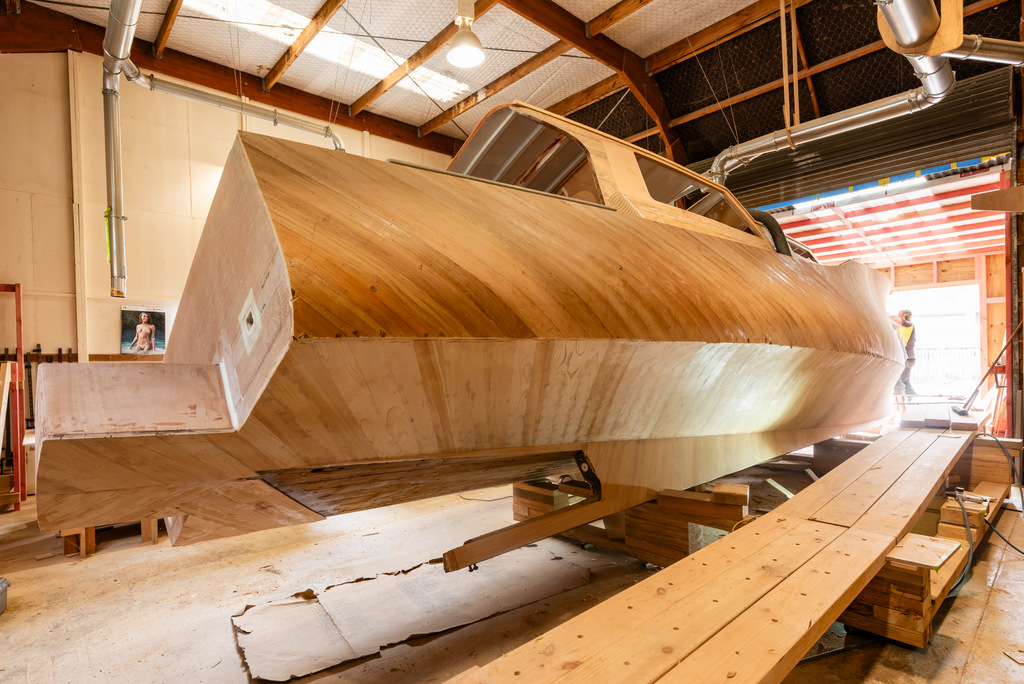
The ceiling in the forward cabin had to come down to sort a hatch that had been put in the wrong place.  When the boat was reconfigured a past owner put a hatch in the centre of the forward cabin (to let light in I think) and then covered over the forward hatch. They then moved the mast to the top instead of the centre of the forward hardtop. So, in order to correct this back, we had to remove the ceiling as one of the ribs had been cut to allow for the hatch and this was compromising the integrity of the roof. The new ceiling will have insulation and show the ribs to give a little more height. 
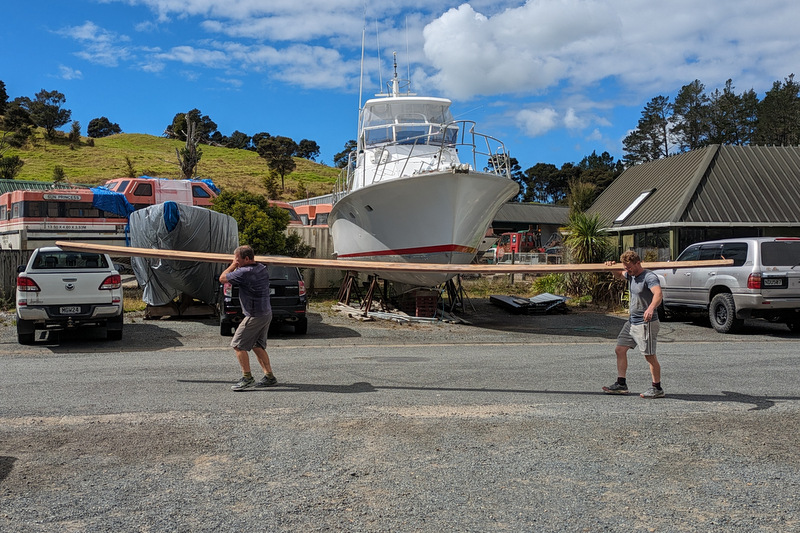
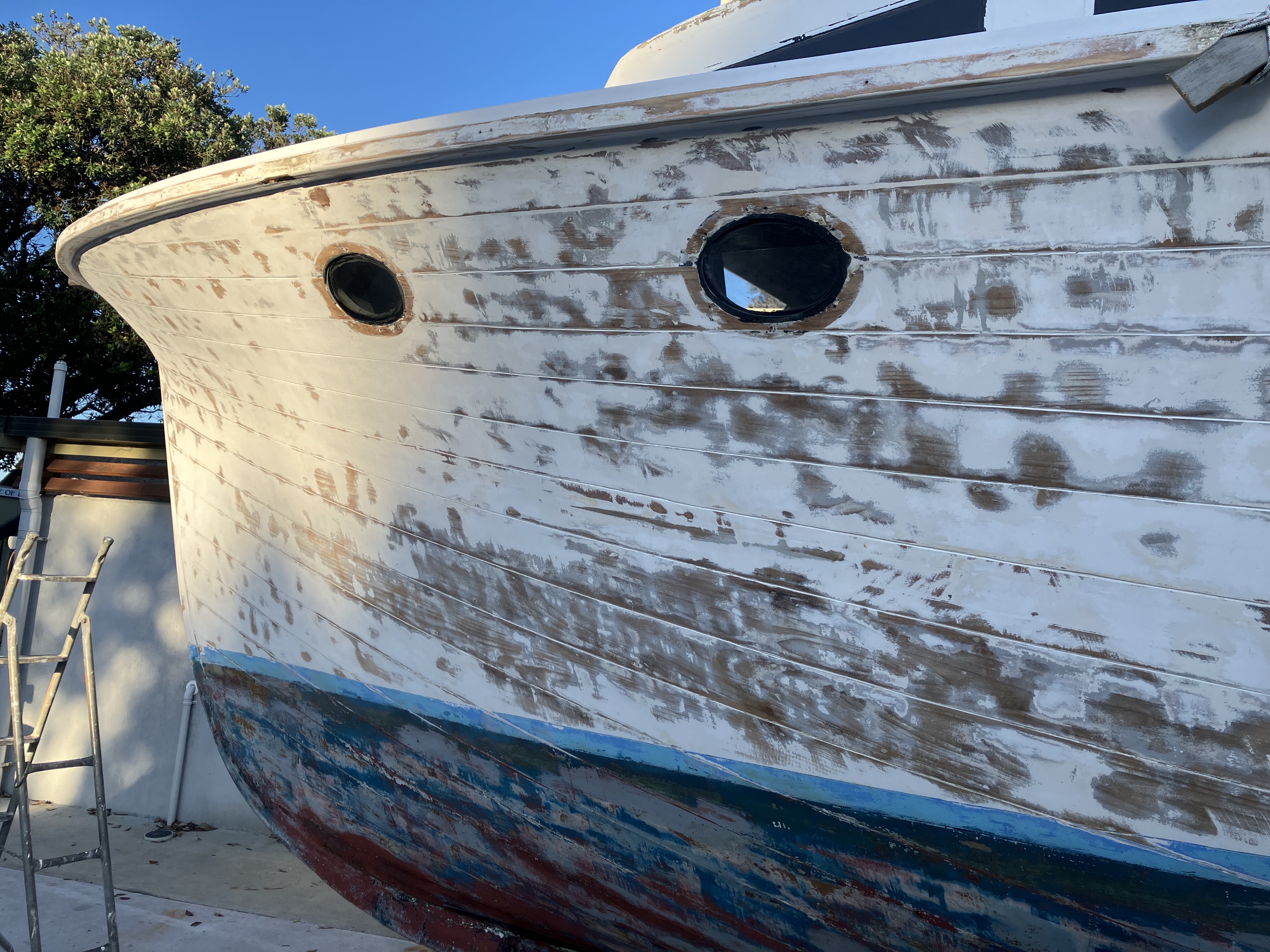
Meanwhile a lot of sanding has been taking place and we are almost there – well, first sand anyway.”

LADY CAROLE REFIT – Update #2

LADY CAROLE REFIT – Update #2

Small update re important design work to the overall lines and  look of the boat. Again co-owner Patrick Crawshaw updates us below :

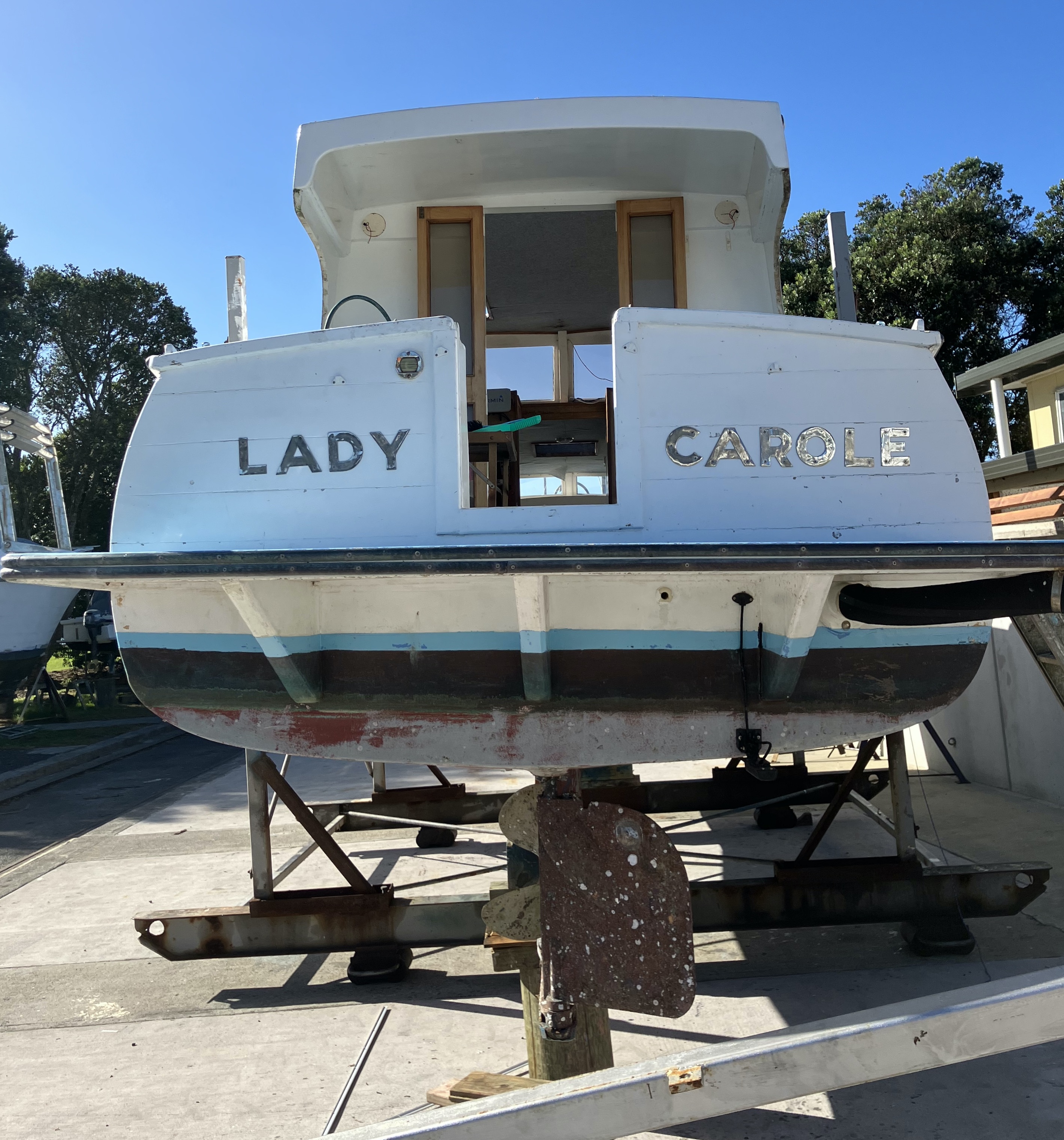
“When they raised the main cabin roof, the aft deck curves and back end on the upper part looked very clumsy and ungainly. She lost a lot of elegance in the stern. We spent a day refining these lines and curves. – lots of curves. She now looks much better. The large aft bulkhead curve was enlarged to open up the aft deck and then the back ends where they meet with the roof refined with nice curves. All the curves in the stern section now have relationships with one another.   There is also going to be a curve where the entrance from the duck board is and this will be raised so the lettering can go symmetrically across the stern. 

Windows are next. I think they are being done next week so will send details of how we work those out in relation to the stern curves/lines and the mid ship section.” 

UPDATE #1 https://waitematawoodys.com/2024/06/14/lady-carole-refit-update-1/

And Some Great News – WW rocked on the search for x4 1/2 cowl vents. Not only did we locate some, they are in fact her original ones, removed in a past life and kept in storage. Well done to Ron Trotter and his generous offer to return them to the vessel.


OLLIE IRENE

OLLIE IRENE- with covers removed, catches her breath in Port Macquarie for a couple of years
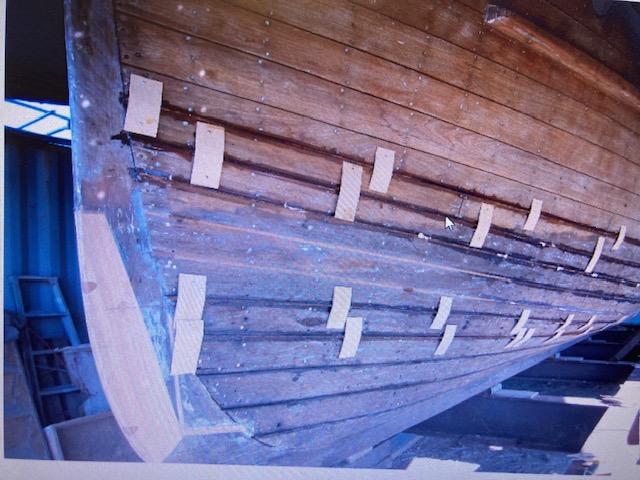
Splined hull and repaired bow …and installed 5 new laminated ring frames to secure shape
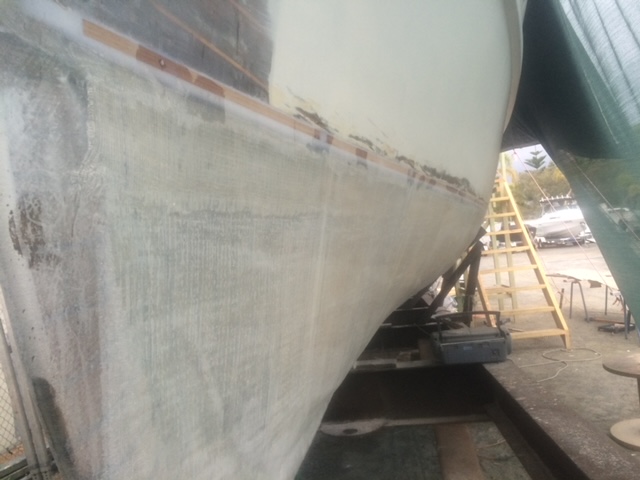
Repaired garboard and glassed under waterline rolling the glass into a rebate and glued a “spline” into it secure the transition at water line.
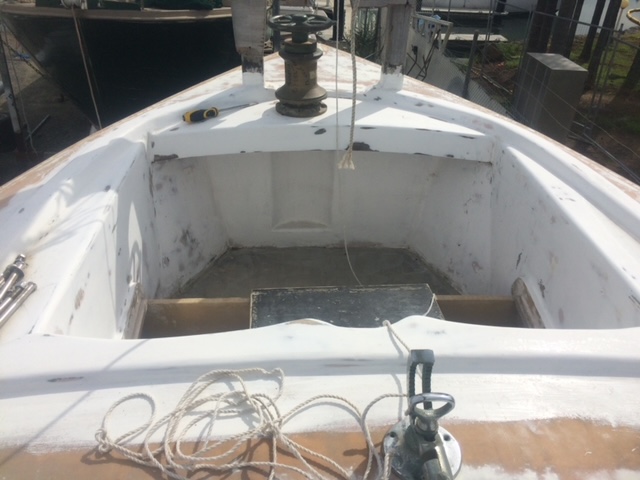
Installed self draining front cocktail cockpit through front hatch carlings, including provision for  ice bucket to chill the “ bubbles Also allowing safer working space for anchoring. Storage for 3 piece hard deck cover when cockpit not in use and spare anchor in locker under seat…
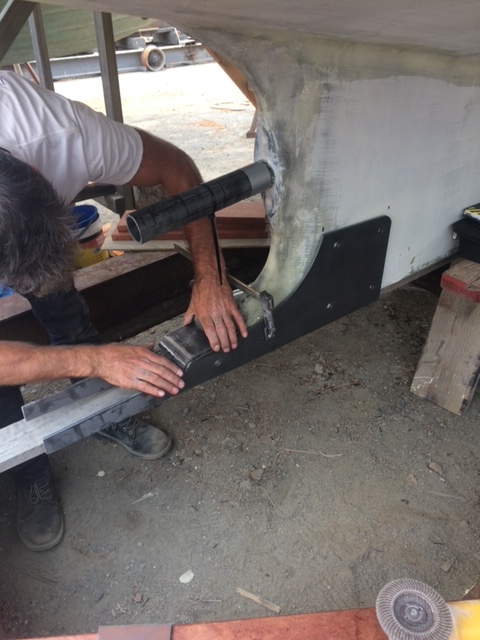
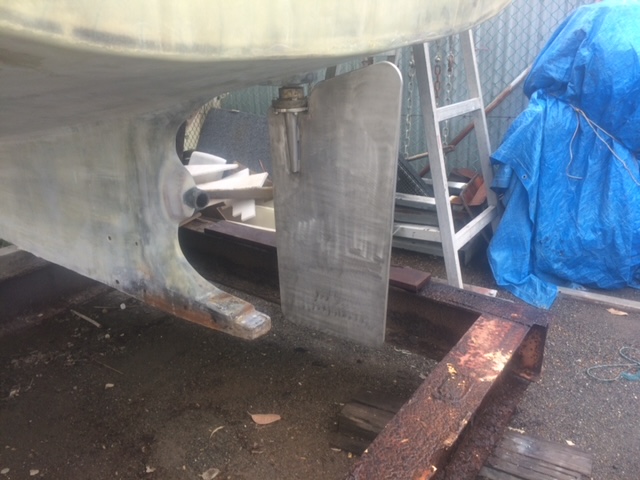
Fabricate and fit keel extension for rudder and install new prop shaft tube
New rudder
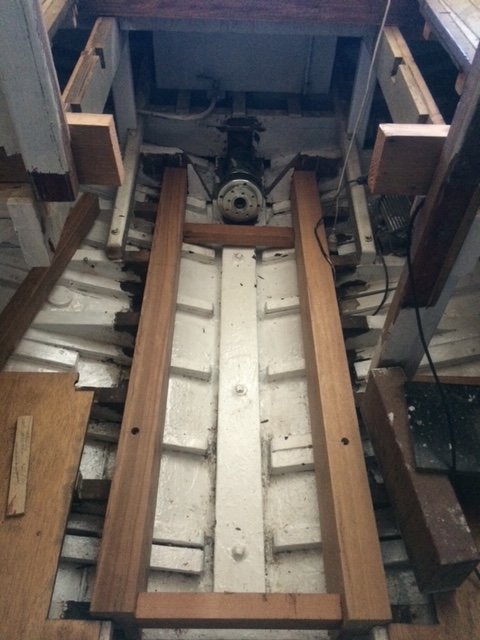
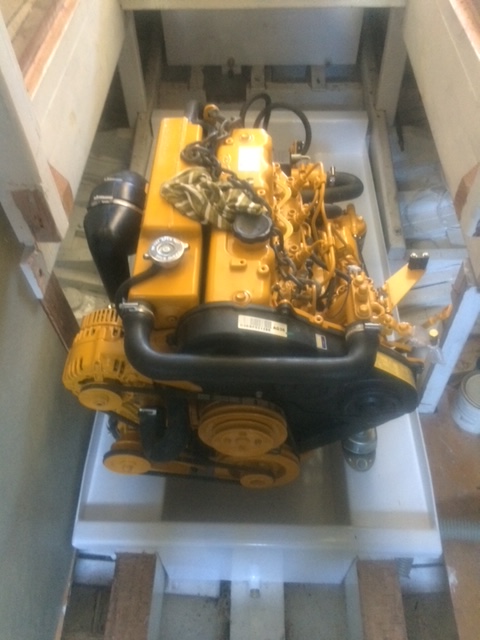
After removal of a number of previous era bearers New engine bearers install to take 80HP Vetus, new prop shaft and drip less seal 
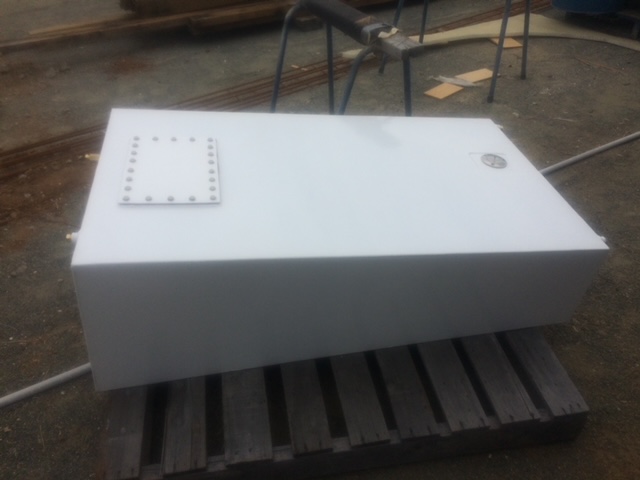
The tank!…..out, modified to fit and be removable in future increased baffling, water sump and inspection plate which now sits below the cockpit engine hatch…Cockpit sole and structure remained  in tact
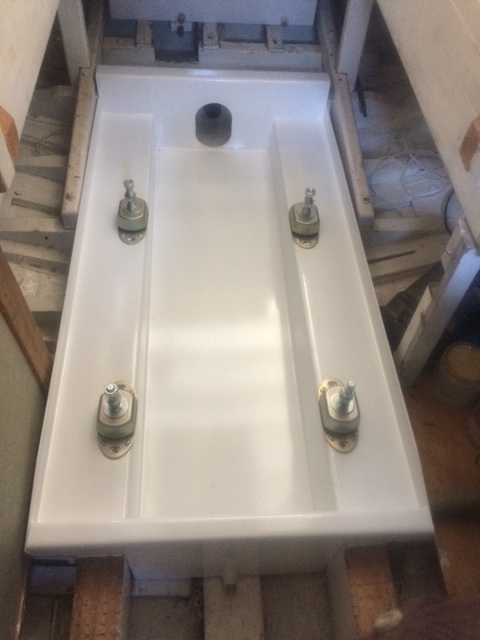
Engine pan fabricated and installed
Engine in position for installation
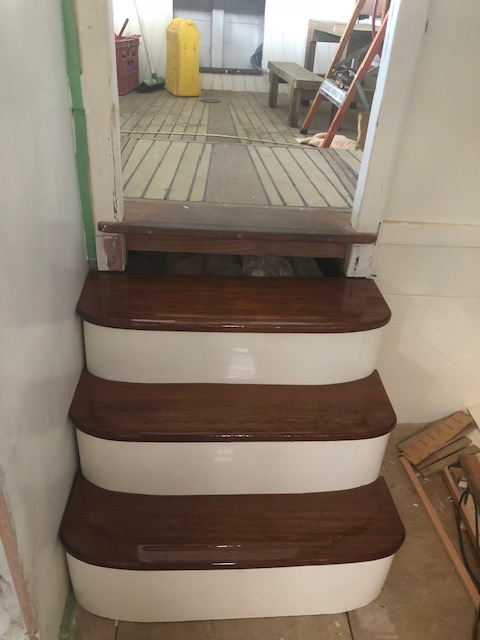
Front engine cover/ companion way with storage bins in each step for oils , spare belts, filters etc 
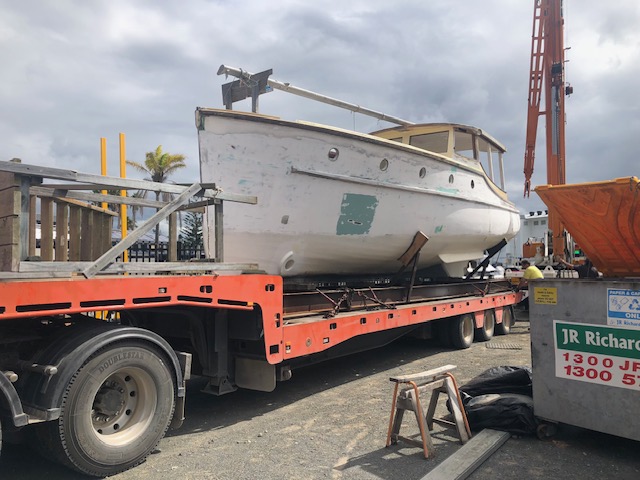
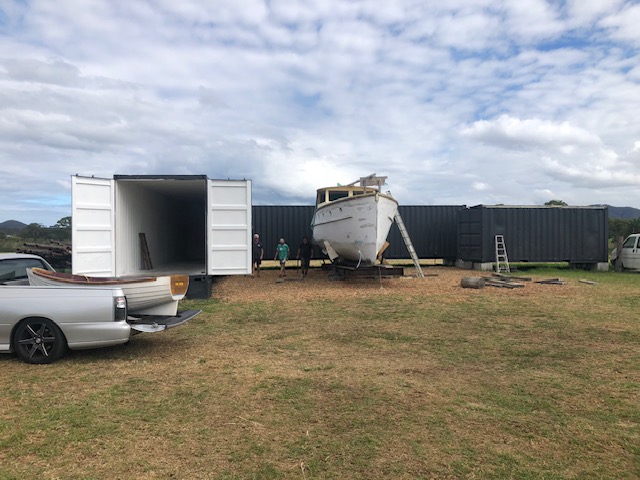
About this time I decided to put Ollie out in my back paddock

OLLIE IRENE

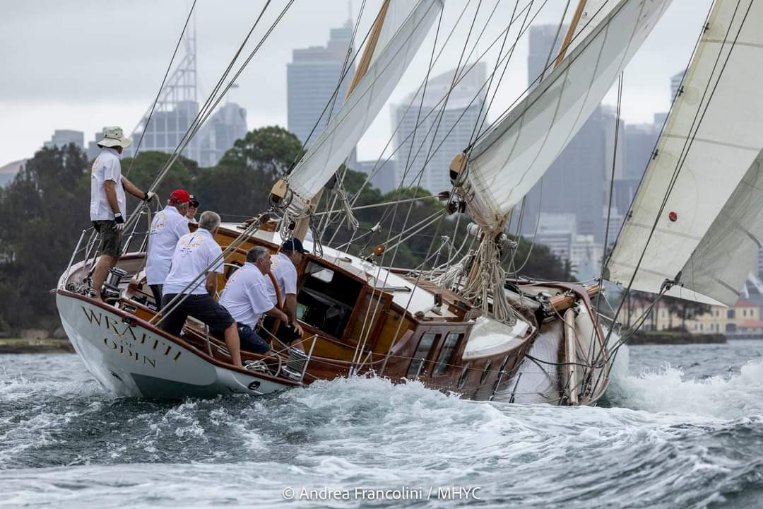
Over the past couple of weeks I have been chatting online with woody from over the ditch – Keith Glover is well known to some of us in the classic wooden boat community having competed in several Auckland classic yachting regattas as crew on Auckland classics. Unlike most Keith has even gone as far as to sail his 1949/50 Alden ketch ‘WRAITH OF ODIN’ (photo below) from Brisbane to Auckland to compete in the 2010/11 regatta.

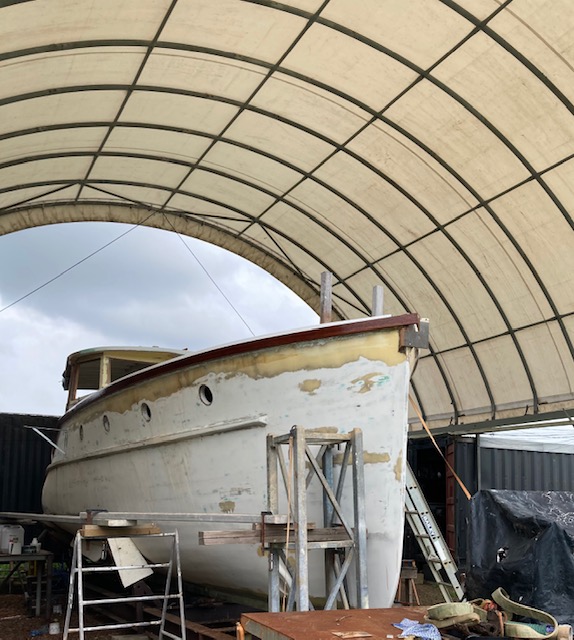
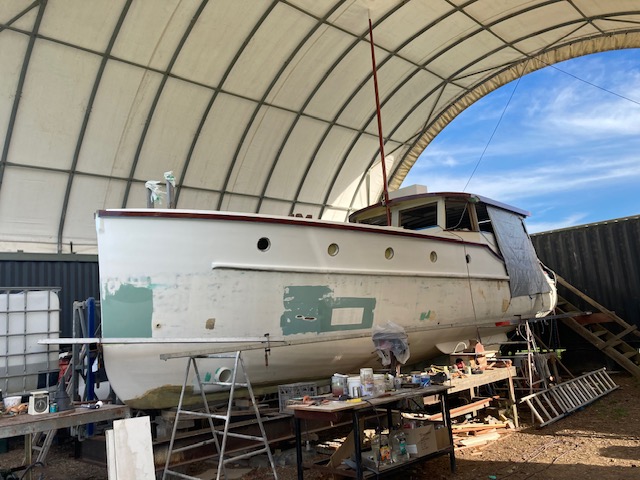
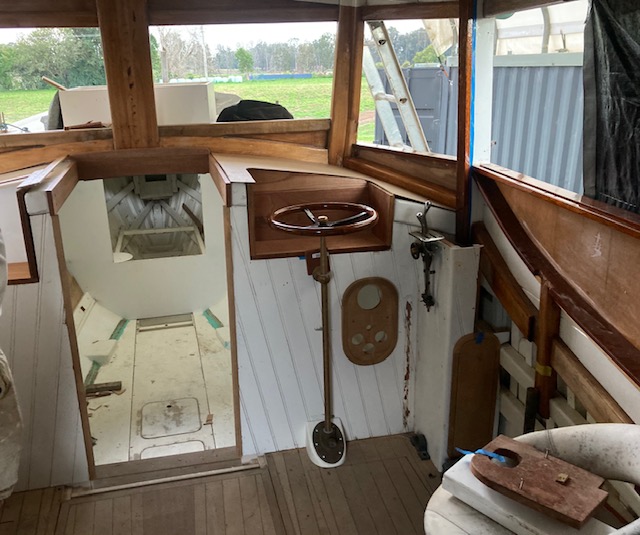
Todays WW story is based on Keith’s launch – OLLIE IRENE, that Keith has been restoring/rebuilding//recommissioning/rebirthing (multi-choice) for the last few years as he says “out in the back paddock’Probably best if I let Keith tell us about OLLIE IRENE:

* LOA 32’x Beam 9.3″‘x Draft est 3’ x Displacement est 5.5 Ton

* Original Iron bark keel, Spotted gum frames and hull planking, new sheathed ply deck, house, and laid teak cockpit sole

* Little is known of history or providence (long story of how it finished in my hands) other than to say it was a completely stripped-out mildly hogged hull, with a rebuilt deck, and bare house structure. No engine, gearbox, drive train, prop or rudder, although you could see from remaining engine beds it would appear at least 3 different power plants had made an appearance over time!  However there was a fuel tank of unknown age or condition totally built-in positioned aft between floor plates and captured by custom deck beams prior to the teak cockpit sole being laid  BONUS!!….it was sport but suffice to say it turned out to be new SS which now has better baffles, removable and the cockpit structure remains intact!

* De hogged (adjustable steel cradle)  and Splined hull, installed a 80HP  motor with hydraulic box ,bow thruster pressure hot water, head etc etc etc

*The complete fit-out has been built, dry fitted, finish coated  including upholstery ,basic electrical systems and switchboard etc etc and are in storage awaiting installation whilst we finish painting stuff.

* Limited research suggests Ollie was built in Brisbane during the 1920s as a spec (launched as Irene) built by a yard long since gone and appears to have a close design reference to Blanchard Lake Union Dream Boats of the 1920s from the NW coast USA.

Along the way, I have managed to repurpose many orphan genuine classic bronze bibs and bobs boat bits including some from my original restoration of Wraith of Odin, and targeting a Wooden Boat show in Pittwater November this year.

The purpose of Ollie is to explore some Australian East Coast river systems for which Wraith is unsuitable.

WRAITH of ODIN

LADY CAROLE REFIT – Update #1

1950’s

LADY CAROLE REFIT – Update #1

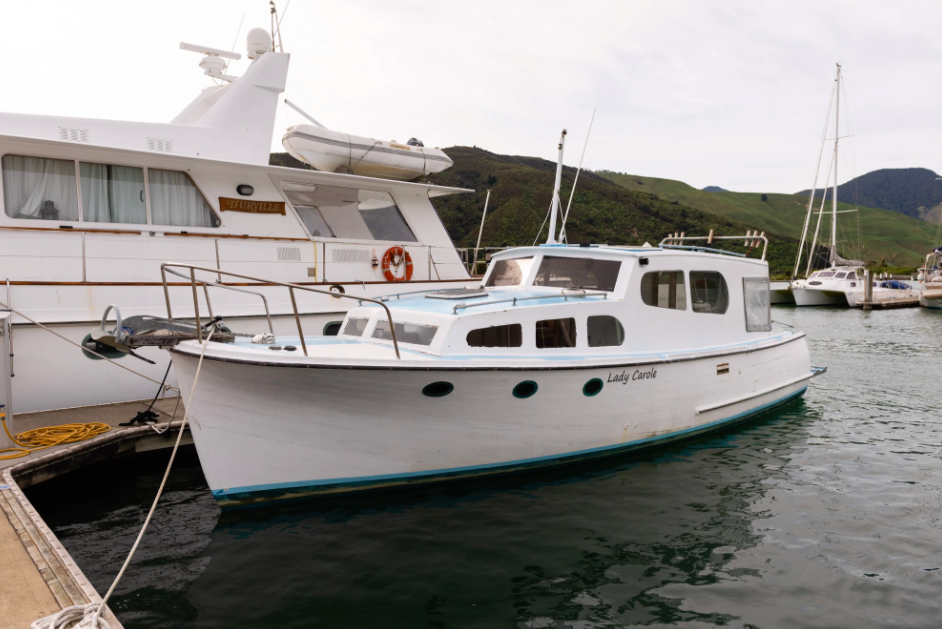
As mention previously the launch – LADY CAROLE has just commenced a refit that will see her returned to as launched configuration (or very close). The project is being overseen by co-owner Patrick Crawshaw and Patrick has agreed to report into WW with updates on the work. Patrick is a talented and articulate gent so I’ll hand over to him to tell the story:

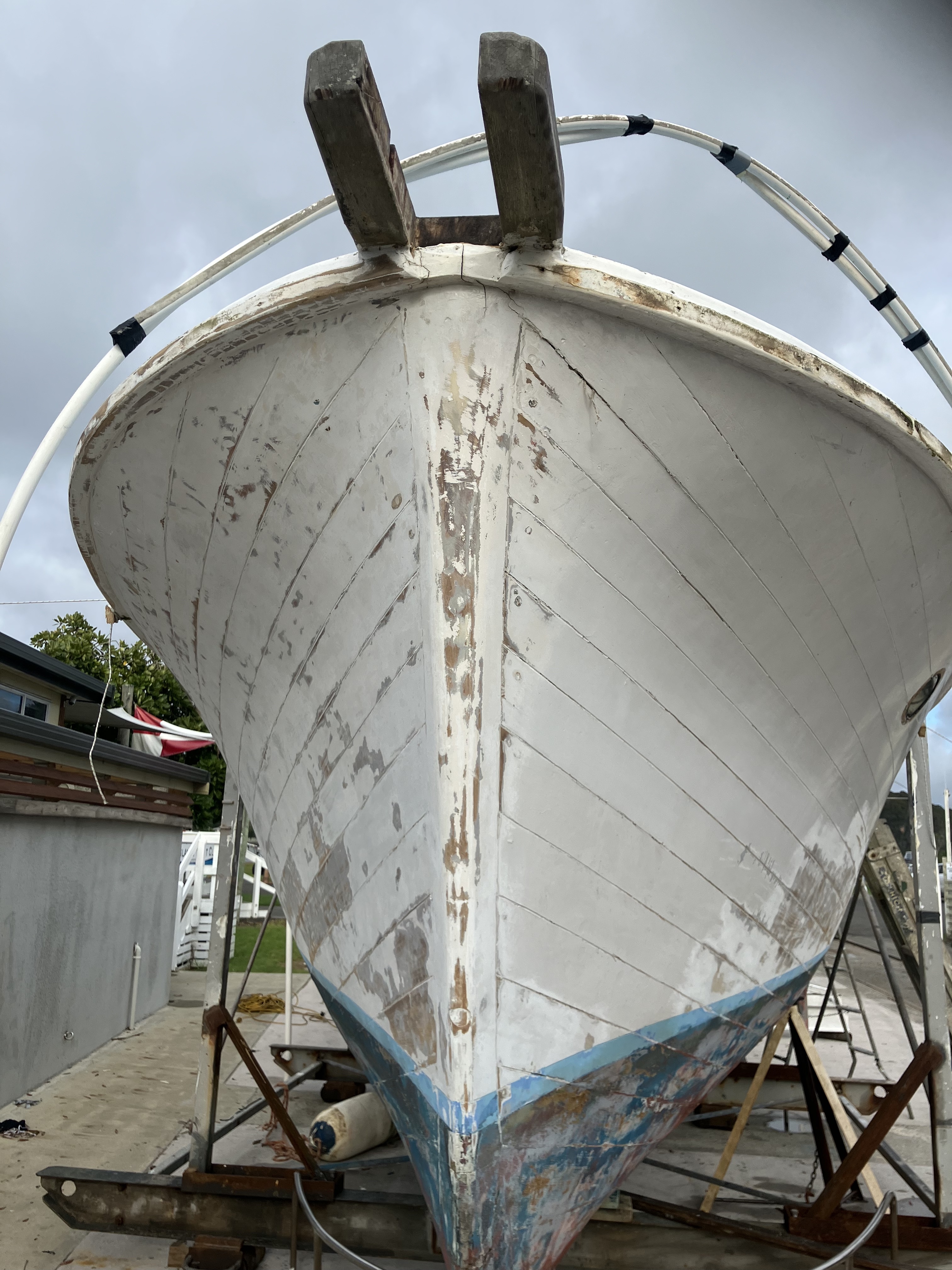
She came out on the 30th of May and is now on the hard in the Bay of Islands. First job was to remove all the plastic bits and pieces she had accumulated over time. Then the chrome and rub rails came off. Once she was stripped, we could see what we had, and already she was a better looking boat. Since then we have been sanding – a lot of sanding!  And many discussions and decisions around how best to return her lines and original appearance. 

A lot of thought has gone into the colour scheme in order to pop the lines again. In one of the photographs, you’ll see where we have put a makeshift pipe to know where that mid section line was (we had to do this by eye) and also to know where the windows need to be reduced to.  We will have to do the windows by eye/photograph as well so we are filling the whole section, then cutting them out.  

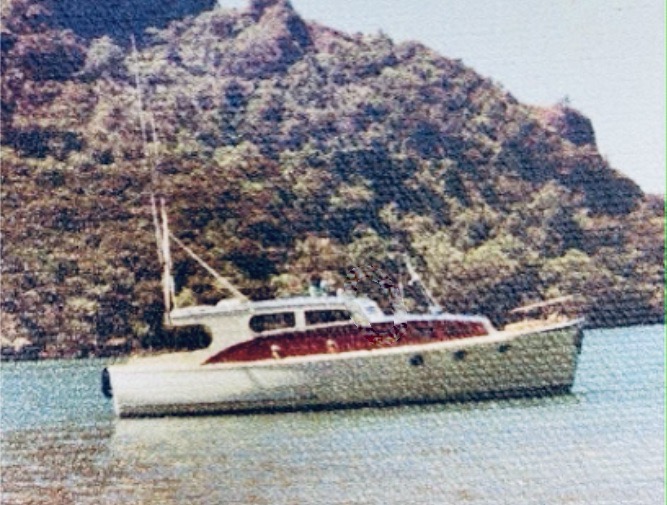
One problem was, the ceiling in the main cabin has been raised so we are going to re-cut the back curve so it lines up with the top of the windows, which will make that upper aft section look more elegant than it is at the moment – if you compare the 1950’s b/w photo to the now one, you’ll see what I mean. 

There has been much deliberation over the bowsprit, and as it’s glued and bolted down, we want to really work with it, so I have redrawn it to make it look more elegant.  

There were cuts along the side rail for water to drip down, but these have been filled today so we can get a sharp white pinstripe along the side that will contrast with the midnight blue hull and the red side section. 

The rub rails are copper and everything else is chrome, so I am going to treat them to make them black, which will pop the white pinstripe and work with the midnight blue. 

Great discussions over the glass windows – should they be tinted, or clear?   Originally they would have been clear so I think we are going for that. I would also like to replicate the striped curtains (seen in the 1950’s photo) in blinds, so you get that horizontal stripe from the fabric which looks great – So the fabric blinds need to be blue and white to work with the exterior colours. 

The mast is pretty knackered and has lost its cross rails, so we took the decision to make a new one. I’m in the process of designing this so will forward that on when it’s done. I want it to look very streamlined 50’s so taking those curves at the back and the new bowsprit design as inspiration so they all work together. 

We have fortunately found only a tiny bit of rot, so someone is smiling on us.

Another item is her stern and name – my grandfather put the duck board on her in the late 70’s, but before that she just had a ladder up the back (as seen the 1970’s photo) so in order to centralise the lettering properly we are going to raise that aft entrance cut up and then put the letters in between the duck board and the bottom of the new line. 

I have some interior design drawings, which I need to finish, but will send these to you as well, so you can see what that cockpit and interior fit out will look like. “ (edited AH)

The Adoration Of Wooden Boats

AWBF – HOBART 2023

The Adoration Of Wooden Boats

One of the many wooden bating channels that I follow is {the} Southern Woodenboat Sailing news-blog out of Australian, their tag line is ‘The News, Culture and Practice of Sailing Woodenboats in Australia, New Zealand and the South Pacific’ . Its very good check it out and subscribe. In this weeks communiqué one of the stories was a link to a 45min interview on the ABC Radio Sydney’s nightlife program, hosted by Philip Clark – the stations intro blurb was – ‘We are a land bound by sea, and boats are an integral part of Australia’s history. Wooden boats especially have something magical about them. They flex, they groan, they creak. They each have unique characters. Philip Clark on Nightlife is joined by a panel of wooden boat specialists. Steve Robson, a self-confessed timber tragic from Sydney. Peter Higgs, President of the Wooden Boat Guild of Tasmania and Greg Blunt, a shipwright and fifth generation boat builder from Williamstown, each with wooden boats in their veins.

Click the link below to listen to the interview – so many similarities to the NZ scene, a lot of the discussion focussed on the dwindling wooden boat building timber stocks, being Australia its Huon Pine, they do make reference to out mighty Kauri.

Three comments that made my ears prick up: 1. The key tip for looking after these old girls is – usage and maintenance was use it and often e.g. one > two weeks

2. In Australia fractional ownership eg a group of people forming a syndicate to buy, maintain and use  vessel is well established. In NZ I only know of 2>3 successful ownership syndicates. While there are numerous ‘charitable’ (I use the word loosely) trusts that own and maintenance classic yachts, seems NZ is slow out of the gates with fractional ownership groups – food for thought.

3. One of the panel was asked to give an estimate to build a clinker dinghy out of Huon Pine – answer for a 10’ one AUS$30>40,000………..CLICK LINK BELOW TO ABC RADIO 

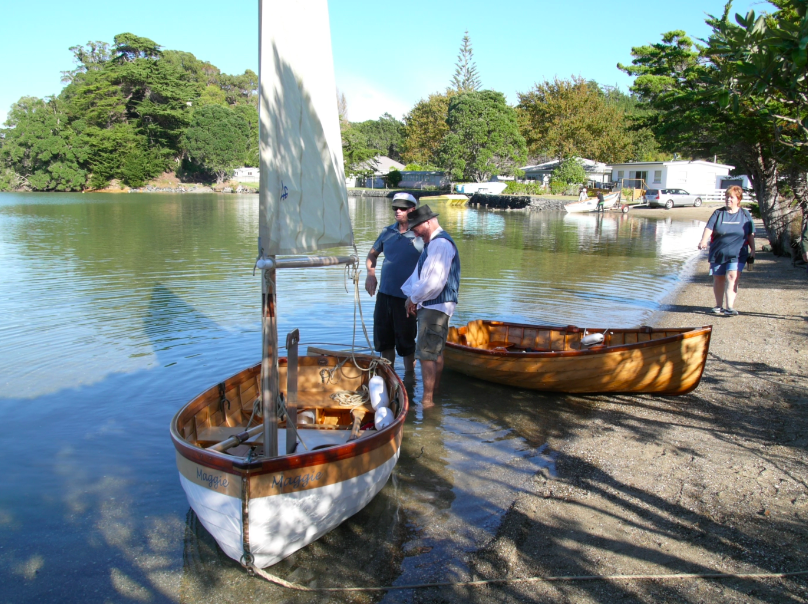
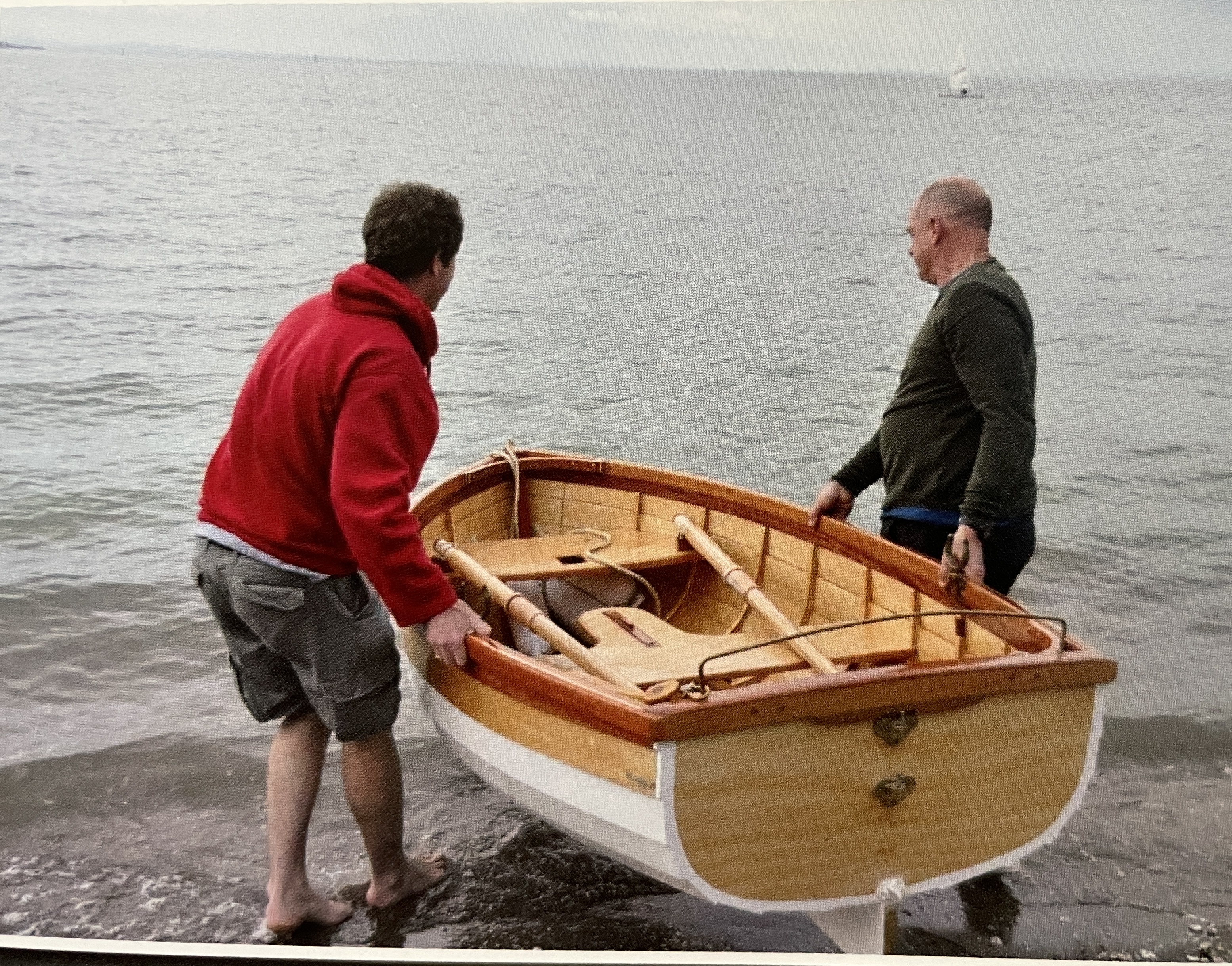
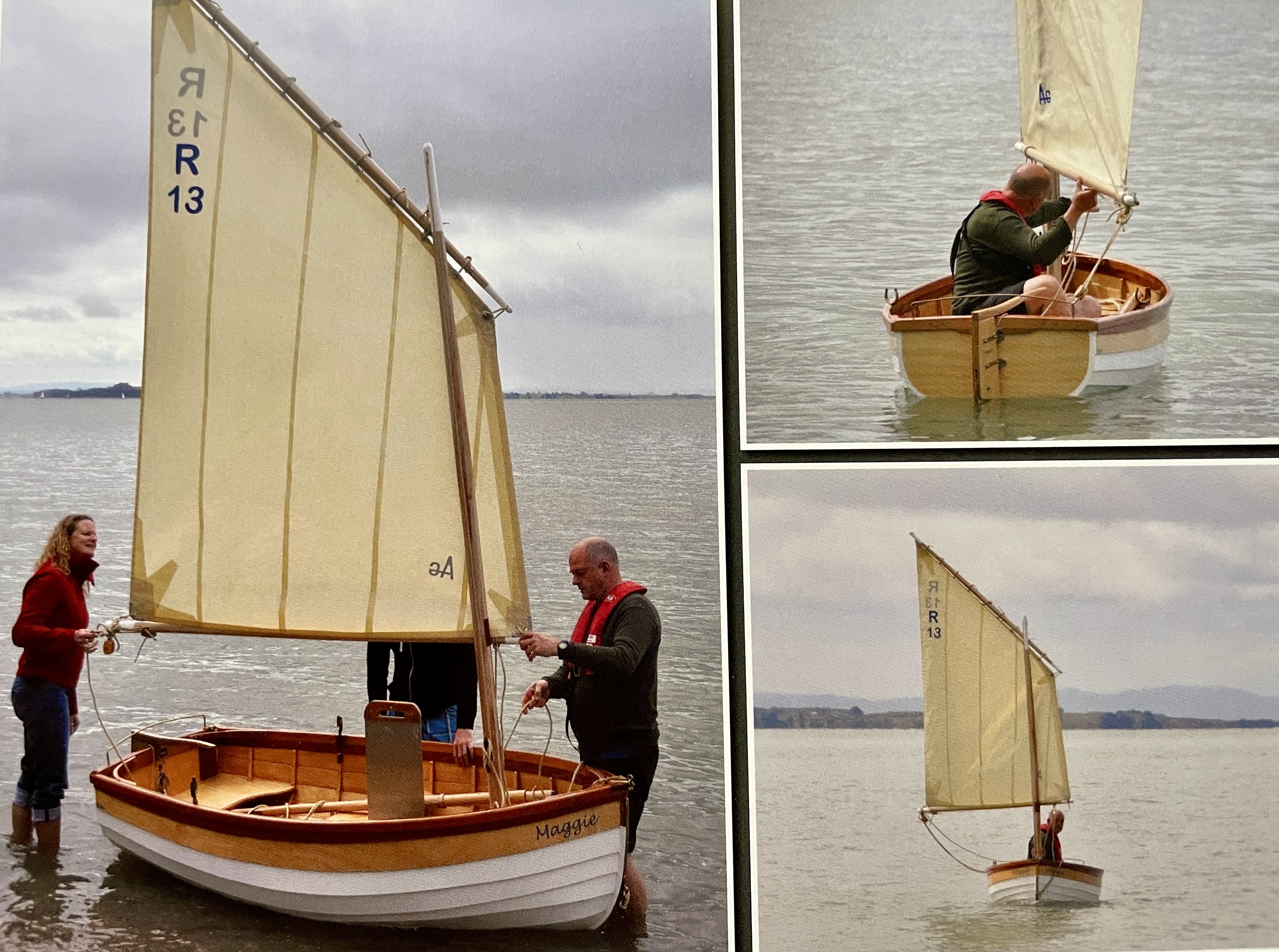
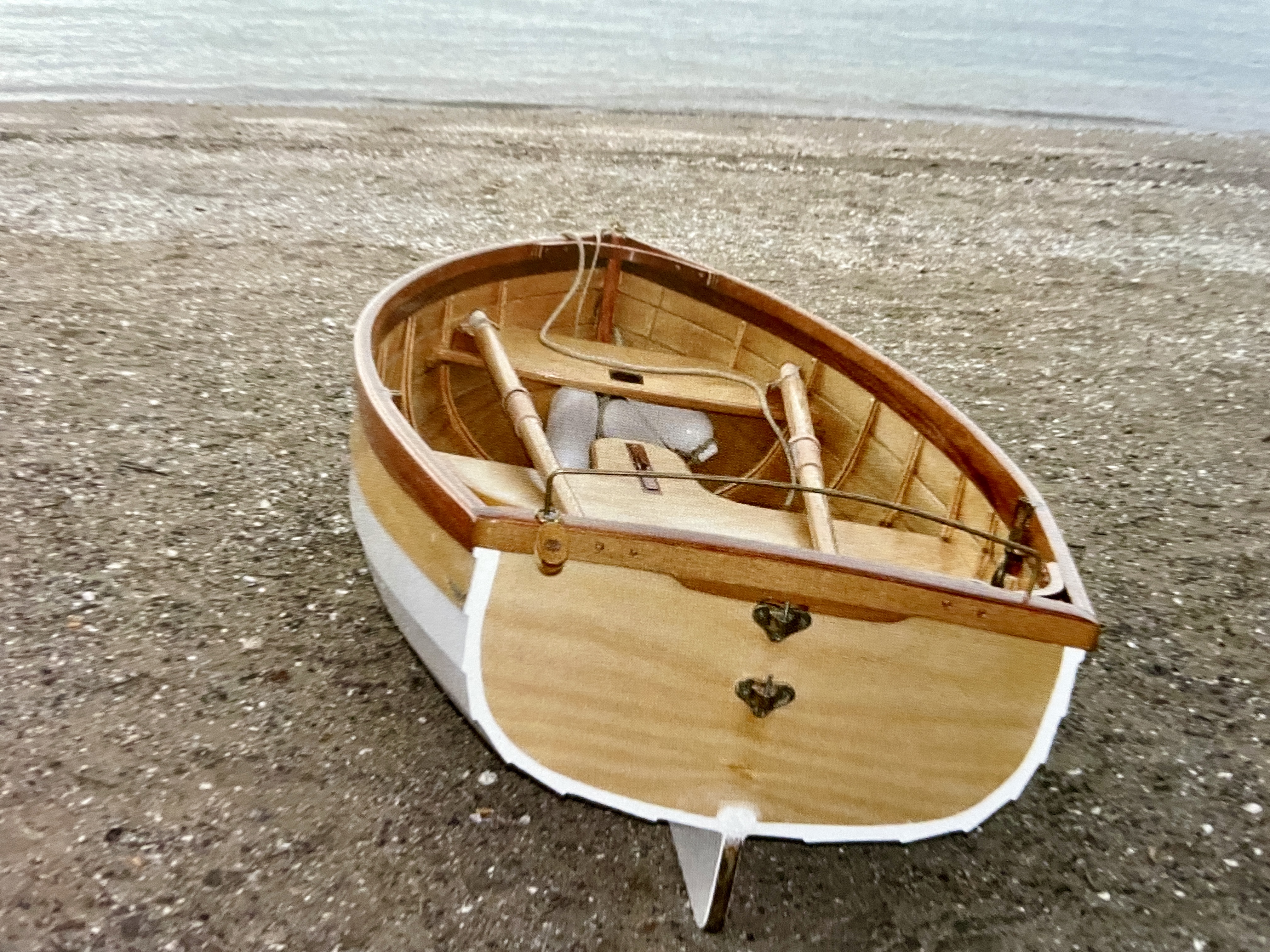
MAGGIE – Clinker Dinghy 4sale

MAGGIE – Clinker Dinghy 4sale

Regular WW readers may recall that sadly last year one of the classic boating movements most committed crew – Alan Good departed this life.

Alan was co-owner along with partner Nicky of Lucille – a L33 launch. Alan would always wind me up that his f/glass boat had more bronze and varnish than most wooden classic craft – he was probably right, but I’d never admit it.

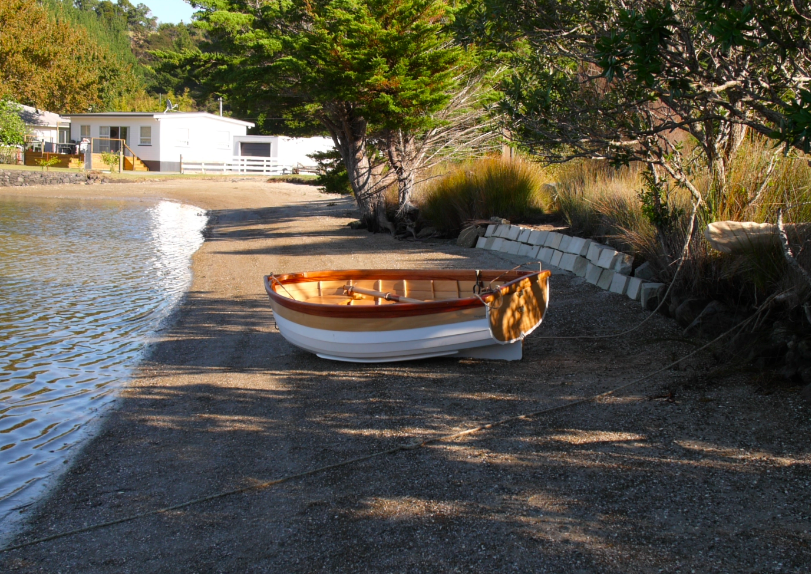
Back in 2012 Alan undertook a project to build a classic clinker dinghy, which he named Maggie. I was recently contacted by Nicky advising that the family had made the decision to find a good home for the dinghy. 

So woodys if you are looking for a clinker to accompany your classic or maybe just want a traditional gaff rigged sailing dinghy for the grand children – Maggie is for sale and Nicky is looking for realistic offers. If you are a serious woody you will know the time and $$ that it takes to craft a boat like Maggie, so please only genuine enquiries to Nicky via email in the first instance nmlgood@gmail.com

Specs – 7’6” , designed by Selway Fisher, Redshank Dinghy. (Note: oars excluded from sale)

Fantasia

FANTASIA 

Earlier in the week I was out east and called into Leader Boats on the Panmure River. Dave Patterson and his team are currently breathing newline into a launch named – Fantasia, previously she was ‘berthed’ near-by.

Fantasia started life as a Crestacraft design and was built by Harry Biddle in a shed in Saleyard Rd, Otahuhu c.1968.

She has had several face lifts over the years and at time been a little un-loved. Now is getting what I’d describe as a sport fisher look, check out the new sheer line – close your eyes and think Oliver & Gilpin. The boat was re-engined in 1978, with what I’m not sure – much to K Ricketts disgust, I’m never that interested in the engines.

Her owner commented to me that he only came in for a new duckboard and paint job 🙂 I said to Dave that he could always get a job at McDonalds i.e. he’s the champion of companion selling – “do you want fries with that” 🙂

Still very much a work in process but you can see from the photos what she will look like.

HAROLD KIDD INPUT – According to the contemporary APYMBA records FANTASIA was built in 1963 By B. Everett of 51 Kiwi Esplanade Mangere. No mention of a designer. Make of that what you will. Did Everett simply pay for her to be built? That’s not the normal way APYMBA recorded information. Did he finish off a hull perhaps?