Laughing Lady

LAUGHING LADY

A ‘new’ lady from the USA joins the NZ classic fleet. But first stop is the Whangateau Traditional Boat yard. Click any image to enlarge.

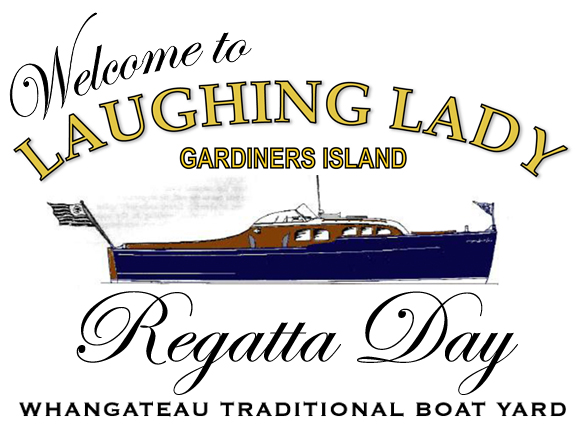
Luders built the motorboat Laughing Lady in Connecticut in 1949 as a day fishing boat for a wealthy American socialite. A few years later she sold it to David Gardiner, who considered himself the 16th Lord of Gardiners Island. The island has an interesting history. As Americas largest private island, It had been in the family ever since his ancestor, the English settler Lion Gardiner, bought it from the Montaukett Indians in 1639 for ”one large dog, one gun, some powder and shot, some rum and several blankets”. He also obtained a charter for the island from King Charles I of England. Captain Kidd once buried treasure there, and the family withstood several attacks by pirates. Gardiner used the Laughing Lady to commute from the Island to New York where he worked as a stockbroker and also across to the up market Hamptons to ferry his guests to the Island, including Jacqui Kennedy-Onassis. Before David Gardiner passed away in 2004 the boat was sold and transported to a yard in San Diego where it underwent significant restoration of the hull before the restoration eventually stalled.

Enter Kiwis, Michael & Katy his sister-in-law who have both worked in the yachting industry and found a love for old boats working as crew on the historic 142 foot Dutch built Feadship Istros and also crewing aboard Fife yachts in various classic yacht regattas around the Mediterranean. They were looking for a small-scale project of their own and found the Laughing Lady languishing in a yacht yard in San Diego last year. They made an offer and the boat was theirs. The boat was then loaded onto a cargo ship in Los Angeles and shipped to Tauranga in March 2014, then towed on a large trailer up to Whangateau in early April (refer photos above). After being shoehorned into the main shed at Whangateau Traditional Boat yard, work will now commence returning the lady back to her former glory.

Luders stopped making boats in the 1980’s but had a fine pedigree in boat building, pioneering hot molded construction and the use of plywood during WWII.  The yard built and designed, fast commuter yachts, Navy patrol boats, tugs, launches and racing yachts including the 1962 America’s Cup winner Weatherly.

Laughing Lady is 32 foot long and was originally powered by Packard straight 8’s, nowadays is powered by twin Volvo turbo diesels.

Built of double planked cedar and mahogany with oak framing and a unique hot molded cabin trunk, she still has the basin that was used for shaving on the way to work and cast bronze fish fighting chairs. The boat will be kept as original as possible, but they will add some modern navigational equipment and something to cook on for overnight trips. Aside from that there is a lot of wiring, wood working, plumbing, paint and varnish to be done before she is completed and back on the water and turning heads as a fishing boat on her new home – the Hauraki Gulf.

Waitematawoodys will follow the work her owners will be undertaking with the assistance of Pam & George at the Whangateau Traditional Boat yard.

This might be easier to read


Whangateau Traditional Boats Regatta – Part Two

Whangateau Traditional Boats Regatta – Part Two
photos Shane Anderson, Mark Lever, Alan Wallace & Phillip Jones
Remember clicking on the photos will enlarge then for your viewing
See previous post (below) for more photos

Whangateau Traditional Boats Regatta – Part One

Whangateau Traditional Boats Regatta – Part One

This is the coolest thing happening, down under, in the traditional wooden boating world – if you have not been to Tramcar Bay, you need to ask yourself how serious you are about wooden boats.
photos Shane Anderson, Mark Lever, Alan Wallace & Phillip Jones

Clicking on the photos above will enlarge them 😉

Saturday March 8th was the 12th year that Whangateau Traditional Boats has hosted a regatta at Tramcar Bay Whangateau.  The regatta was initiated by Russell Ward who in the early days focused on steamboat maintenance.  Russell held 2-3 regattas before Pam Cundy and George Emtage started repairing their first boats at the historic boat building sheds 9 years ago.

Whangateau Traditional Boats are involved with the preservation and restoration of classic and traditionally built wooden boats, both big & small. George and Pam (both boat builders) have amassed a fleet of traditional planked small craft.  Some purchased, many donated, some saved from the tip but all needing their restoration skills. The regatta is a perfect venue for Pam & George to showcase these boats & provides the local community with the opportunity to participate. The craft are offered for the publics use, as they want to create opportunities and acceptance of our traditional wooden boat heritage. These craft are complementary to the ongoing survival of the historic boatbuilding shed and yard.

On regatta day some arrive with their own small boats, others help and crew on the WTB fleet, many just enjoy the spectacle and a day on the beach.  Among the small boats held by WTB are 7 x Z class, 3 x Idle Alongs, 1 x Frostbite, 3 x Cadet training boats, 2 x Dory’s, 1 x S class open 16ft, 1 x T class open 14ft & then some.

Bridging the gap between these small boats and some of the larger boats WTB are restoring is Desdimona, an 18ft Mullet boat seen in some of the photos.

The conditions on the Saturday were near perfect – full sun, high tide at 1.00 pm & a light 5 knot breeze.

The historic red sheds sit amongst the mangroves on Tramcar Bay. The beach is very tidal with enough water for small boats approx 1.5 hours either side of high tide. So the regatta is a brief 2-3 hours of sailing time & the format is casual – sail it, row it, talk it. All levels & ages of sailors & rowers are welcome. But keep an eye on your watch, get the timing wrong & there’s a long walk over the mud flats. The regatta is a great get together for the local boating community. Pam and George generously host the event with the historic boat building sheds open on the beach. The March regatta was so popular another will be held very soon – date tbc.

Enjoy the photos, more tomorrow 🙂
Video footage of the varnishing of Trinidad with Awlwood MA (Uroxsys)

Video

How did Trinidad get that look?

If you have seen Trinidad in the last few months you would have gone………….. WoW……………… thats amazing. Well now thanks to the wonders of modern technology (a time lapse camera & Gareth Cooke’s photography & editing skills) you can watch how the team at Greg Lees Boatbuilders, working with Awlwood MA (Uroxsys) achieved that amazing finish on her topsides.

The process went like this –
1. Old coatings removed
2. Yellow primer applied
3. Two coats rolled / brushed on
4. Three days of heavy ‘wet on wet’ spray applications, with a good block sanding between coats
5. Final coat applied as a single coat to achieve best leveling

Now this is all stunning but do not think its a pro-only product, the results us amateurs can achieve with 6 > 8 coats using a hand brush is pretty wow.

Ever Wondered Whats Inside Those Sheds?

This slideshow requires JavaScript.

A Peek Inside The Clyde Quay Boat Sheds

In my real life, I have one outside of ww 🙂  ,  I get to work with some very talented people, in 2013 one of my clients partnered with New Zealand’s award winning consumer lifestyle magazine – ‘NZ Life & Leisure’ on a marketing initiative. Just before xmas I was in their offices & they said “hey we have an article in our upcoming Jan/Feb issue that would interest you & your ww readers. So folks here it is a pictorial insight into the Wellington’s Clyde Quay boat sheds, where several CYA members (Phillipa Durkin & Gavin Pascoe) hang out. The passion & enthusiasm that the Gavin & Phillipa, along with the other Wellington Classic Yacht Trust members have is amazing & we should all take a lead from them.

The mag goes on sale today so grab a copy at your local, you can also see more at their never cool website http://nzlifeandleisure.co.nz

You can find out more about the WCYT  here http://www.wcyt.org.nz

Trinidad

TRINIDAD

CYA members Barbara & David Cooke have had 52′ Salthouse built Trinidad hauled out for the last 4 months in the boat shed at Lees Boat Builders, Sand Spit.

The original intention was to take the cabin top back to bare wood, replace all the glass & give her the Awlwood MA (Uroxsys) treatment. As happens, the to do list grew just a little & just about everything that could be painted, polished or re-chromed was given a birthday. The attention to detail & workmanship from Greg Lees & his team has impressed every classic boater that has passed thru the shed. The end result is simply magnificent, but you would expect that from Barbara & David as they set a pretty high bar when it comes to Trinidad.

She slipped out of the shed yesterday (12/12/13), with a little help from the little classic work boat ‘Karewa’. At 56′ Trinny was a tight fit & the shed sure looked bare post launching.

My photos will give you a good idea of the ‘new’ Trinny but there were more camera’s there than on a Japanese tour bus so there will be better ones to come.

Also David Waddingham (Mr Uroxsys) commissioned marine photographer Gareth Cooke to film a mini movie of the complete Uroxsys process, so once that has been edited I will post that on ww.

if you enter Trinidad into the ww search box you can view previous posting on her, including a peek down below

Around the yards

This slideshow requires JavaScript.

Eeny, Meeny, Miny, Moe

Which one would I choose  – Trinnidad, Ngaio, Waimiga ?

Well unless, one the owners gets a bang on the head & Big Wednesday smiles on me this week, its a hypothetical question . The answer – any of them could slip into my berth at Bayswater.

Three of the CYA’s prettiest ladies are about to leave the shed after a winter of pampering, o-boy the launch fleet bar just got raised a few notches 🙂

My spies tell me that Lady Crossley is also due back in soon & is also looking very smart.

I’ll post more when they splash.

A serious boat shed

A serious boat shed

Greg Lee’s shed (Lees Boatbuilders) at Sandspit is the real deal, no concrete floor here, the tide comes & goes twice a day. You have to wonder how many tools have been dropped into the tide over the years.

The launch in the shed is CYA member Angus Roger’s ‘Mahanui’, built by Keith Atkinson & originally launched as Jacinta II – photo taken in Jan 2013 while she was getting a 9 month major makeover that included two new Perkins Sabre M135′s with Newage PRM gearboxes. That deep shine on the coamings is ex a tin of Uroxsys.

Their tug boat ‘Karewa’ (a CYA register boat) was built in 1951 by Lidgards for the Department of Works to push barges on the Piako river for the construction of bridges. From there she went to the Tauranga Harbour Board as pilot/survey vessel, finally coming to Warkworth in the early 1980s, where she has been working tirelessly since. In the photos above she along side Steve Horsley’s yacht Ngatira.

In the photos the number 8 on her side I assume is her ‘race’ number from when she won the Parry Trophy (tugboat award) as the Best Presented Survey Commercial Tugboat in the Auckland Anniversary Day Regatta in January 2008.

When I was there in 2011 I spied the very cool ‘Auck Motor Yacht Club’ sign, that should be in a museum – hang on, it is – The Lee’s Museum 🙂

Charles (Chas) Collings – Designer / Boat Builder

Image

This slideshow requires JavaScript.

Charles (Chas) Collings – Designer / Boat Builder

The story below on Charles Collings’ approach to design in the immediate post-WW1 period has been penned by Harold Kidd.

Charles Collings emerged from World War I with a massive reputation for fast craft. In late 1914, when the war was just a distant rumble in France, he had built the 21ft restricted racer FLEETWING with which he raced and beat the Christchurch boat DISTURBER on the Waitemata in April 1915 at exactly the time of the landings at Gallipoli. He developed his “concave-convex” hull design where the chine hull had a convex (hollow) entry and progressively transitioned though straight to convex at the stern. He was by no means the originator of the idea, but certainly grabbed it as his own through decades of successful planing hulls he built for racing, fast cruising and whale chasing.
There is no doubt that he was well ahead of his time in a local context, although Major Lane was close behind.
By war’s end in 1918 Charles Collings had been a notable war effort contributor as a pal of local motorboat guru Charles Palmer (see ADELAIDE on this site), had lost his partner Alf Bell who had gone to the Walsh Brothers helping them build flying boats at Kohimarama for their flying school (and did not welcome him back afterwards), and was preparing for the post-war boom in large launch building that was inevitably coming, during which he built MARGUERITE, PAIKEA and RUAMANO amongst many others.
I have had a chip at his aesthetics from time to time but, to be fair to the man, he did not have the hindsight we have on the way launch design went and could not know what looks good to us today.
Faced with the design of a fast cruiser, only 32ft loa by 8ft 6in beam, and the desire for headroom in the main cabin, he came up with his second motorboat called FLEETWING (by now a brand for him). She was an extension of the ideas in the 1915 ADELAIDE.
I think, with this second FLEETWING, Collings’ first training as a civil engineer shows through more than his secondary training with Robert Logan Sr. as a shipwright. To obtain headroom he carried the tramtop/clerestory concept to the point IMHO of ugliness, using the parameters of the railway carriage, the electric tram and the motor bus of the time, abandoning completely the parameters of the yacht, even a token attention to which had kept launches aesthetically pleasing until now.
Anyway, see what you think of this image of the second FLEETWING which I have taken from one of Collings’ own glass plates, very decayed, but an amazing insight into the goings on in St Mary’s Bay in late 1920. Collings & Bell’s yard is out of picture to the left, so we see the yards of Dick Lang and Leon Warne close up.
This launch was on TradeMe at Picton recently, erroneously called MISS FLEETWING.

Update: Charles Collings was a very good amateur photographer with excellent gear. After his death in 1946 his glass plates got scattered around in the workshop, many were used for skipping across the Bay, most were smashed one way or another. A very few survived, most cracked or with their emulsion badly decayed. I have a handful more of which a couple are excellent and the definitive shots of his 26ft mullet boat CORONA after her launching in 1936.

PS Leon Warne took over the shed on the right in 1916 from Henry Barton who left for the US with his family because of his anti-war convictions (and had a shocking time on the way). Warne had served his time with Collings & Bell. He painted up the shed very nicely as you can see but was building in St.Mary’s Bay only until c1924 when he and his brother set up in Russell, building and chartering game fishing launches.