A QUESTION FOR WOODY BOATERS – Why have a mast on a classic motor boat*
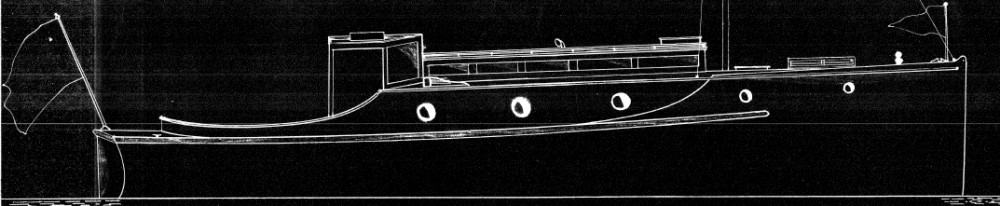
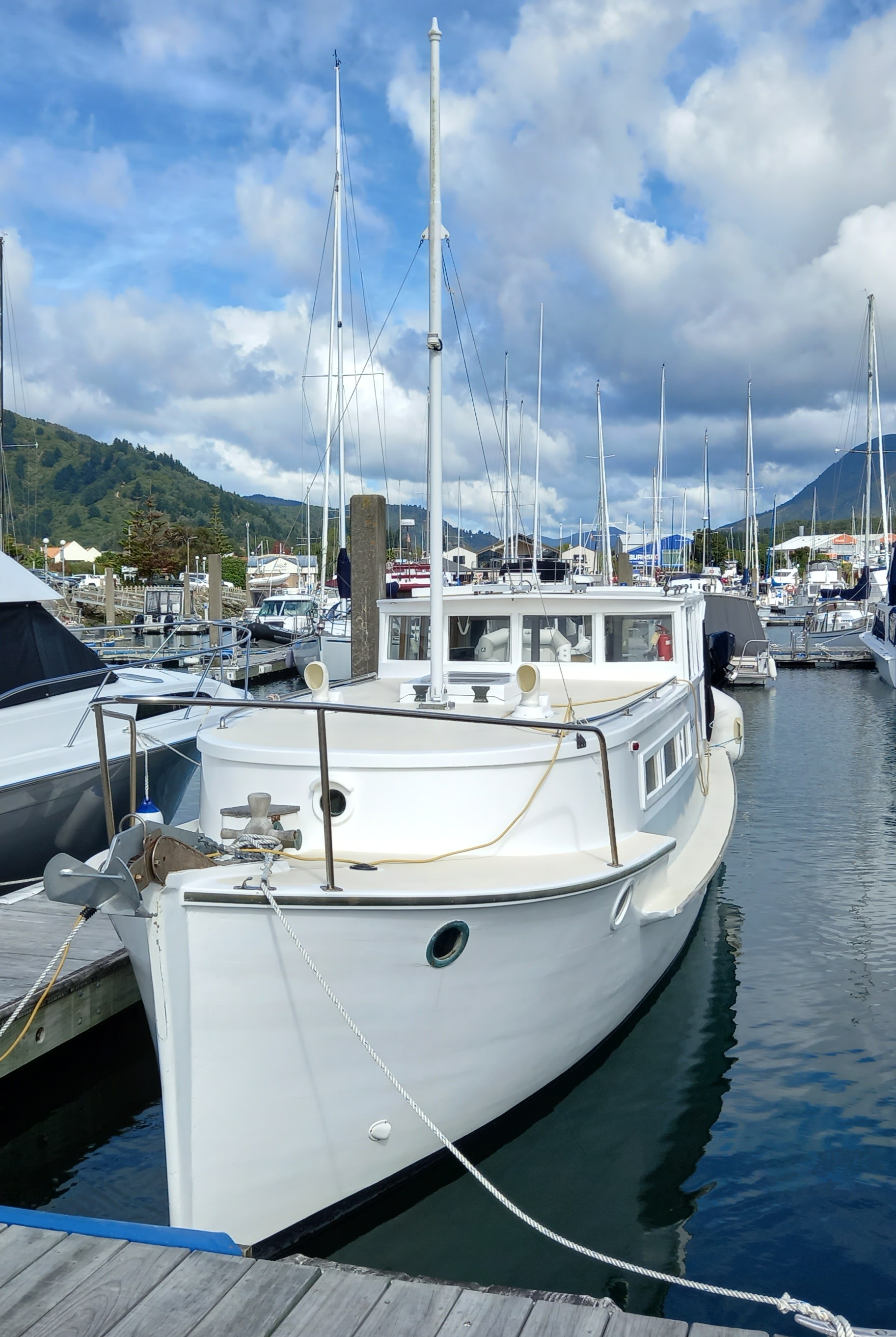
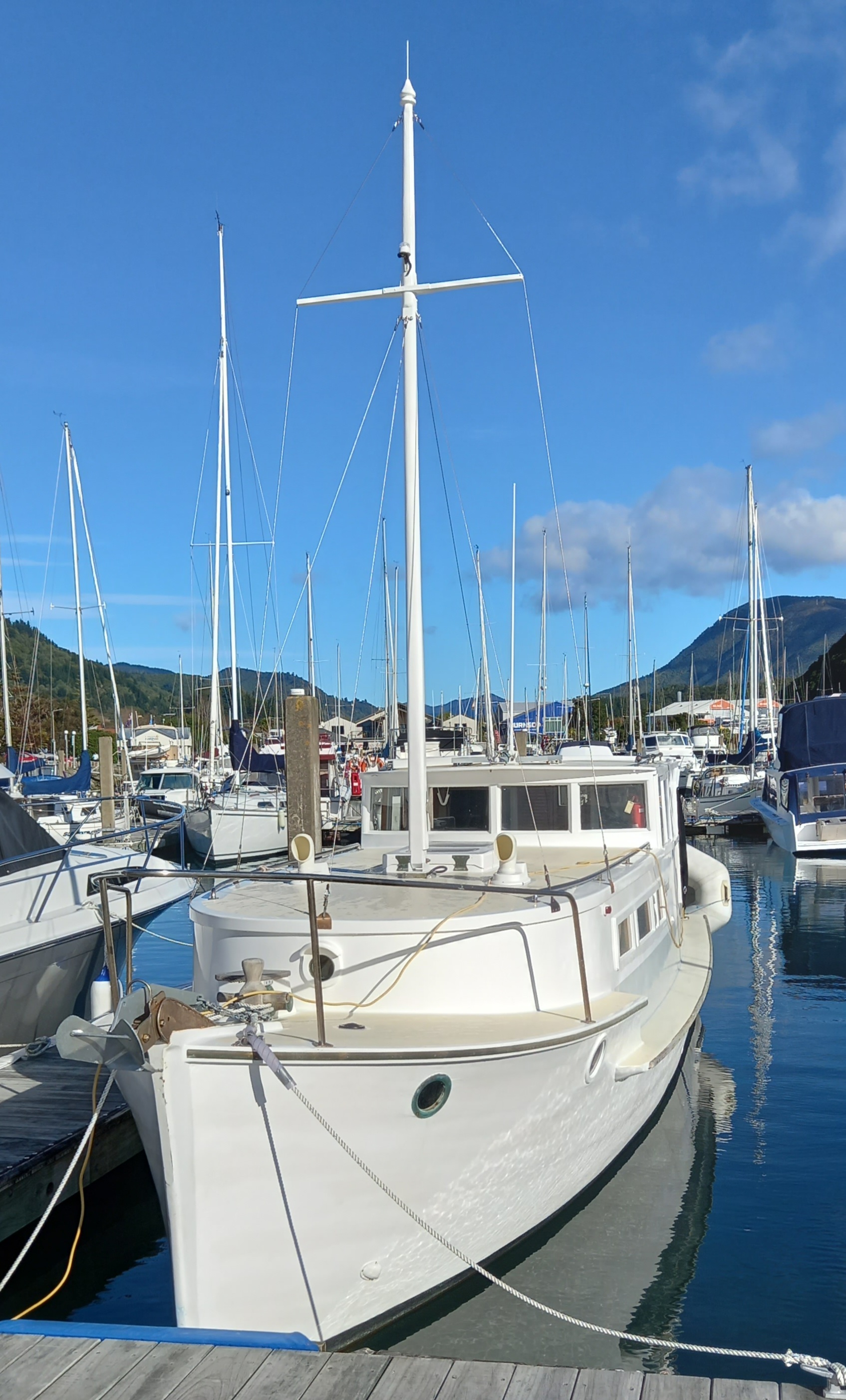
Can You Spot The Difference Between The Two Photos Above Of SKIPJACK ?
*It is something I get asked a lot, mainly when someone is restoring a classic wooden launch and trying to decide if they should reinstate the wooden mast that they have seen in older b/w photos. My answer is always yes and this based on the belief the mast was never about sailing power — it served practical, traditional, and aesthetic purposes. It was used to hoist navigation and signal flags, support lights or an awning, and sometimes rig a small boom for lifting dinghies or stores. A few launches even set a steadying sail to ease rolling in a swell.
But most importantly, to me, reinstalling a mast preserves originality and gives a launch a proper profile and balances her shape — and adds character. So in short: not for sailing power, but for utility, stability, and looks.
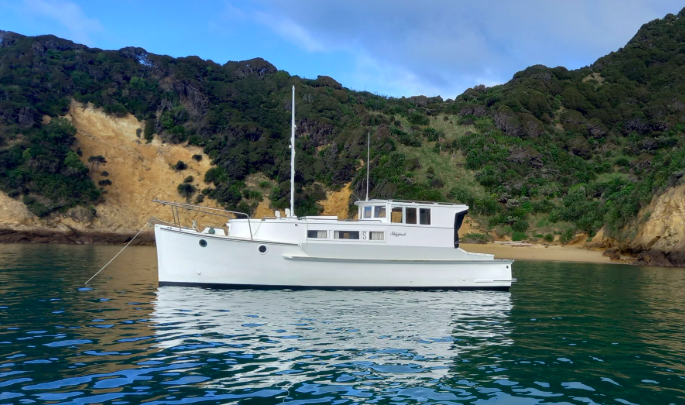
Still on the topic and focussing on the area of stability, during the week Greg Billington the owner of the 1918 Chas Bailey built launch – SKIPJACK contacted me following up on the story we did on SKIPJACK. Greg had two things he wanted to share – 1. SKIPJACK was no longer for sale, he had seen the light and decided to keep her ✔️ – we liked that.
And 2. Share a recent experience around masts on old classic launches – I’ll hand over to Greg to tell the story:
“I thought I would share something that may be of interest to readers. Along the lines of ‘a little knowledge is a dangerous thing…’
I was offshore on one occasion when a beam sea knocked the boat over such that I had this thought – ‘that heavy wooden mast must go.’ I had this thought because it appeared that bringing the mast back up was an issue. It wasn’t, obviously. Nevertheless, I thought I would lower the centre of gravity and improve the righting moment with a shorter, lighter mast. So, I installed an alloy mast, which did make the boat significantly stiffer, but sometimes more than I wanted.
After much thought and further reading, I decided that the original wooden mast must have made the boat more tender i.e. slowing and dampening roll and therefore making for a more comfortable ride. Guess what? It did. So, I am attaching a couple of pics showing the alloy mast, and then the old wooden mast back where it belongs and I can say that the motion in any sea is considerably improved. Which goes to show, and I don’t mind admitting, that the boat builder knew far more than me.”
And woodys for the record the 2nd photo above is the wooden mast 😉

Discover more from waitematawoodys.com #1 for classic wooden boat stories, info, advice & news - updated daily - 15+ million views
Subscribe to get the latest posts sent to your email.
 waitematawoodys.com #1 for classic wooden boat stories, info, advice & news - updated daily - 15+ million views
It was good to see my uncle – Merv Sefonte’s name as he did assist a lot of people in building of boats.
LikeLike
When I got bridgedecker Movarie, she had a squitty tripod mast on the wheelhouse. Looked rude compared with her wartime and early ’50s configuration. I got the late Merv Seefonte to make me up new oregon masts and he reckoned “it’d knock some of the roll out of her”. He was right, but I did it for looks. I had a jib and mizzen -the latter was good for nosing her up into the wind when fishing but too lazy to anchor.
Also, it was great to have the rigging and mast as support and to hang on to when moving on deck -she had a companion aft of the wheelhouse and the mizzen was good to get up on the cabin top. I did carry the jib (ex heavy canvas storm sail off Gloaming) on one heavy beam sea en route to Kawau. But not much help really.
I just loved the look. Next owner took them off and ditched them went back to a dumpy stick. I’d put new ones back straight off!
LikeLike
My uncle, Neville Ward, always insisted on hoisting a flag to show “owner on board” as the first task on greeting the boat.
LikeLike
Yip- rotational inertia. When weight is further from the axis/centre of rotation it takes more force to accelerate it, thus dampening the roll.
Then a steadying sail, dampens a roll/sea even more by being twice as hard to roll one way than the other(assuming the sea is caused by wind). Pacific’s steadying sail keeps her really nice in a beam sea, although it could do with being a bit larger as I’ve found that enough wind to make a sea isn’t quite enough pressure in the sail.
There’s a lot to be gained in safety by having a skipper and crew who are happy and non-seasick from a constant or violent roll, and less broken glassware.
LikeLiked by 1 person
Any yachty who has removed the mast for maintenance and has motored anywhere while it is still out will know immediately how much the mast contributes to stability. No mast = a quick jerky roll.
LikeLike