KOMURI
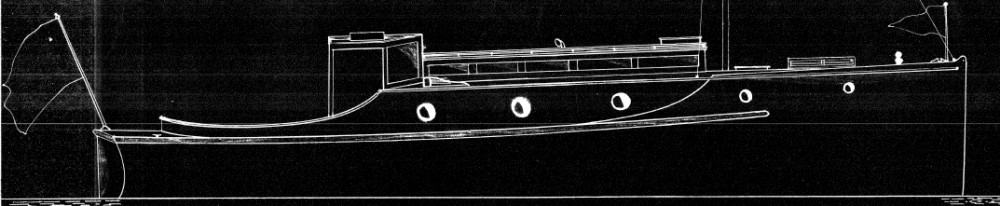
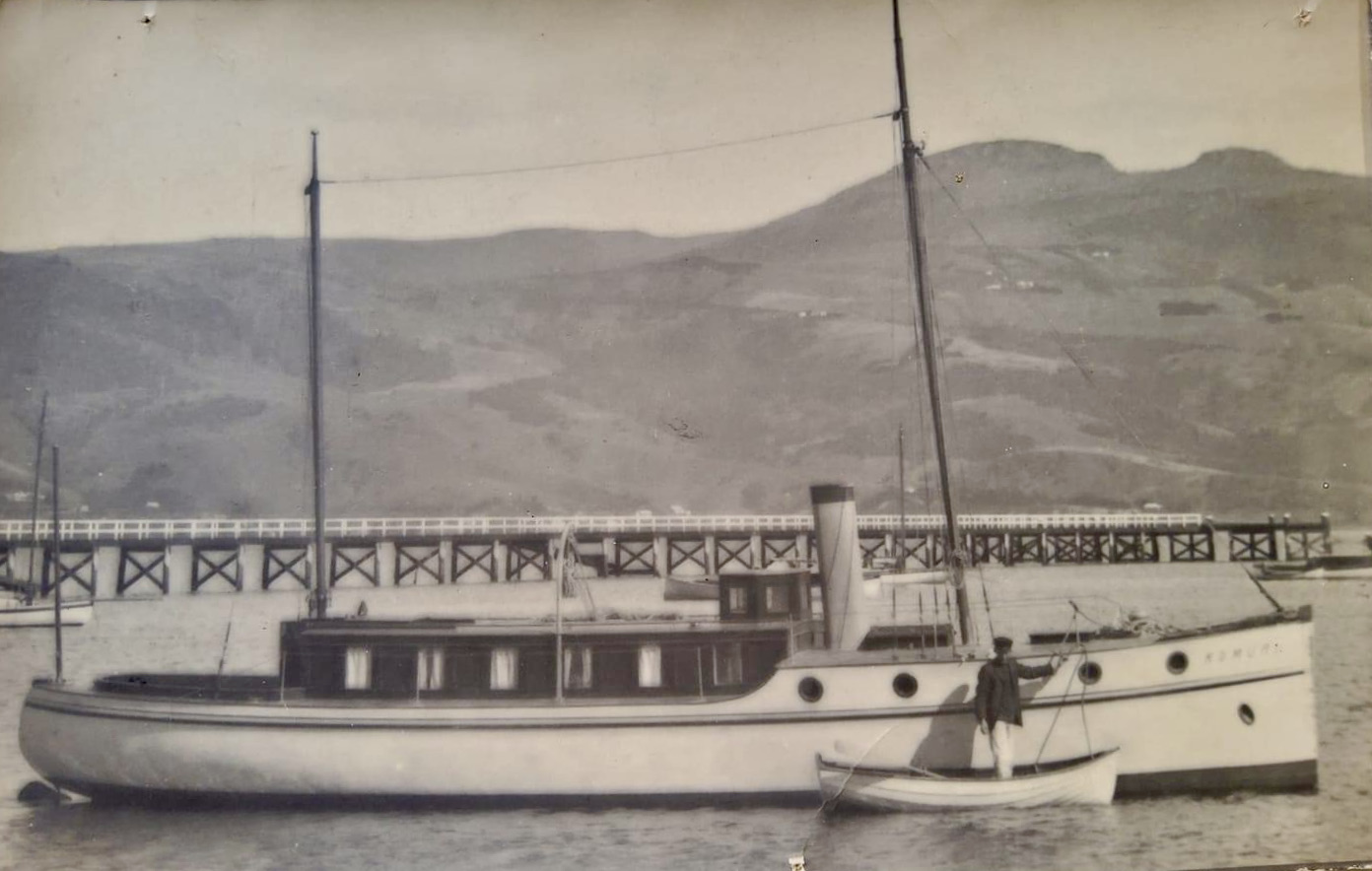
Today’s photo comes to us from Heather England’s fb and shows a very smart looking steamer. The photo was originally sent to Heather’s grandmother in 1912 when she was 12., and has a Dunedin post mark stamped on the rear, so the possible location surprise surprise is Dunedin. The photo is tagged Komuri on the back, which is the maori word for ‘fine weather’ which kind of sounds like a good name for a boat.
Would love to learn more about the vessel and what became of her – she is a real looker.
Input from Harold Kidd – KOMURI was built in Dunedin in 1913 by Austen Jenkinson to a design by McRae for James Johnston. She had a 2 cylinder Bolinder semi-diesel crude oil engine. She was sold in 1916 to the lessees of Campbell Island for whaling. On the trip down she had an engine breakdown and was abandoned at sea, the crew took to the surfboat. Long story. (thanks Nathan Hebert for the advising the correct spelling)
And On A Lighter Note
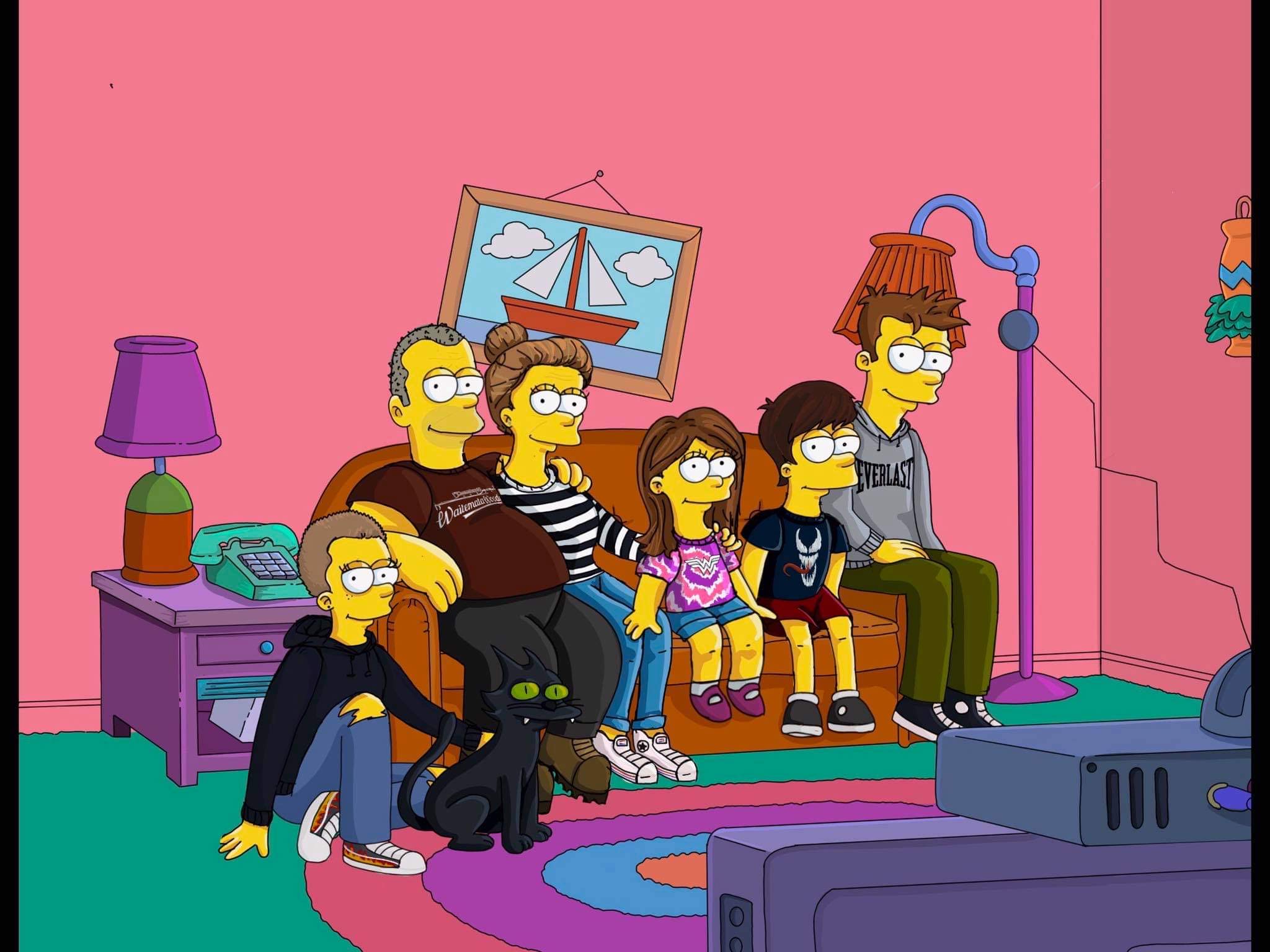
I was sent the image below by a WW follower, whose daughter has too much spare time during lock-down. I have enlarged a section to help you see the blatant breach of copyright 🙂


Discover more from waitematawoodys.com #1 for classic wooden boat stories, info, advice & news - updated daily - 15+ million views
Subscribe to get the latest posts sent to your email.
 waitematawoodys.com #1 for classic wooden boat stories, info, advice & news - updated daily - 15+ million views
Here is an excerpt from my forthcoming book on the Subantarctic islands. Any comments welcome Lloyd Esler
A new whaling company was formed and in February 1917 the 10 ton launch Komuri was towed to Campbell Island by the Himitangi which returned to the mainland with the island’s wool clip. Two months later the Komuri was lost in an unusual mishap that ended shore-based whaling in the Subantarctic. Unable to restart her engine (a 24hp Bolinder crude oil engine) her crew abandoned her as she drifted from sight of land. The ten men took to the surf boat which they rowed through heavy seas in darkness to eventually reach Campbell Island safely. The Komuri was not seen again. She had aboard all their whaling gear so there was to be no whaling that season, nor ever again.
A slightly different version was recorded by Robert Wilson who got his story from Albert Metzger, one of the men in the crew. From Bird Islands of New Zealand… “Seals were completely protected, but considerable poaching was done and the skins preserved. A diesel launch was kept at the island, and, when a poaching American schooner appeared off the island, several Maoris employed on the island and Albert went out to the schooner towing a whale-boat, from which they boarded the schooner and sold their seal skins. The men then returned to the launch. It was blowing hard from the north, and the towing rope of the whale-boat got tangled round the launch’s propellor. Albert stopped the diesel to untangle the rope. The engine was started by compressed air, but unknown to Albert, the cock had been accidentally knocked off the compressed air tank, and the air had escaped. They vainly tried to start the engine by hand for a couple of hours, drifting rapidly to the south, but gave it up, and manning the whaleboat, started to row back to the island They rowed all night without making land. When daylight came no land was in sight, but Albert kept them rowing and finally, just as they were exhausted, the island hove in sight and they reached the harbour. The launch was never heard of again.”
LikeLike
Many thanks for this, Alan.
LikeLike
Have emailed you. Alan H
LikeLike
Am interested in getting a good image of the KOMURI alongside at (Dunedin?) posted by Heather England. I had one of a port bow on view from Sea Spray magazine a couple of decades ago but lost it.
LikeLike
In 1976, whaler Joseph Timms (Picton) told of KOMURI’s 1918 loss at Campbell Island. The Campbell Island Company purchased KOMURI to assist with mustering (island same size as Waiheke) – and for whaling. Right whales are at the island in winter. There was, reportedly, an issue with the motor’s compressed air restart. Albert Metzger (Invercargill), engineer, vainly tried to restart the motor when off the island’s southeast coast. All seven men who were on the island were on board. They abandoned KOMURI and took to the longboat they had in tow when the island was low on the horizon, and pulled for South East Harbour, which they made by dark. Joe wondered if they bothered to use the set of sails known to be stored in the forward lockers.
LikeLike
Mmm… Komuri flows so much more easily off the tongue. I didn’t think she was steam -insufficient plumbing on the funnel. You’d need to get the exhaust from a semi diesel up out of the way at least until it was up to running temperature. They usually kept running once going. Sad she is no longer with us. Tell us more, Harold.
But what a fabulous picture the ship centre stage and centre stage of her that great clinker dinghy with great run of the strakes -well done that man!
LikeLike
The artist would be Maddie, Cam at the slipways daughter 😉 she has talent out her ears!! Also does a good special effects blood and gore package amongst others 😉
LikeLike
KOMURI was built in Dunedin in 1913 by Austen Jenkinson to a design by McRae for James Johnston. She had a 2 cylinder Bolinder semi-diesel crude oil engine. She was sold in 1916 to the lessees of Campbell Island for whaling. On the trip down she had an engine breakdown and was abandoned at sea, the crew took to the surfboat. Long story.
LikeLike
The way I went about looking this boat up from Heather’s photo a few days ago was pretty simple- Komuai has no place in Te Reo, so I guessed at Komuri and sure enough came up as this boat on Paperspast
LikeLike
Looks like Akaroa to me
LikeLike